Korean Won Tumbles to 17-Year Low Amid Geopolitical Instability
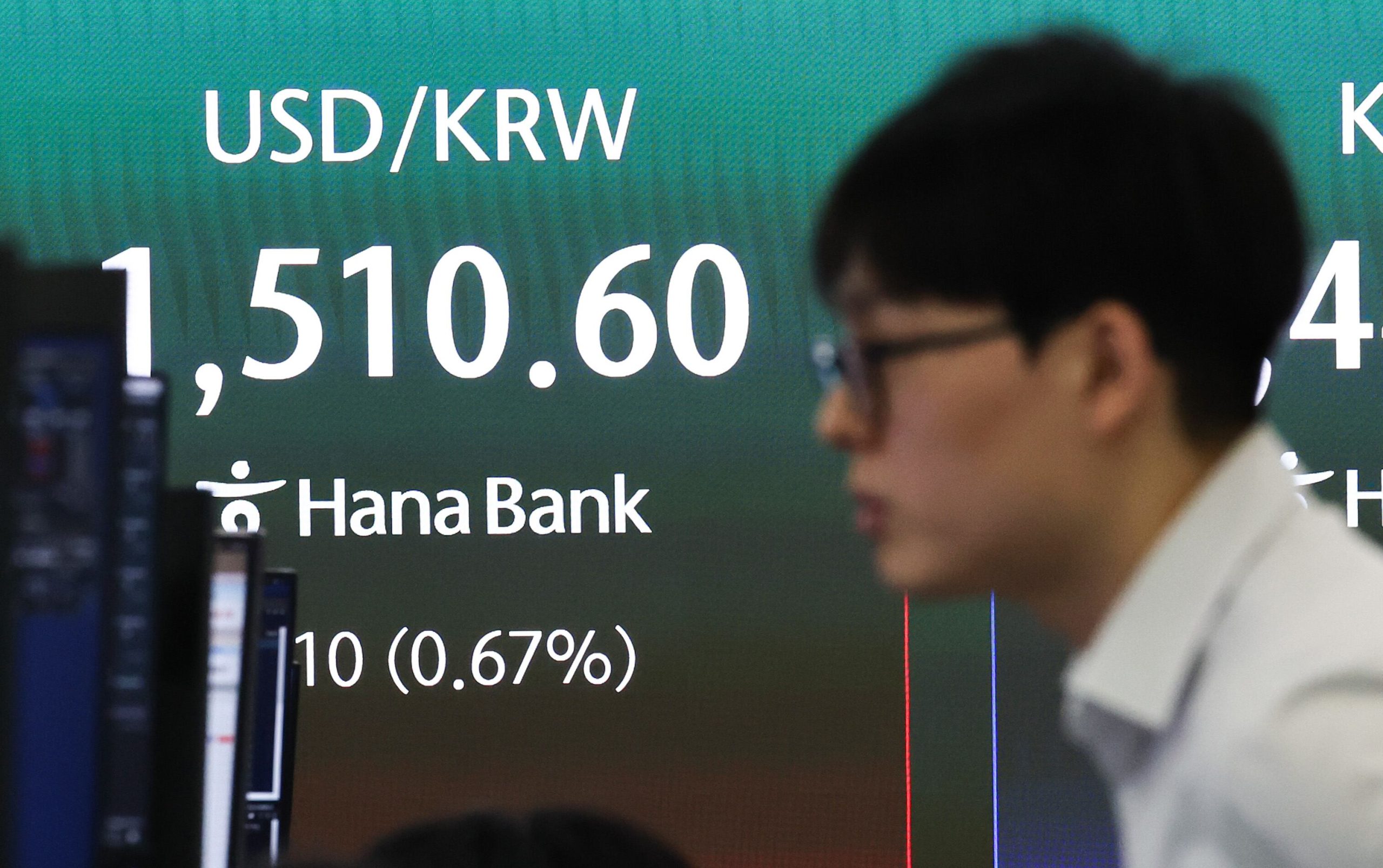
The South Korean won has experienced a significant depreciation, breaching the 1,510 mark against the U.S. dollar for the first time in 17 years. This alarming slide, last seen in March 2009, comes as escalating tensions in the Middle East cast a long shadow over global financial markets.
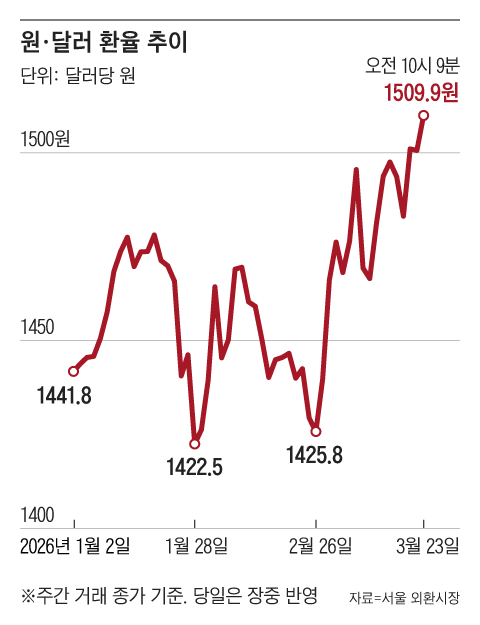
On the day of the significant breach, the won-dollar exchange rate opened at 1,504.9 won, already a notable increase from the previous trading day. Throughout the session, it surged further, reaching an intraday high of 1,511.8 won. While it showed some volatility, hovering around 1,509.9 won by mid-morning, the rate remained precariously close to the 1,510 threshold. This level is a stark reminder of the financial climate in March 2009, when the exchange rate had peaked at 1,561 won during intraday trading.
The Safe Haven Dollar’s Ascent
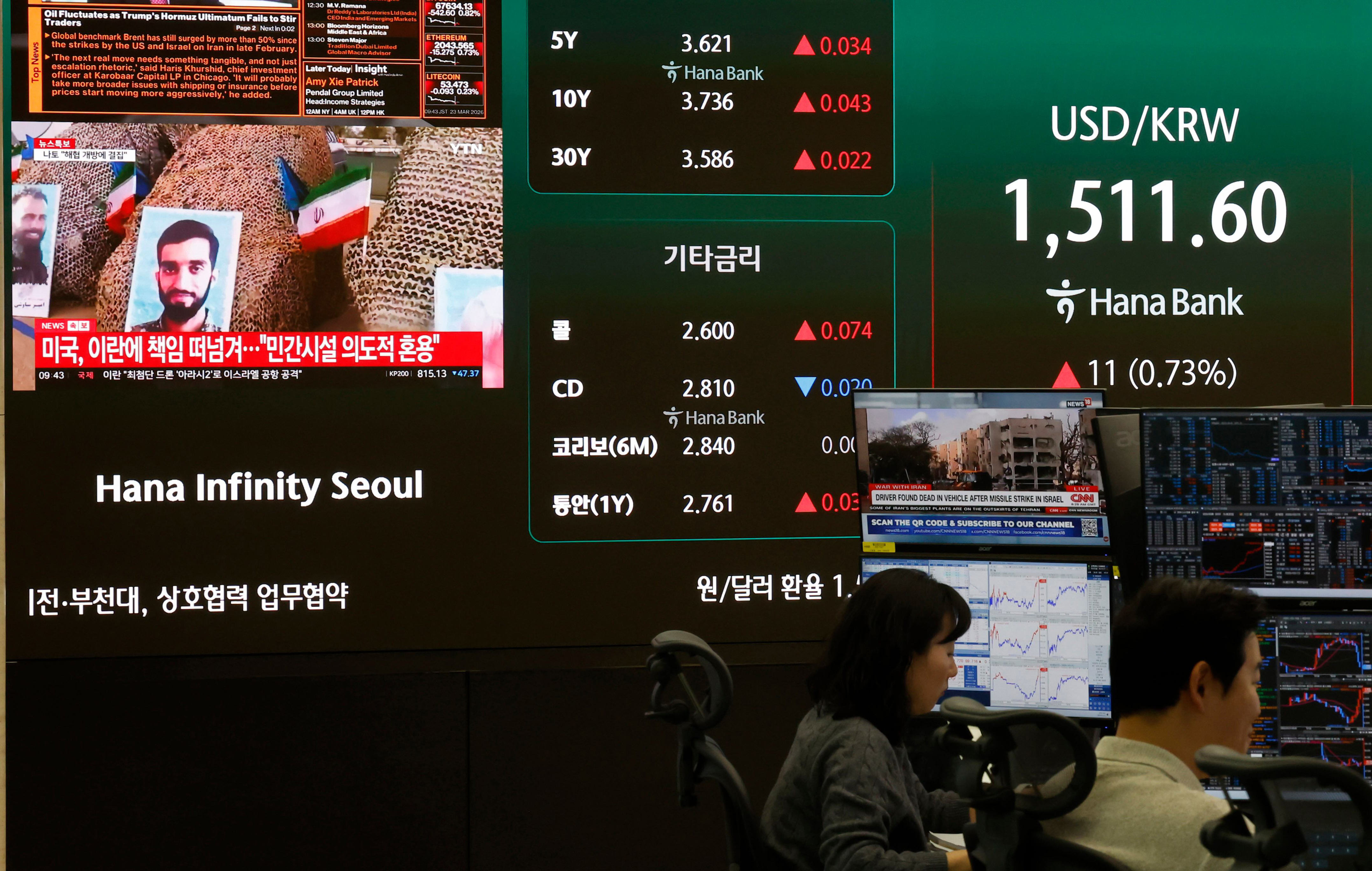
The primary driver behind the won’s weakening is the intensified conflict involving the U.S., Israel, and Iran. As geopolitical uncertainty mounts, the U.S. dollar, traditionally a safe-haven asset, has seen a considerable strengthening. The U.S. Dollar Index, a key barometer of the dollar’s strength against a basket of six major currencies, has climbed from the 97 range to the 99-100 range since the outbreak of hostilities.
Furthermore, Iran’s actions, including blockades of the Strait of Hormuz—a vital artery for global oil transportation—have directly contributed to a spike in international oil prices. This surge in energy costs further bolsters demand for the dollar, as oil is predominantly priced in the U.S. currency.
Foreign Investors Flee South Korean Markets
The weakening of the won is also exacerbated by the exodus of foreign investors from the South Korean stock market. Seeking to mitigate risks associated with the escalating Middle East conflict, these investors have been net sellers of South Korean equities.
This flight of capital had a tangible impact on the KOSPI, the benchmark stock index. The KOSPI opened trading significantly lower, down 3.48% from the previous session, at 5,580.15. The selling pressure was so intense that it triggered the sixth sell-side circuit breaker of the year at 9:18 a.m., a mechanism designed to halt trading temporarily during sharp declines. This occurred amidst foreign investors offloading a substantial 335.7 billion Korean won in early trading.
A Volatile Standoff in the Middle East
The geopolitical situation in the Middle East remains highly volatile, characterized by a cycle of de-escalation and escalation. In a recent development, U.S. President Trump issued a stern warning via his Truth Social platform. He stated that if Iran did not fully open the Strait of Hormuz without any threats within the next 48 hours, the U.S. would retaliate by attacking and “completely destroy[ing] Iran’s power plants, starting with the largest one.”
This threat was met with a firm response from Iran. Ebrahim Zolfaghari, a spokesperson for Iran’s Central Military Headquarters, declared that if the U.S. followed through on its threat to target Iran’s power plants, the Strait of Hormuz would be “completely closed and will not reopen until the plants are rebuilt.” This exchange highlights the precarious nature of the situation and the potential for further disruption to global trade and energy supplies. The implications of this standoff are being keenly felt in currency markets worldwide, particularly in South Korea, which is heavily reliant on international trade.