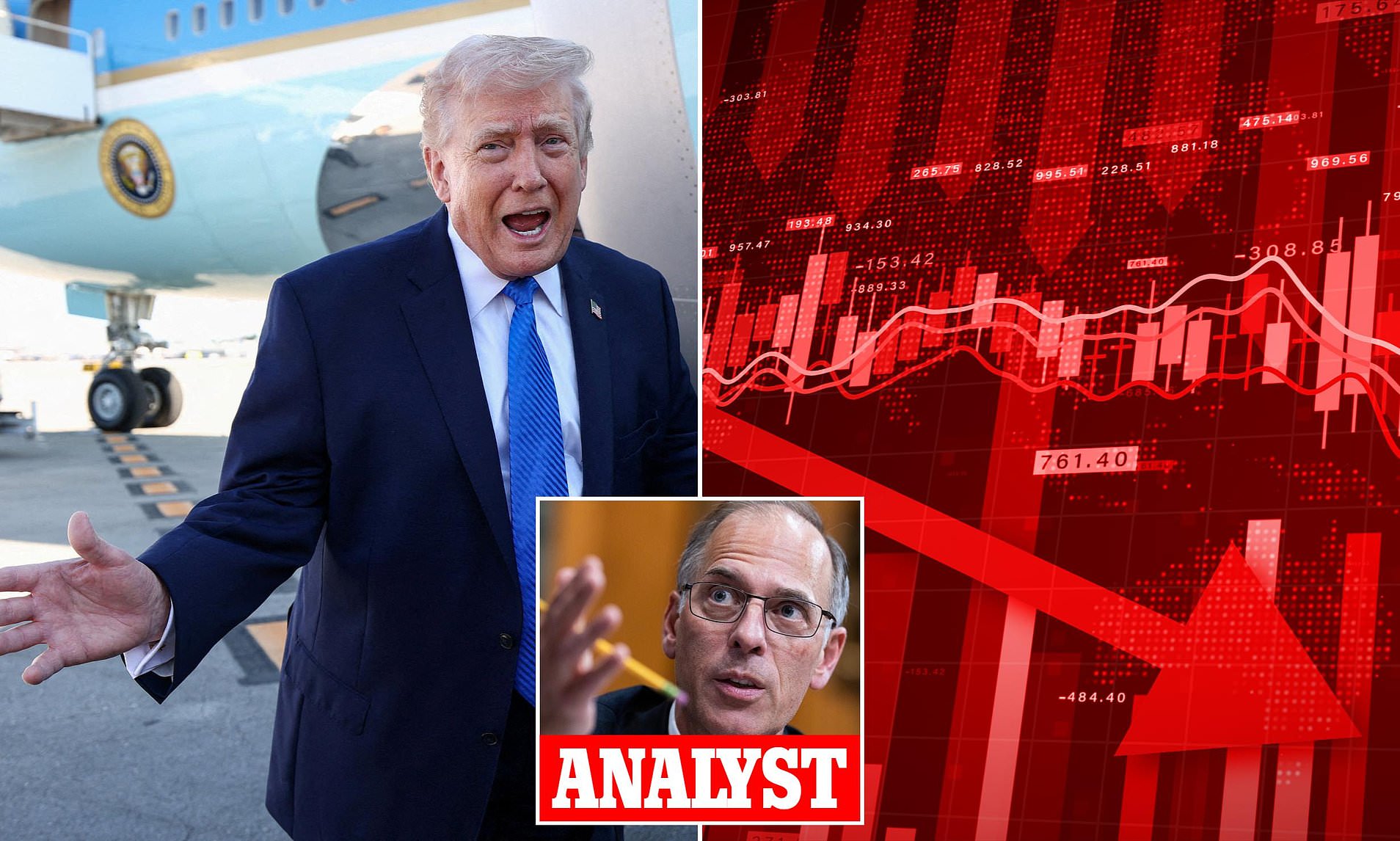
Wall Street Issues Stark Recession Warning Amidst Soaring Oil Prices
Financial markets are sounding an alarm bell, with major Wall Street institutions issuing a stark warning that escalating oil prices could propel the United States into an economic recession. This perspective directly contrasts with the more optimistic outlook presented by the Trump administration, creating a significant divergence in economic forecasts.
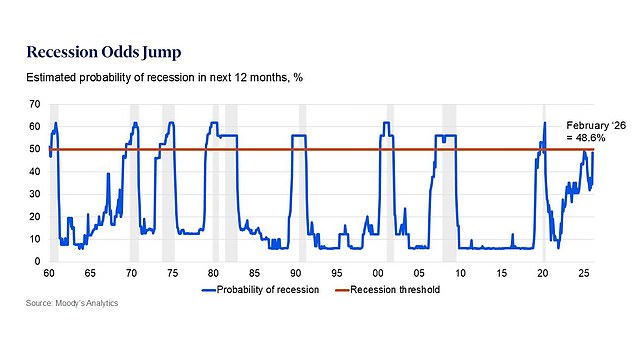
Investment firm Moody’s, known for its rigorous economic analysis, has updated its recession probability model, indicating a heightened risk for the US economy. Prior to recent geopolitical events, Moody’s had already assessed a 49 percent chance of an economic slump within the next 12 months, citing job losses and weakening Gross Domestic Product (GDP) as primary concerns.
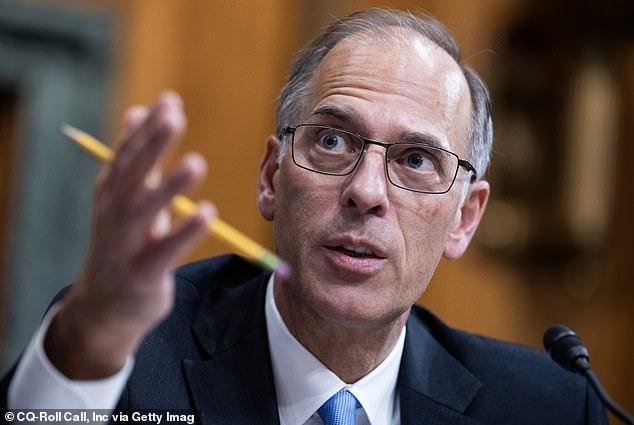
However, a leading analyst from Moody’s has now warned that the surge in oil prices has pushed this probability above the critical 50 percent threshold. Mark Zandi, Moody’s chief economist, articulated the underlying reasons for this elevated risk. “Behind the recent jump are primarily the weak labor market numbers, but almost all the economic data has turned soft since the end of last year,” Zandi stated, highlighting a broad-based economic slowdown.
The Moody’s recession indicator boasts a strong historical track record, having accurately predicted previous economic downturns in 2020, 2007, and 2001. This historical accuracy lends significant weight to its current warning.
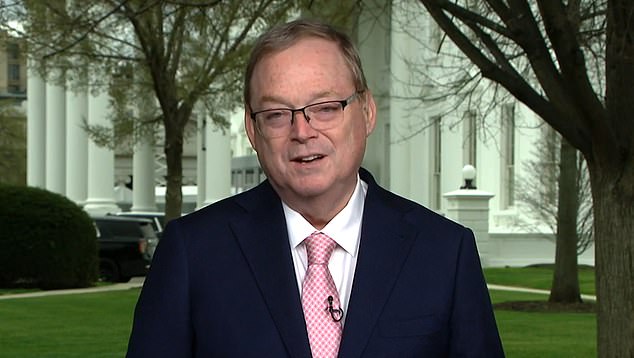
This assessment from Wall Street directly challenges statements made by officials within the Trump administration. Kevin Hassett, director of the National Economic Council, recently expressed confidence in the economy’s fundamental strength. He asserted that even an extended conflict abroad would have minimal disruptive impact on the US economy.
Historically, with the exception of the brief COVID-19 pandemic downturn, nearly every US recession since World War II has been preceded by a significant spike in oil prices. The current situation appears to be following this established pattern.
The Moody’s recession indicator has demonstrated its predictive power in recent years. The model’s probability measure surpassed 50 percent in 2020, 2007, and 2001, with each instance being followed by an officially recognized recession.
Divergent Views on Recession Triggers
A key point of contention among Wall Street analysts, the White House, and central bankers lies in the specific oil price levels and duration required to trigger a recession.
Analysts from the investment giant Vanguard, in an assessment earlier this month, suggested that oil prices would need to remain at an elevated $150 per barrel for the remainder of the year to precipitate a recession in the US.
Similarly, Wells Fargo indicated that “sustained” oil prices exceeding $130 per barrel would “materially raise the risk of recession.”
The Federal Reserve, meanwhile, has maintained a cautious and non-committal stance on the matter. At its most recent March meeting, the US central bank issued a general warning that the ongoing geopolitical conflict “presents uncertainties for the economy.”
Federal Reserve Chair Jerome Powell, speaking to reporters after the meeting, acknowledged the prevailing uncertainty, stating, “Nobody knows what the economic impacts of the war and higher oil prices will be.”
Defining a Recession and Recent Economic Indicators
The precise definition of a US recession can be somewhat nuanced. The National Bureau of Economic Research (NBER), the official arbiter of US business cycle dates, defines a recession as “a significant decline in economic activity spread across the economy, lasting more than a few months.” The NBER’s determination is based on a comprehensive review of various economic data points, including GDP, income, employment levels, industrial production, and retail sales.
Recent economic reports have indeed painted a picture of softening activity. In February, the US experienced a net loss of 92,000 jobs, and the unemployment rate saw a slight increase to 4.4 percent. Furthermore, the government has revised downward its estimate for fourth-quarter 2025 GDP growth, reducing it from an initial projection of +1.4 percent to a more subdued +0.7 percent.

Resilience and Lingering Concerns
It is worth noting that the United States’ increased domestic oil production has, to some extent, mitigated the direct economic impact of rising global oil prices compared to previous decades. However, the economy remains susceptible to the effects of higher oil and gasoline prices, particularly given existing consumer anxieties that predated the recent geopolitical tensions.
Despite the mounting evidence of economic pressure and rising recessionary risks, many economists have been hesitant to definitively declare an impending recession. This caution stems, in part, from previous instances where forecasts of an imminent downturn, particularly in the wake of the Federal Reserve’s interest rate hikes, proved to be inaccurate.
Nevertheless, a consensus is emerging: if oil prices continue to remain at elevated levels for an extended period, avoiding a recession will become increasingly challenging.