
The Token Economy: How China’s Energy Might and Low-Cost Models Could Redefine Global AI Competition
The landscape of artificial intelligence is undergoing a fundamental shift, with “tokens” emerging as the new cornerstone commodity. Nvidia CEO Jensen Huang, a prominent figure in the semiconductor industry, recently articulated this vision at the company’s GTC developer conference. He proposed a redefinition of Nvidia’s role, moving beyond mere silicon manufacturing to becoming architects of “AI factories” that produce tokens as their standard output. This conceptual rebranding signals a burgeoning “token economy,” and China is strategically positioning itself across its entire value chain, from energy and computing power to the development and deployment of AI models.
This evolving paradigm has sparked a parallel discussion in China regarding “token exports.” The core idea is that AI-generated intelligence, quantifiable by tokens, is becoming a tradeable commodity. China’s proactive approach, encompassing a broad spectrum of the AI ecosystem, suggests a potential structural advantage in this new global marketplace.
Understanding AI Tokens: The New Currency of Intelligence
In the context of artificial intelligence, a token represents the smallest unit of data that an AI model processes or generates. Unlike their cryptocurrency counterparts, which often represent ownership or speculative value, AI tokens are fundamentally computational. They are the units for which users pay and that AI models produce.
As the demand for AI services escalates, fueled by the proliferation of multimodal models, AI agents, and diverse applications, the efficiency and cost-effectiveness of token production are becoming paramount. Huang’s analogy of tokens to oil barrels in the AI era underscores their commodity status – a resource to be produced, priced, and competed over. This shift implies that data centers will increasingly function as production facilities, with revenue measured in tokens per watt. Consequently, businesses may soon find themselves managing token budgets with the same diligence they currently apply to human resources.
Chinese tech giants are embracing this evolution. Alibaba Group Holding, which is undergoing a strategic pivot towards an AI-centric identity, recently consolidated its AI operations into a new, top-tier entity named the “Alibaba Token Hub.” This unit’s mandate is to spearhead the creation, delivery, and application of tokens.
Reshaping Global Tech Competition Through Tokenomics
The concept of tokens as a resource introduces inherent supply constraints. Their large-scale production necessitates robust infrastructure, including advanced chips, efficient cooling systems, and, crucially, abundant electricity. This reality has catalyzed an unprecedented infrastructure investment boom. Major US technology corporations are committing vast sums to data center construction, leading to significant delays in grid connections in some regions, with waitlists extending to 2028.
The consumption of these tokens is intrinsically linked to AI models. Recent data from OpenRouter reveals a striking trend: the four most heavily utilized models, based on token consumption, are all of Chinese origin. These include models from StepFun, MiniMax, Xiaomi, and DeepSeek, with Zhipu’s models also ranking within the top ten. Collectively, these leading models account for an astonishing 18.8 trillion tokens. Prominent Chinese models, such as Alibaba’s Qwen series, are not included in this specific chart due to their open-source nature.
A primary driver behind this widespread adoption is cost. The pricing for application programming interfaces (APIs) of models like Zhipu’s GLM-5 is reportedly orders of magnitude lower than that of premium Western alternatives, such as Claude 4.6 Opus. As the scale of token usage grows, cost becomes an increasingly decisive factor in model selection and deployment.
While China may still trail the United States in cutting-edge chip technology, its strategic focus on the token economy, where key performance indicators revolve around output per watt and cost per million tokens, is enabling it to cultivate a distinct competitive advantage.
Electricity: China’s Unparalleled Structural Advantage
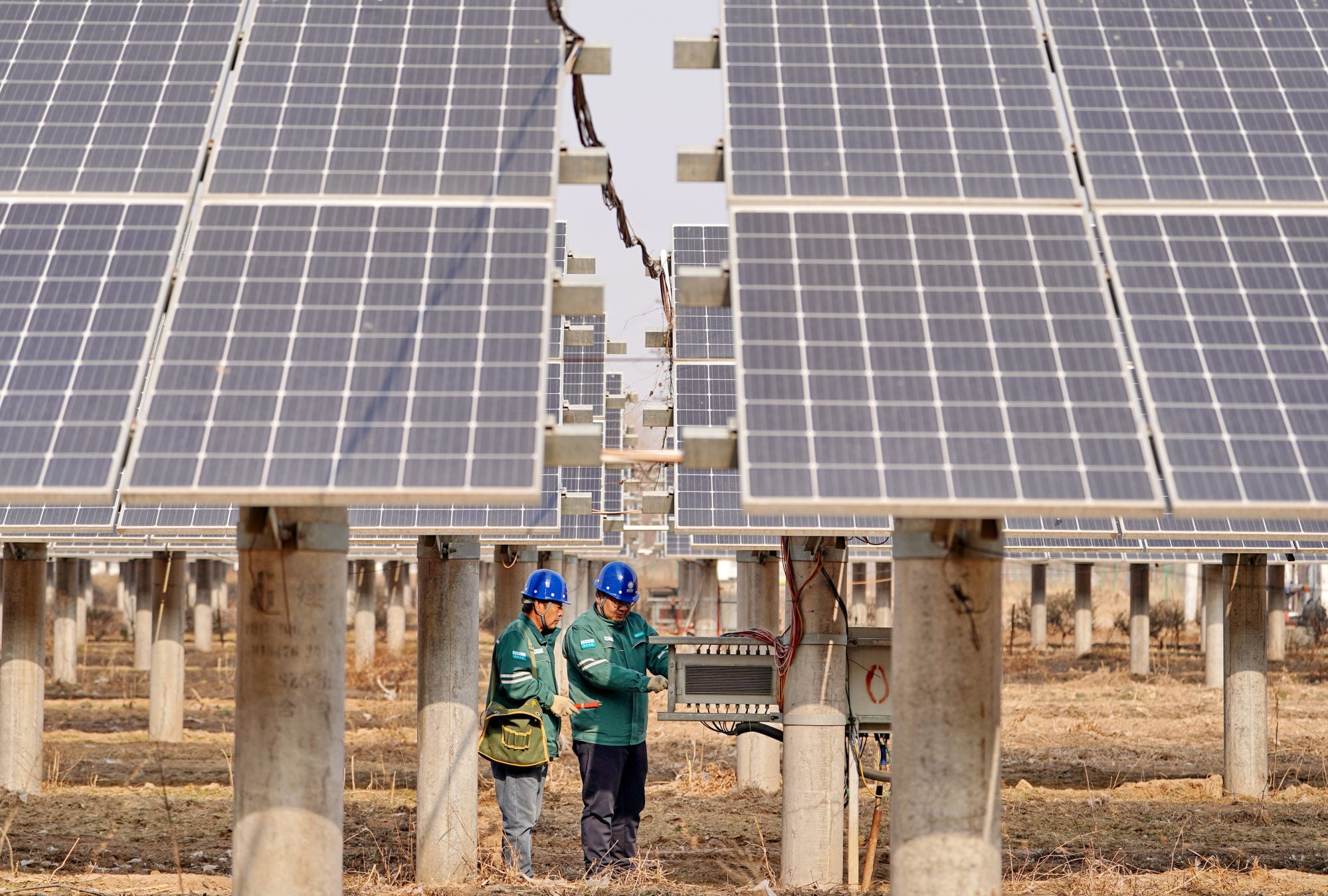
China’s position as the world’s largest electricity producer provides it with a significant structural edge in the burgeoning token economy. The nation’s power generation capacity has expanded at a remarkable pace, consistently exceeding official projections. By the close of 2025, China’s total installed generating capacity is projected to reach 3.89 billion kilowatts, a figure nearly three times that of the United States, according to data from their respective energy agencies. The growth in solar power alone surged by 35% last year, while wind power increased by 23%.
The Chinese government has elevated “compute-electricity synergy” to a national strategic priority. This initiative aims to strategically align the deployment of data centers with available energy resources, thereby mitigating geographical imbalances between energy supply and demand. Projects such as the west-to-east power transmission and the “East Data, West Compute” program are integral components of this strategy.
Adding to this advantage is the sheer depth and breadth of China’s supply chain. The country holds a dominant position in the manufacturing of essential grid and energy components, including transformers, inverters, switching equipment, and solar panels. These components are increasingly being sourced by leading global tech companies, including Google, Tesla, and Amazon, underscoring the critical role of China’s industrial ecosystem.
In this new era where AI intelligence is commoditized and measured in tokens, China’s foundational strengths in energy production and its deep-rooted manufacturing capabilities position it as a formidable contender, potentially reshaping the dynamics of global technological competition.