A viral “baseball goddess,” a wolf that never existed, and a deepfake crisis. Generative AI is reshaping South Korea’s reality.
The young woman in the audience merely sighed, turned her head, and remained seated, appearing remarkably calm, as 15 million unknown people momentarily fell in love with someone who had never been real.
As stated in the caption of one of numerous posts, she was “the typical Korean woman.” Her fans swiftly named her a “baseball goddess,” scrutinizing each of her features with the intense dedication usually seen in online fascinations, as the five-second video became widely shared across platforms.South Korea’s online communities.
Then, a person observed the score display.
A broadcast graphic in the upper left corner of the image displayed a current Hanwha Eagles player against a retired Doosan Bears batter, creating a scenario that was impossible.
The deity was a fabrication – created by a program and virtually identical, to countless spectators, to the genuine article.
Soon, copycat videos began overwhelming social media platforms. Users added themselves next toBTSstar Jungkook in stadium seats and relocated invented spectators intoFormula One paddocks and NBAarenas, established manufacturing footprint where there was nothing before.
In South Korea, where generative AIhas quickly evolved from a novelty into a common tool, with such clips pushing the boundaries of how fast artificial content can resemble reality – and how readily entertainment can shift into false information, damage to reputation, political exploitation, and public confusion.
A wolf that never existed
The growing divide between artificial imagery and real-life experiences became evidentin April, during the citywide search for Neukgu, a two-year-old wolf that had escaped from its enclosure at O-World theme park and zoo in central Daejeon, leading to a nine-day operation.
While officials searched the area, a middle-aged office employee utilized an AI image creation tool to produce a fake picture of a light-brown wolf nonchalantly walking across a genuine crosswalk close to a school.
The picture was so realistic that it tricked Daejeon’s own emergency management officials, who included it in public warnings telling people to remain inside, and even showed it during a televised press conference.
Digital forensic experts and news agency fact-checkers eventually discovered clear contradictions in the image. Law enforcement detained the creator on allegations of hindering official procedures. However, the harm was already done: a fake wolf had temporarily been associated with a real public crisis.
“From a light perspective, this might just be considered as entertainment or a pastime,” Kim Myung-joo, executive director of the Korea Artificial Intelligence Safety Institute, said to This Week in Asia.
However, if this behavior becomes too much or lasts too long, the difference between imagination and reality may grow. Overindulgence in AI can increase discontent, promote avoidance of real-life issues, and lead to a cycle where general happiness continues to decrease.
Escaping reality
South Korea has rapidly adopted generative AI.
Almost half the population – 44.5 percent in 2025 – have utilized these tools, as per a recent government survey: a level of adoption that highlights the nation’s advanced digital infrastructure and a long-standing enthusiasm for technological innovation that predates the present AI era by many years.
South Koreans also have a higher intake of “AI slop- subpar, algorithmically designed content created to attract clicks – more than any other group on the planet, as per a 2025 study by the video editing platform Kapwing.
The same creative technologies that generate trending baseball goddesses are being utilized toconverse with elderly residentsWith the help of AI-driven companion dolls, flood e-book markets with machine-generated titles — one American publisher, Luminary Books, is said to create as many as 9,000 AI-enhanced e-books each year — and to generate “news” content at a speed that human editing cannot keep up with.
In a nation occasionally referred to as the “plastic surgery republic” due to its strong cultural focus on looks and image, AI has thrived as what Kim describes as “a tool that offers indirect fulfillment for hidden desires and frustrations”: a virtual mirror designed to show an improved version of oneself.
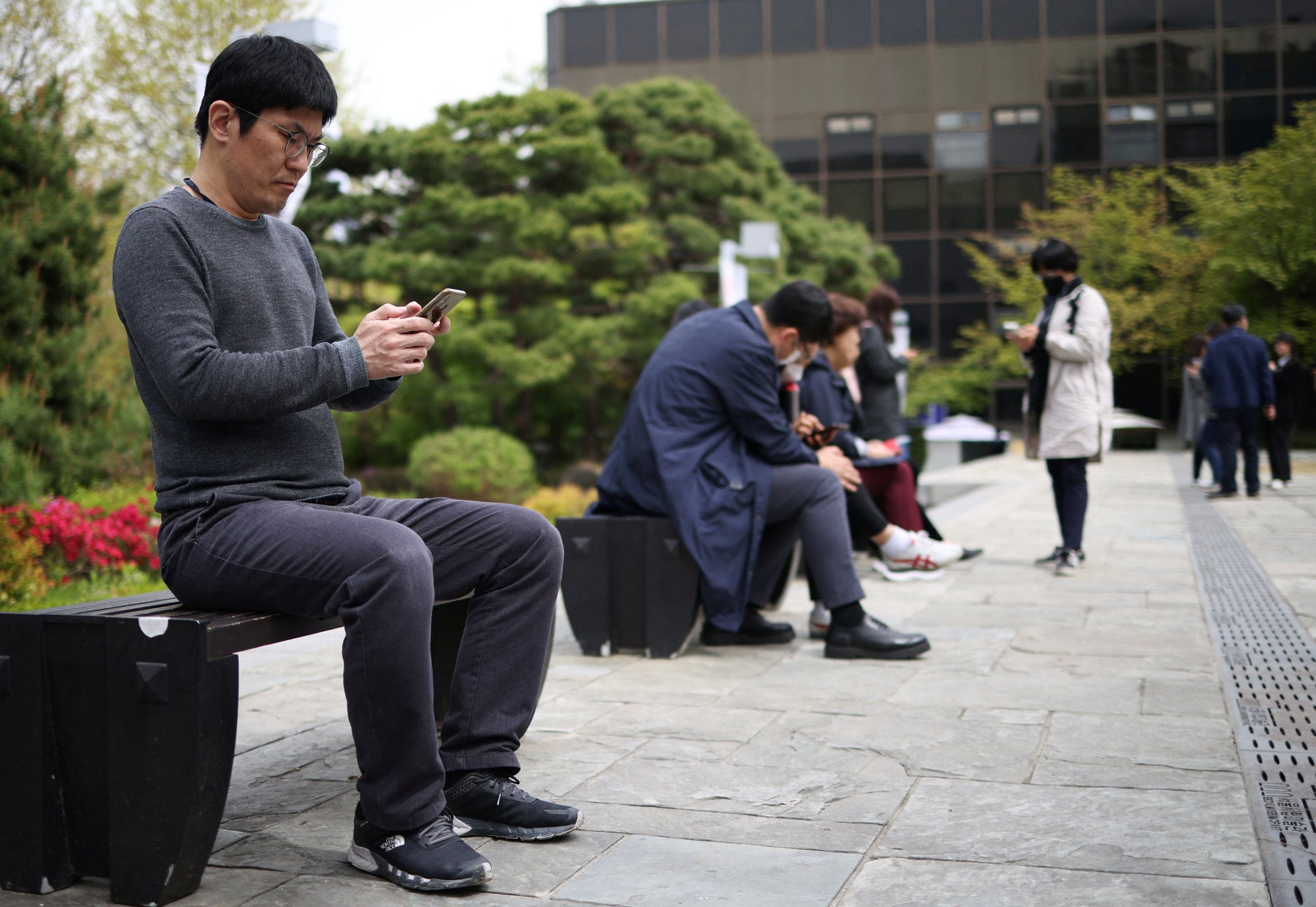
President Lee Jae Myunghas consistently tried to present AI as a key element of South Korea’s economic vision. In January, the nation passed acomprehensive AI lawmeant to harmonize technological advancement with moral protections within critical industries like healthcare, transportation, and finance.
However, critics point out that its penalties are significantly less than those applied under theEuropean Union’s AI Acta discrepancy that could turn out to be significant as the technology’s negative impacts become increasingly difficult to overlook.
South Korea has already faced some of these negative effects in their most intense and direct way.
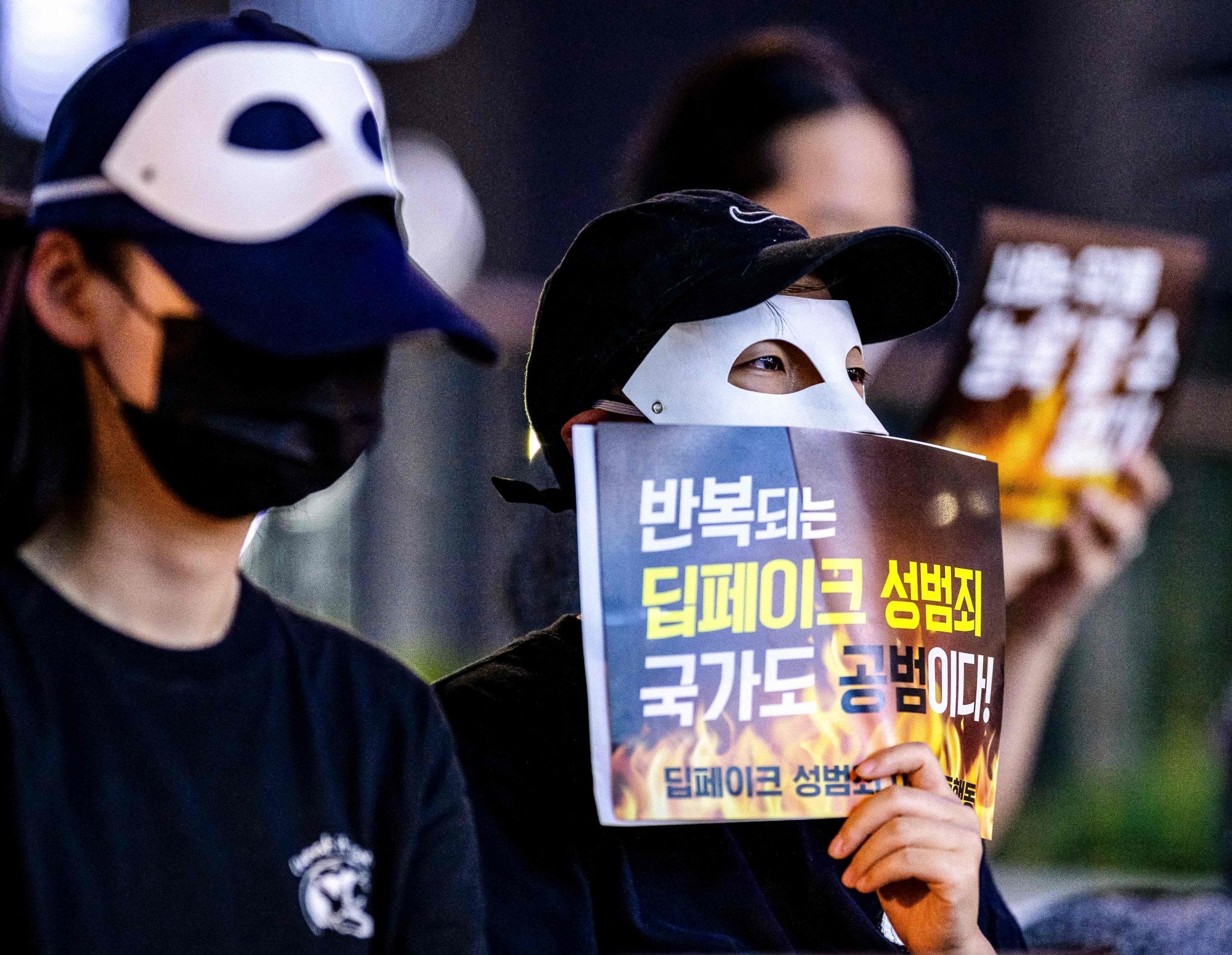
In 2024, the nation was rocked bya deepfake pornography epidemic, with the widespread production and sharing of sexually explicit AI-generated images aimed at women and children, primarily circulated via encrypted channelsTelegramchat rooms. Numerous victims were schoolgirls whose pictures had been altered by fellow students.
Artificial intelligence has now also emerged as a powerful political tool. Fake television reports incorrectly included a mayoral candidate on Time magazine’s list of emerging political leaders. Artificial intelligence-generatedK-poptracks were used to honor politicians and ridicule their rivals before voting periods.
Officials state that they have deployed hundreds of staff to track fake material before the upcoming local elections next month.
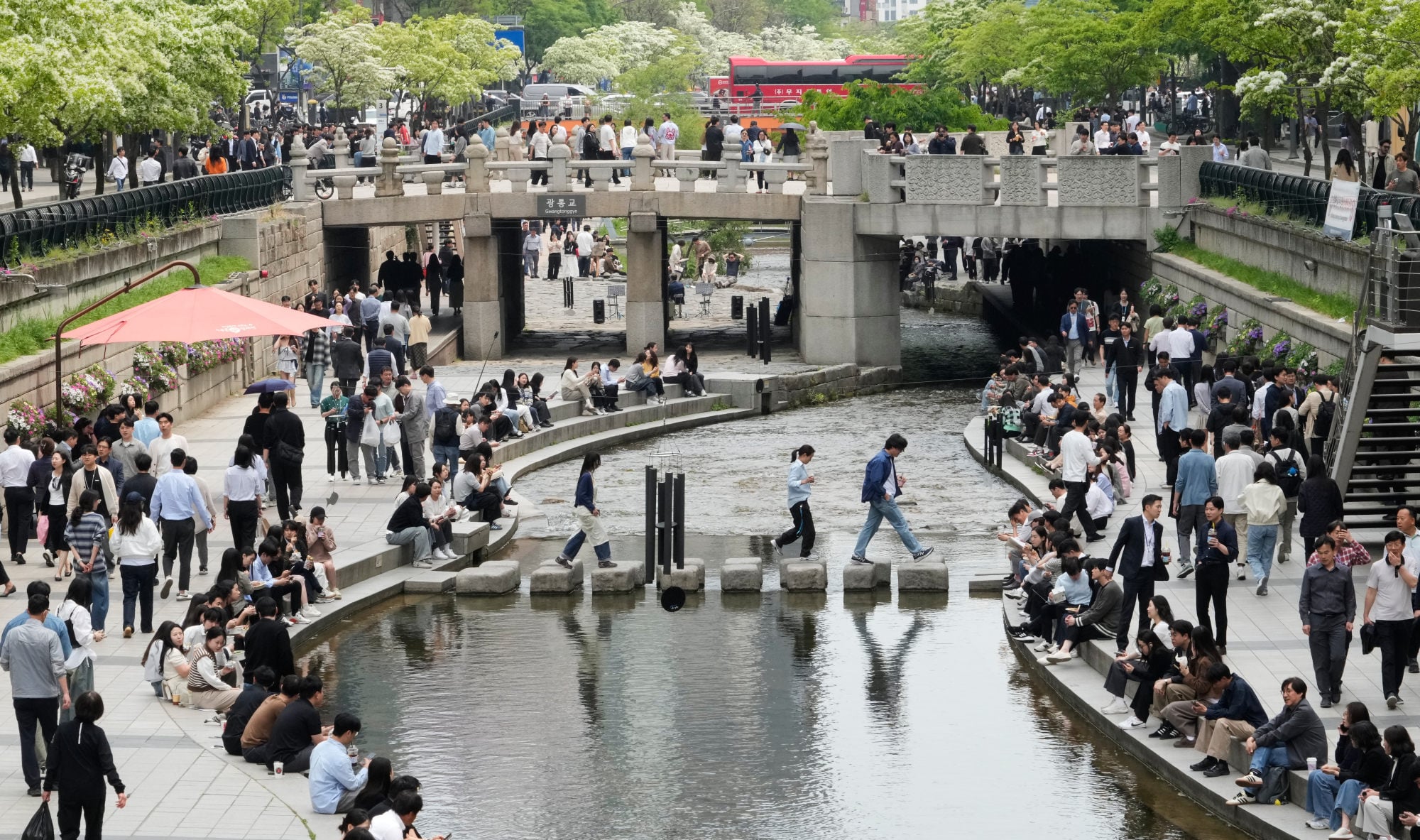
The financial impacts are also beginning to be experienced. Almost 98 percent of the 211,000 youth job losses in the country between July 2022 and July 2025 took place in sectors heavily affected by AI automation, as reported by the South Korean news agency AJP, referencing data from the Bank of Korea.
Job numbers in the professional, scientific, and technical services industry dropped by 105,000 in February compared to the previous year — the largest decrease since the current industry classification system began in 2013.
In the field of education, students from Seoul National University were discovered utilizing artificial intelligence to cheat during final examinations in December, leading to the cancellation of their grades. Yonsei University and Korea University have also implemented comparable measures against what students now openly refer to as “AI cheating”.
The introduction of AI-created textbooks in primary and secondary schools, supported by the government, faced significant backlash when educators highlighted numerous inaccuracies and expressed concerns about the extra work required to verify information and inspect devices before each class.
‘Healthy and humane’?
Although South Korea introduced its initial AI ethical guidelines as early as 2020, Jeon Chang-bae, chairman of the International Association for AI and Ethics, states that the country has continually placed more emphasis on progress than on ethical considerations.
“A key factor is that AI-related ethical issues have not yet appeared on the same noticeable level as in countries such as the US or China, but government bodies, scholars, businesses, and citizens must start discussing and studying solutions before more significant problems arise,” he stated.
Considering the extensive impact of AI, society must start examining the potential issues that may emerge from its broad application and develop solutions in advance … AI should not be regarded as just another standard technology. Its negative effects might have a more profound impact on people compared to earlier technologies.
A certain level of AI misuse and excessive reliance might eventually be impossible to prevent, as Kim suggests, emphasizing that instead of focusing on labeling these actions as problematic, communities should concentrate on the deeper issue of defining a meaningful human life in an era of artificial experiences.
Society might eventually decide that refusing specific types of AI-driven actions is actually better for a healthy and compassionate life,” he stated. “If a wide societal agreement forms around this concept, new kinds of civic learning and public understanding could arise. This could ultimately serve as a way to address these issues.
For the time being, the baseball goddess will remain seated—calm, radiant, and purely fictional. The audience will continue to watch.
More Articles from SCMP
Amidst turmoil, China demonstrates that stability can be achieved
What implications do China’s initiatives for a ‘comprehensive’ new AI regulation hold for the future of technology?
Indonesia responds following complaints from a Chinese business group about stricter regulations affecting investors
Perfecting the technique of a tourist’s short rest for a more fulfilling journey
This piece was first published in the South China Morning Post (www.scmp.com), a top news outlet covering China and Asia.
Copyright (c) 2026. South China Morning Post Publishers Ltd. All rights reserved.