The Artemis II Mission: A New Era of Lunar Exploration
A NASA (National Aeronautics and Space Administration) Space Launch System (SLS) rocket carrying the Orion capsule with four astronauts aboard launched at 6:35 p.m. Eastern Time on the 1st from the Kennedy Space Center in Florida, U.S. This crewed spacecraft will perform the Artemis II mission, a 10-day journey that will use the Moon’s gravity to fly by its far side and return to Earth.
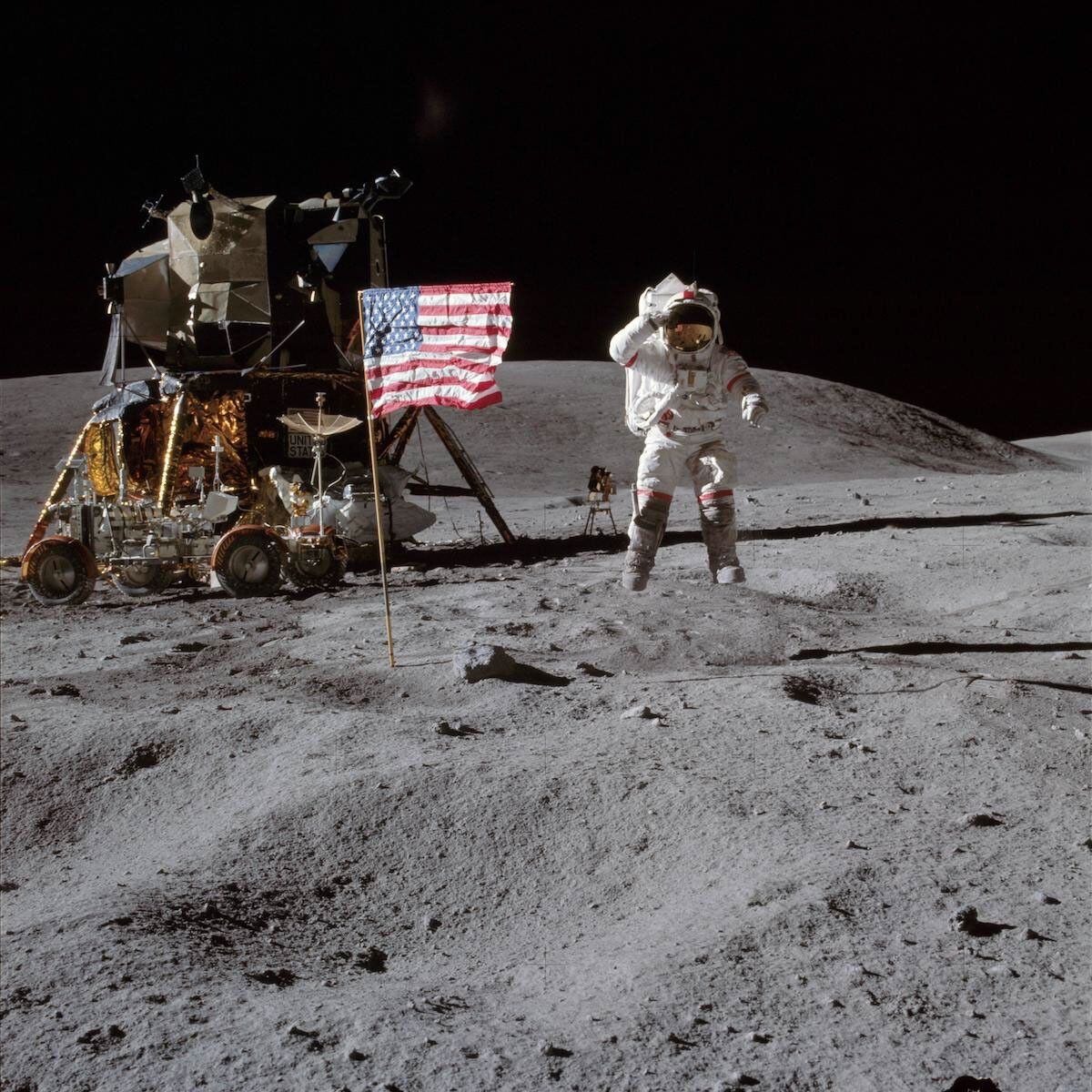
Prior to the Artemis II mission, in November 2022, NASA sent an uncrewed spacecraft with human-shaped dummies to the Moon’s orbit to measure the effects of cosmic radiation and acceleration on the human body over 25 days. However, NASA had already sent three astronauts in December 1968 to orbit the Moon 10 times over six days. During this mission, the first photograph of Earth rising from behind the Moon’s near side (Earthrise) was captured. Building on this experience, on July 20, 1969 (July 21 Korean time), two Apollo 11 astronauts became the first humans to set foot on the Moon. Notably, during the Apollo 8 mission 58 years ago, there was no separate uncrewed test flight to verify the lunar orbital environment using human-shaped dummies.
The Artemis III phase, which aims to land astronauts on the Moon’s surface, is currently scheduled for no earlier than 2027. Apollo’s arrival on the Moon took less than seven years after President John F. Kennedy declared in September 1962, “We choose to go to the Moon, to do this decade.” When NASA announced the Artemis program in May 2019, the target date for lunar arrival was 2024.
Humanity reached the Moon over half a century ago, so why is returning taking so long and proving so difficult? U.S. space experts say the objectives, technologies, safety standards, and budgets for space exploration are entirely different today compared to the past.
Lunar Landing Technology Development Halted for Half a Century
The last human lunar landing was Apollo 17 on December 11, 1972. Since then, crewed space exploration has been limited to the Low Earth Orbit (LEO) at 400 km above ground, home to the International Space Station (ISS). For over 50 years, technology development for lunar landings and lander construction was suspended and did not integrate with new materials or technologies. The engineers from that era have since retired.
After the Soviet Union’s uncrewed Luna 24 mission in 1976, it took 37 years until 2013 for another lunar landing, achieved by China’s uncrewed Chang’e 3 probe. Nico Detman, a lunar exploration expert at the European Space Agency (ESA), stated, “After Apollo, lunar landings fell out of interest, and no landers were developed for decades. Such technology cannot be easily learned from others.” Scott Pace, director of the Space Policy Institute at George Washington University, remarked, “We stopped and forgot. Just because you ran an Olympic marathon 50 years ago doesn’t mean you can do it again tomorrow.”
This is evidenced by the consecutive failures of major private lunar landers from Israel, Japan, and the U.S. since 2019.
A Completely Different Mission
The Artemis program is not Apollo 2.0. Apollo’s primary goal was to send humans to the Moon quickly and have them stay briefly. The longest surface stay during Apollo was 75 hours by Apollo 17.
In contrast, Artemis aims to establish a permanent base at the Moon’s south pole and use it as a staging point for future Mars missions. Apollo’s configuration was relatively simple, consisting of the Saturn V rocket, Command Module (the astronauts’ main living space), Lunar Module (lander), and Service Module (engine, life support, power supply).
Artemis, however, requires simultaneous development of multiple components: the SLS rocket, the Orion spacecraft (capable of housing four astronauts for 21 days), next-generation lunar exploration suits, commercial uncrewed landers to deliver base-building equipment, the Lunar Gateway (a space station for docking with Orion), and spacecraft to travel between the Gateway and the lunar surface. This complexity increases the likelihood of delays in any single component.
Speed Over Safety in the 1960s
In the 1960s, the U.S. engaged in a “survival”-driven space race with the Soviet Union. Reaching the Moon first was a powerful tool to attract newly independent nations and demonstrate ideological superiority. Both nations mobilized their entire national capabilities.
Apollo astronauts were fighter pilots who approached their missions like combat. Society then viewed risking unpredictable dangers as a necessary cost for victory. Apollo 8, the first crewed spacecraft to orbit the Moon, was not originally intended to go that far. The newly developed Saturn V rocket’s safety had not been fully verified, and the Service Module’s engine, which would enter and exit lunar orbit, had never been tested with human-shaped dummies. A single malfunction could have killed the crew, but the pressure to beat the Soviet Union was immense.
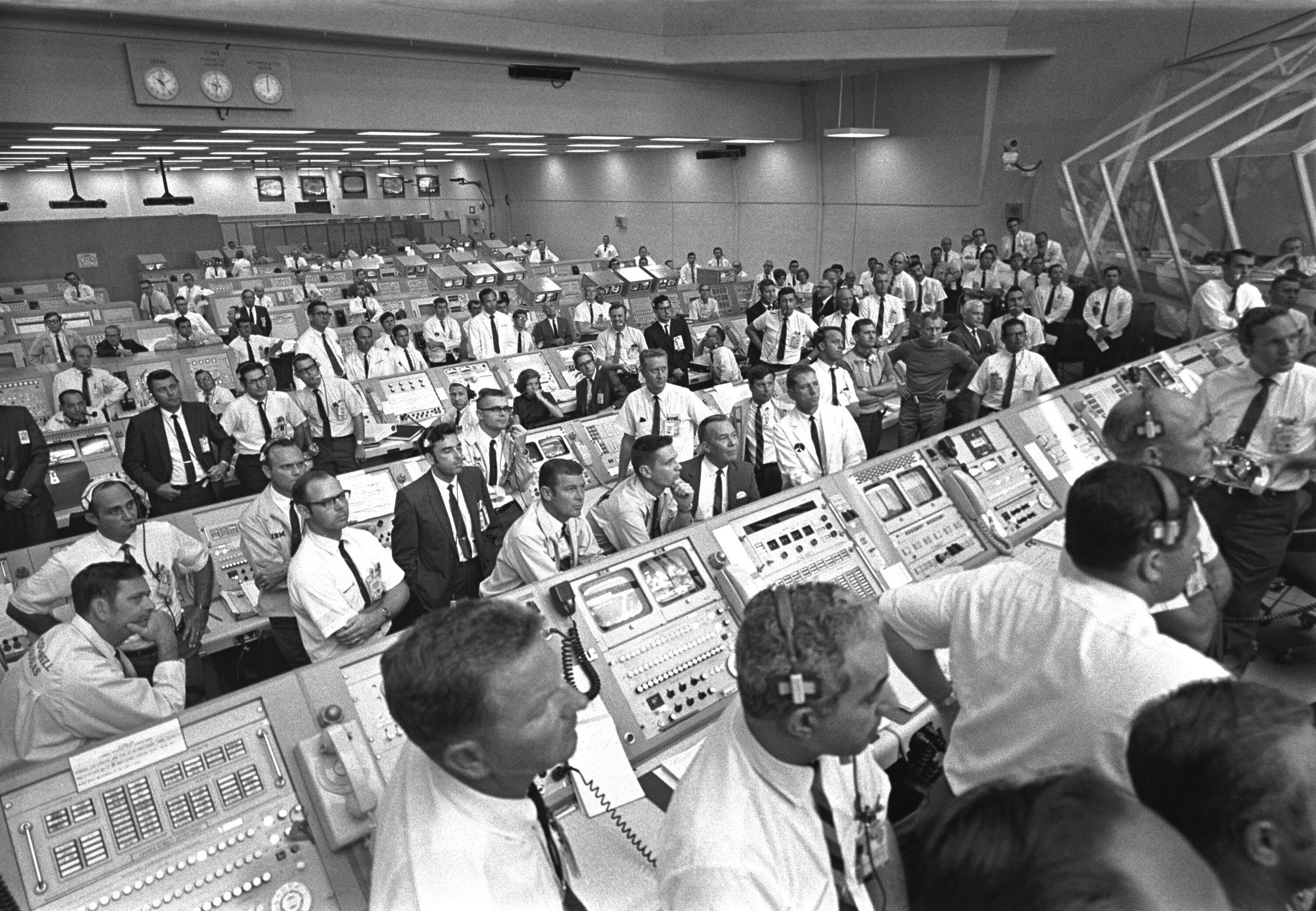
Even Apollo 11, the first lunar landing, was a series of adventures. Six minutes before landing, at 10.2 km above the Moon’s surface, the lander’s computer CPU suddenly reached 85% overload—a scenario never encountered in training. The crew had to choose between “proceed” or “abort” within seconds. Additionally, the intended landing site turned out to be a large crater and rocky terrain. Commander Neil Armstrong manually piloted the lander, but fuel was nearly depleted. If it had taken another 20 seconds, the lander might have crashed.
Today, safety standards are much higher, and societal attitudes toward risk have shifted. While more calculations and simulations are conducted than in the 1960s, any loss of life would significantly impact the project’s future. Furthermore, for international cooperation in scientific exploration, over 30 countries, including the European Space Agency, South Korea, the United Arab Emirates, Japan, and Canada, have joined the Artemis Accords. Decisions by Biden and Trump have shifted priorities, and coordination among nations has caused repeated delays.
Apollo Spent Over Three Times More Than Artemis
From 2012, when SLS development began, until last year, the Artemis program cost approximately 93 billion dollars (about 124 trillion Korean won). It is projected to exceed 105 billion dollars by 2028. The Apollo program cost 25.5 billion dollars, equivalent to over 320 billion dollars today—over three times Artemis’ current budget. Experts argue that reduced funding is more rational. John Logsdon of the Space Policy Institute at George Washington University stated, “There’s no justification to spend so much money unless it’s a war.” However, limited budgets inevitably slow the Artemis program’s progress.