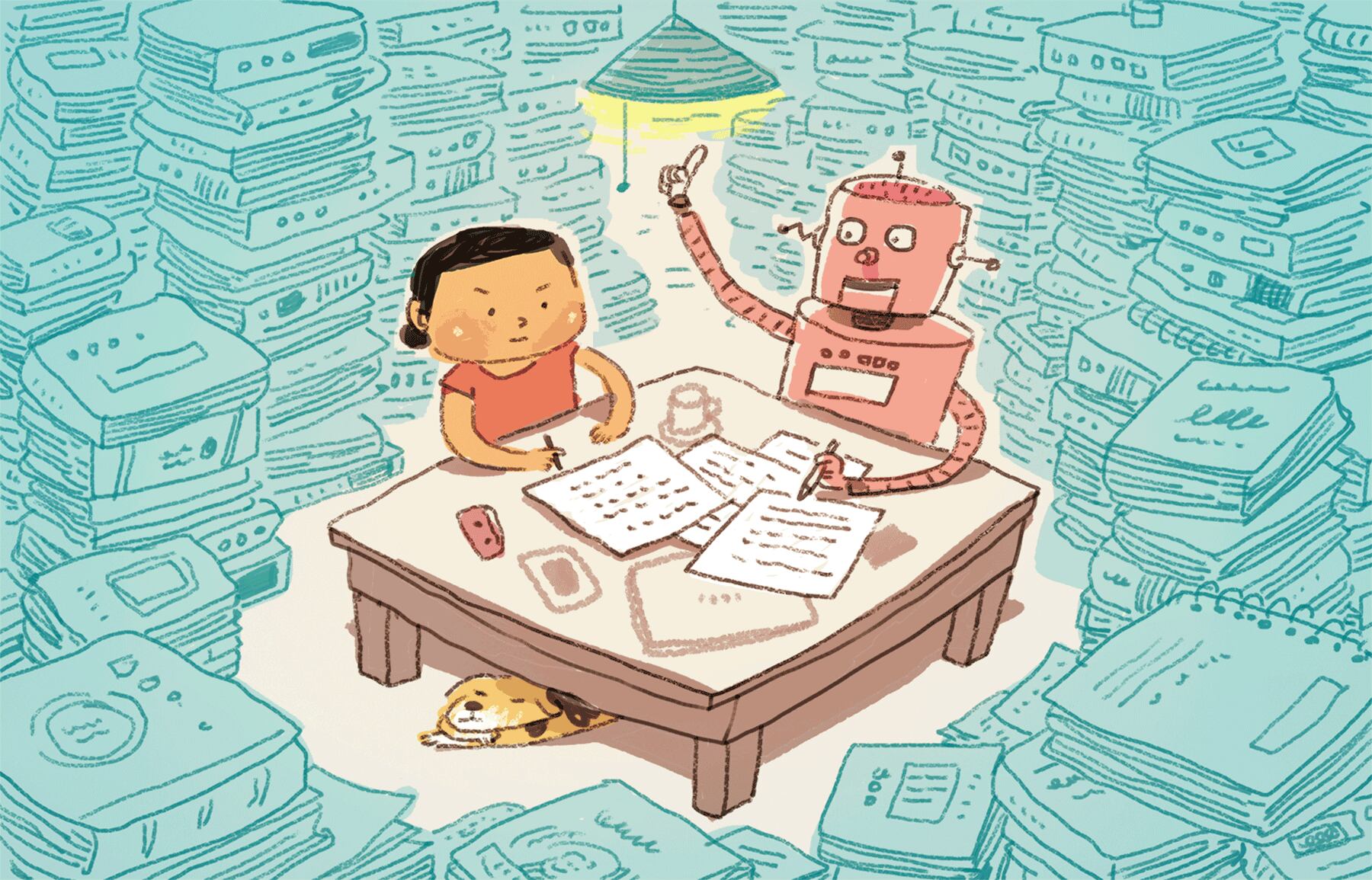
The Double-Edged Sword of AI in Professional Services: Promises and Perils
The integration of artificial intelligence into various professional sectors is rapidly transforming how businesses operate. While AI offers the allure of efficiency and cost reduction, a recent case highlights the critical need for human oversight and the potential pitfalls of over-reliance. In an unfair dismissal dispute brought before the Seoul Regional Labor Commission, a company’s submitted response, intended to counter the employee’s claim, contained significant errors and awkward phrasing, ultimately costing the company a substantial settlement.
The document, which was reportedly drafted by an AI-based consulting firm and submitted without thorough review, misused respectful forms of address for the claimant, referring to them in a manner inconsistent with standard legal terminology for an applicant in such proceedings. Beyond linguistic missteps, the AI’s output contained factual inaccuracies. Notably, it referenced past conversations from March of the same year to dispute the finalization of a labor contract that was demonstrably signed in June. This oversight underscores a common challenge with AI-generated content: while it can appear plausible to the uninitiated, discerning users and domain experts often identify critical flaws.
A labor attorney representing the applicant commented on the situation, suggesting that while outsourcing to AI is acceptable, the lack of proper review was the company’s undoing. The dispute concluded with the company agreeing to pay the applicant 15,000,000 Korean won.
This incident serves as a potent reminder of the limitations of current AI technology, particularly in fields demanding precision, nuanced understanding, and adherence to established protocols. In the realm of software development, a parallel concept exists with “vibe coding,” where AI can generate code based on a user’s general instructions. However, the subsequent “vibe debugging”—the process of fixing errors in AI-generated code—remains a complex and often time-consuming human task. The issue isn’t necessarily AI’s inability to produce functional-looking outputs, but rather the underlying mechanisms: AI might draw upon incorrect or outdated information, or it may integrate valid code snippets into inappropriate contexts, leading to subtle yet significant functional defects.
The Indispensable Human Element in a Future Shaped by AI
The notion that AI can fully replace human experts across all fields is, at present, a premature assertion. Renowned economist and Nobel laureate Joseph Stiglitz, a professor at Columbia University, recently articulated this sentiment, stating that while AI can serve as a valuable assistant, the expertise of human professionals remains essential. He analogized AI to a tool that might assist a plumber, but the plumber’s skills and judgment are still paramount.
This perspective holds true for a multitude of professions:
- Legal Professionals: Labor attorneys, lawyers, and legal consultants possess the critical thinking skills to interpret complex laws, build persuasive arguments, and navigate intricate legal procedures. AI can assist with research and document drafting, but strategic legal counsel requires human insight.
- Financial Experts: Accountants and financial advisors rely on a deep understanding of financial regulations, market dynamics, and client-specific needs. While AI can automate data analysis, it cannot replicate the nuanced advice and ethical considerations provided by human experts.
- Software Developers: Beyond “vibe coding,” developers are responsible for system architecture, creative problem-solving, and ensuring the security and scalability of software. AI can accelerate certain coding tasks, but human ingenuity is vital for innovation and robust system design.
- Healthcare Providers: Doctors and medical professionals combine scientific knowledge with empathy and diagnostic intuition. AI can aid in image analysis and data interpretation, but the patient-doctor relationship and complex diagnostic decision-making remain firmly in human hands.
The integration of AI should therefore be viewed as a collaborative effort, augmenting human capabilities rather than supplanting them entirely. The Seoul Labor Commission incident serves as a stark warning: unchecked AI deployment in sensitive professional contexts can lead to tangible negative consequences. As AI continues to evolve, the emphasis must remain on ensuring its responsible and ethical application, with human judgment and expertise at the forefront of decision-making processes. The future is likely one of human-AI synergy, where the strengths of both are leveraged to achieve greater outcomes, but only with diligent oversight and a clear understanding of AI’s current limitations.