Poland and Ukraine Face Deepening Tensions Over Historical Disputes
As Poland observes a day of remembrance for the victims of a Ukrainian nationalist military unit, there are growing concerns that it may cut off its neighbor from military aid. This comes as the war against Russia continues, raising questions about the future of Polish-Ukrainian relations.
The crisis between Poland and Ukraine has been escalating since Ukrainian President Volodymyr Zelenskyy granted the honorary title “Heroes of the UPA” to a military unit. The UPA stands for the Ukrainian Insurgent Army, which was responsible for the deaths of up to 100,000 Polish civilians during World War II. Poland is marking a national day of remembrance for these victims on Saturday.
Since Russia launched its full-scale invasion in 2022, Poland has provided Ukraine with extensive military support, including weapons and equipment. Until recently, military cooperation between the two neighboring countries had been widely accepted by all political parties and remained separate from domestic political disputes.
Lingering ‘Historical Issues’
However, recent events have brought historical tensions back into the spotlight. Poland’s far-right opposition is now criticizing the center-right government over the delivery of Patriot interceptor missiles to Ukraine. The opposition accuses pro-EU Prime Minister Donald Tusk of risking Poland’s own military defense.
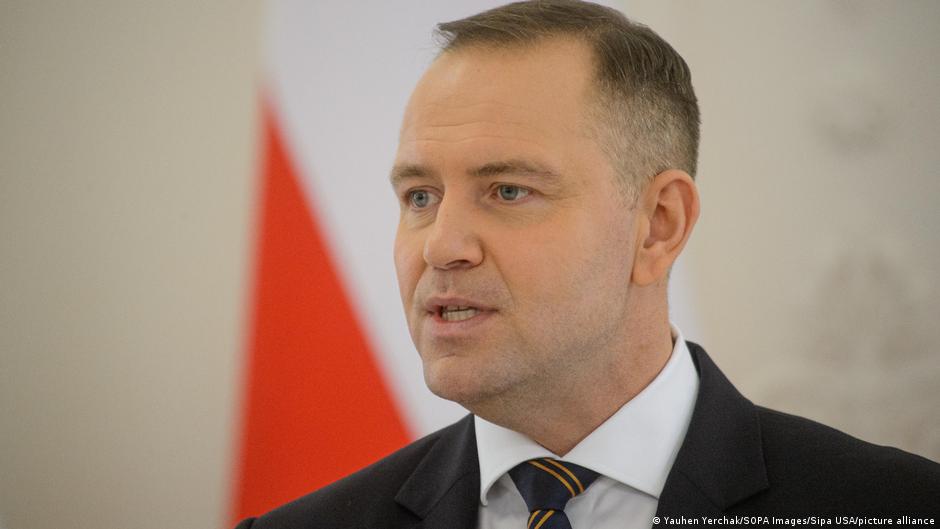
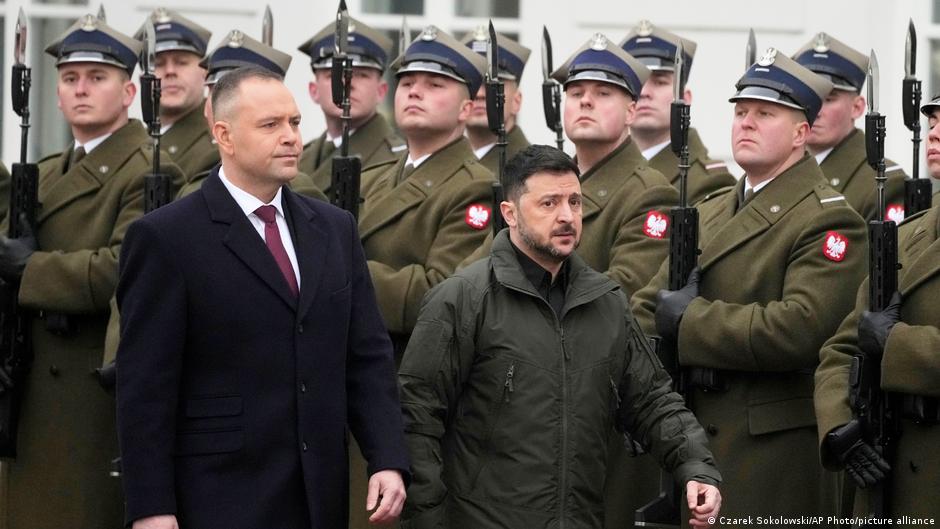
Polish President Karol Nawrocki and Zelenskyy attempted to resolve the crisis during the NATO summit in Ankara but were unsuccessful. “There has been a lot of tension in Polish-Ukrainian relations recently,” Nawrocki said after the meeting. He emphasized that the glorification of the UPA is “nonnegotiable” and expressed skepticism about Ukraine’s EU aspirations.
The dispute over the Patriot missiles was sparked by Krzysztof Bosak, leader of the ultranationalist National Movement. He claimed that the government handed over the missiles without informing the Sejm. Bosak argued that the weapons were essential for Poland’s defense against Russia and demanded an end to military aid for Ukraine.
‘Increasingly Confrontational Stance’
Former Deputy Foreign Affairs Minister Marcin Przydacz, who is now responsible for foreign policy in the president’s office, supported Bosak’s claims. He accused the government of prioritizing Ukraine over Poland’s interests. “Poles will now have to wait longer,” Przydacz said.
Przemyslaw Czarnek, a potential candidate for the Law and Justice party in the 2027 elections, criticized Ukraine for taking an increasingly confrontational stance. “Ukraine has not treated Poland like a partner for two years now,” he said.
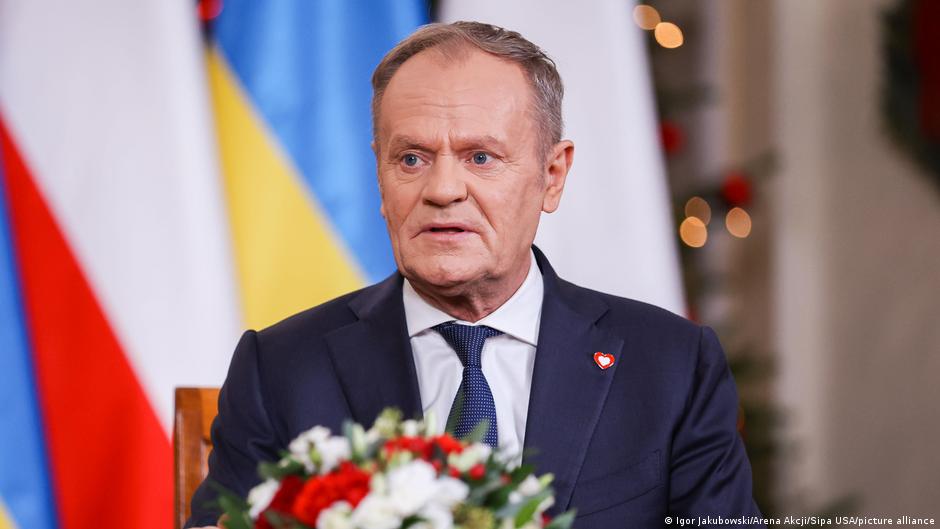
To address criticism from the opposition, the Tusk government took a risky step. Defense Minister Wladyslaw Kosiniak-Kamysz released previously secret data on the scale of Poland’s military aid since the war began. According to the data, Poland has spent 16.45 billion zloty (€3.8 billion/$4.35 billion) since Russia’s invasion, with most of the funds used during the PiS government in 2022-2023.
Was defense compromised? The decision to hand over PAC-3 interceptor missiles for Patriot systems was made at the request of NATO Secretary-General Mark Rutte and US forces commander Alexus Grynkewich. Kosiniak-Kamysz stated that Poland’s air defense was not compromised and that President Nawrocki had been informed in detail.
European Parliament’s Stance
The European Parliament recently adopted a resolution classifying Zelenskyy’s UPA honor as an unnecessary escalation in the dispute between Poland and Ukraine. Members called the honor incompatible with EU values but urged both countries to resume reconciliation efforts.
Nawrocki responded by stripping Zelenskyy of Poland’s highest award, the Order of the White Eagle. Zelenskyy returned the order and went further by having Ukraine’s parliament pass a law to establish a National Pantheon, which includes figures associated with the UPA. “No one will ever force us how to live and speak, whom to love, whom we should be grateful to and which heroes we should honor,” Zelenskyy said.
In Poland, July 11 is observed as an official day of remembrance for the Volhynia massacre, when the UPA attacked Polish-majority villages starting in February 1943. On July 11, 1943, known as “Bloody Sunday,” 99 locations were attacked.
Zelenskyy’s chief of staff, Kyrylo Budanov, expects tensions with Poland to increase around the anniversary. “This peak is certain to come soon,” he said. “July 11 marks the anniversary of the Volhynia tragedy. Information I have indicates that the Polish side is preparing actions that will lead to escalation.”