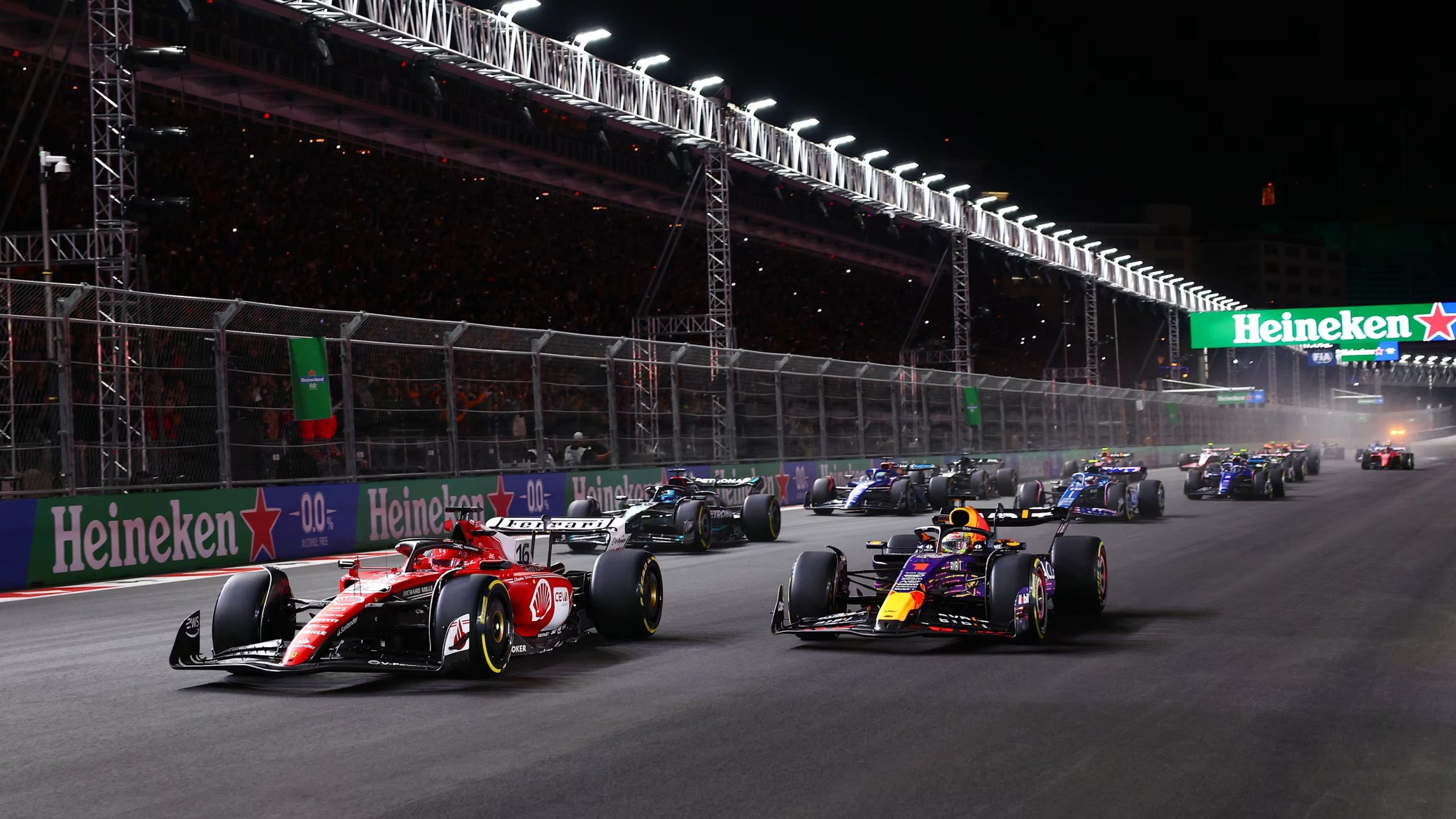
Formula 1 Accelerates Towards Mainstream American Sports Status
Formula One (F1), the pinnacle of motorsports, experienced a remarkable surge in popularity and global reach last year, a significant achievement coinciding with its 75th anniversary. The 2023 season saw an unprecedented turnout, with 19 out of 24 Grand Prix events completely selling out, drawing a record-breaking total attendance of nearly 6.7 million spectators. This success was mirrored in its digital footprint, with the global F1 fanbase expanding by an impressive 63% since 2018, reaching a total of 827 million enthusiasts. Adding to this momentum, the racing film ‘F1: The Movie’, featuring Brad Pitt, captivated audiences worldwide, earning an Oscar nomination and cementing its status as a landmark sports film.
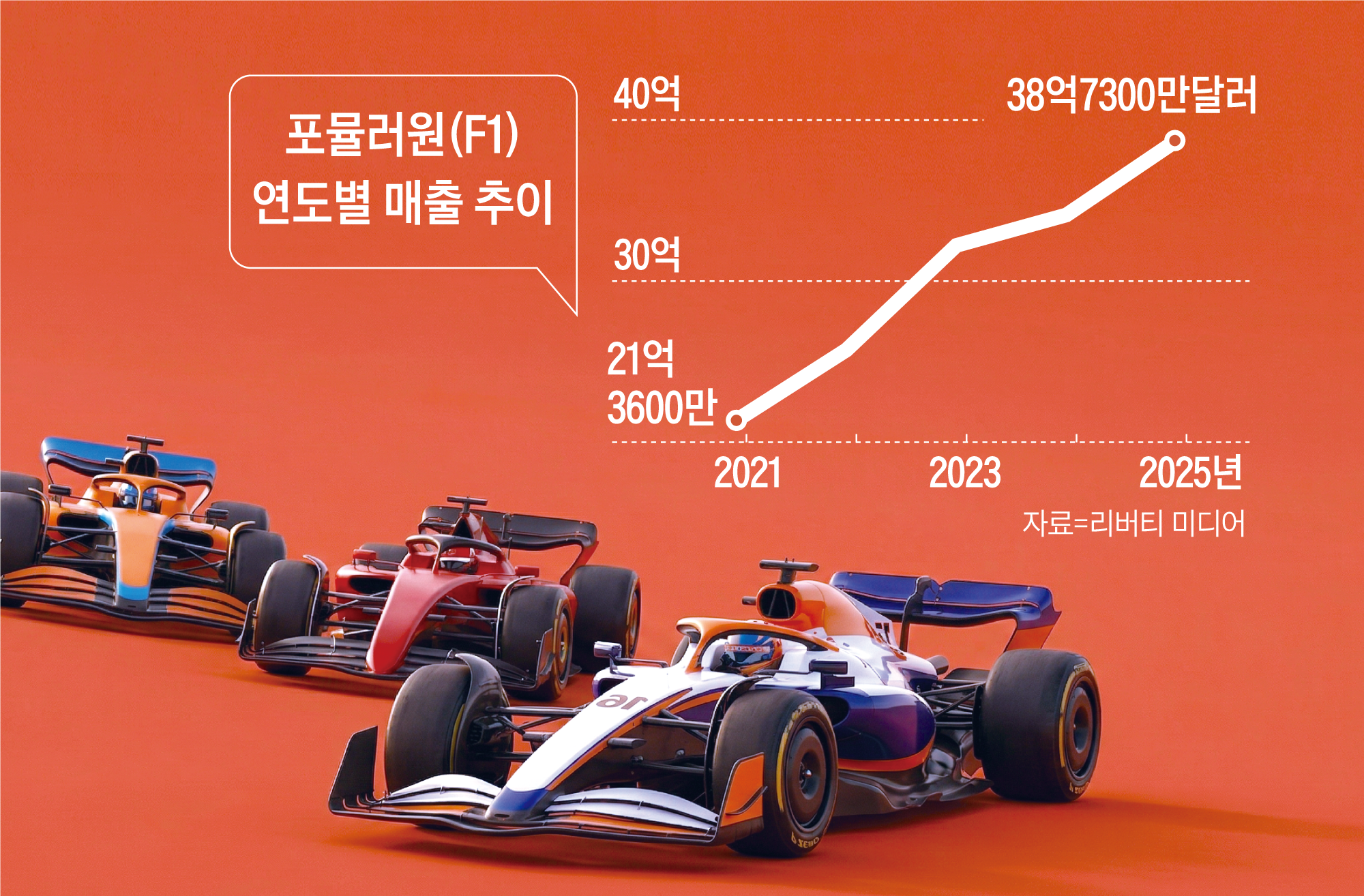
“Formula 1 has delivered exceptional results in recent years, significantly strengthening its presence in the United States while simultaneously broadening its international audience. The critical question now is whether F1 can sustain this fan growth within the American market, emulating the success seen by entities like the NFL, NBA, UFC, and the Premier League,” commented Adam Carley, president of global sports marketing firm IMG. With total sales reaching $3.9 billion (approximately 5.87 trillion Korean won) last year – marking five consecutive years of growth – F1 is actively strategizing to establish itself as a mainstream sport in the U.S. The sport’s proactive approach is evident in its bold changes leading up to the 2026 season, which commenced in Melbourne, Australia, on March 8th.
From European Roots to American Dominance: A Strategic Evolution
Originating in Europe, F1 historically struggled to gain traction as a mainstream sport in the United States, the world’s largest automotive market. However, a pivotal shift occurred during the COVID-19 pandemic. Netflix’s F1 documentary series, ‘Drive to Survive’, achieved widespread popularity, particularly among American Generation Z (born after 1997), drawing millions of new fans into the F1 ecosystem. This digital engagement has been complemented by strategic partnerships with global powerhouses, including Saudi Aramco, Saudi Arabia’s state-owned oil company, and LVMH Moët Hennessy Louis Vuitton, the world’s leading luxury goods conglomerate. Further underscoring its commitment to diverse collaborations, F1 partnered with Walt Disney to release its inaugural webtoon featuring iconic characters Mickey Mouse and Donald Duck. The number of F1’s global partners has dramatically increased from just four companies four years ago to ten today.
A Landmark Broadcast Deal and New Entrants
F1’s escalating influence in the U.S. market culminated in a bold move: a five-year exclusive broadcasting rights contract with Apple, valued at an astounding $700 million. This significant deal was heavily influenced by the success of ‘F1: The Movie’, a joint venture with Apple that generated over $600 million in worldwide box office revenue on an approximate $250 million investment. Previously, ESPN, a Disney-owned sports channel, held the U.S. broadcasting rights for F1. However, F1 recognized the immense strategic advantage of aligning with Apple, the world’s largest corporation, anticipating powerful synergy between Apple’s extensive app and hardware ecosystem and F1’s compelling content. Apple, in turn, identified F1’s substantial growth potential in the American market and sought to accelerate its expansion in live sports broadcasting, a sector where it perceived itself as trailing competitors.
This season also welcomes a new competitor to the grid: Cadillac, sponsored by American automaker General Motors (GM), bringing the total number of competing teams to eleven. This marks the first addition of a new team in ten years, since Haas joined in 2016. Forbes noted that “F1 will be able to further expand its presence in the U.S. market with Cadillac’s participation.” The United States will host three F1 Grand Prix events this season, a testament to the sport’s growing appeal. The recent surge in viewership and on-site attendance has led many to believe that this is the opportune moment for GM to make its debut on the F1 stage.
Greg Maffei, CEO of Liberty Media, the owner of F1, expressed his optimism: “The participation of major U.S. brands like Cadillac and GM’s future supply of power units will inject new value and interest into F1 in the American market.” While Cadillac will initially utilize Ferrari engines, the team has a ten-year plan to transition into a full works team, independently supplying its own vehicles, engines, and power units.
Technical Innovations and a Greener Future
Beyond commercial and strategic expansions, the 2024 F1 season also features significant technical modifications aimed at enhancing performance and efficiency. The cars have undergone a substantial weight reduction, with the minimum weight lowered by 30 kg to 768 kg. Furthermore, the width and wheelbase of the machines have been shortened by 10 cm and 20 cm, respectively. These adjustments in chassis dimensions are designed to reduce aerodynamic drag, thereby improving overall driving efficiency and increasing speed.
Engine regulations have also seen a notable shift. The previous power unit configuration, which comprised 80% internal combustion engines and 20% electric motors, has been recalibrated to a 50:50 split. This evolution reflects the automotive industry’s accelerated transition towards electric vehicles. F1 is thus transforming into a platform where teams not only compete on raw power but also on their prowess in energy efficiency and sophisticated power management capabilities, signaling a commitment to a more sustainable future for motorsport.