Cultural Exchanges Highlight China’s Role in Preserving Global Heritage
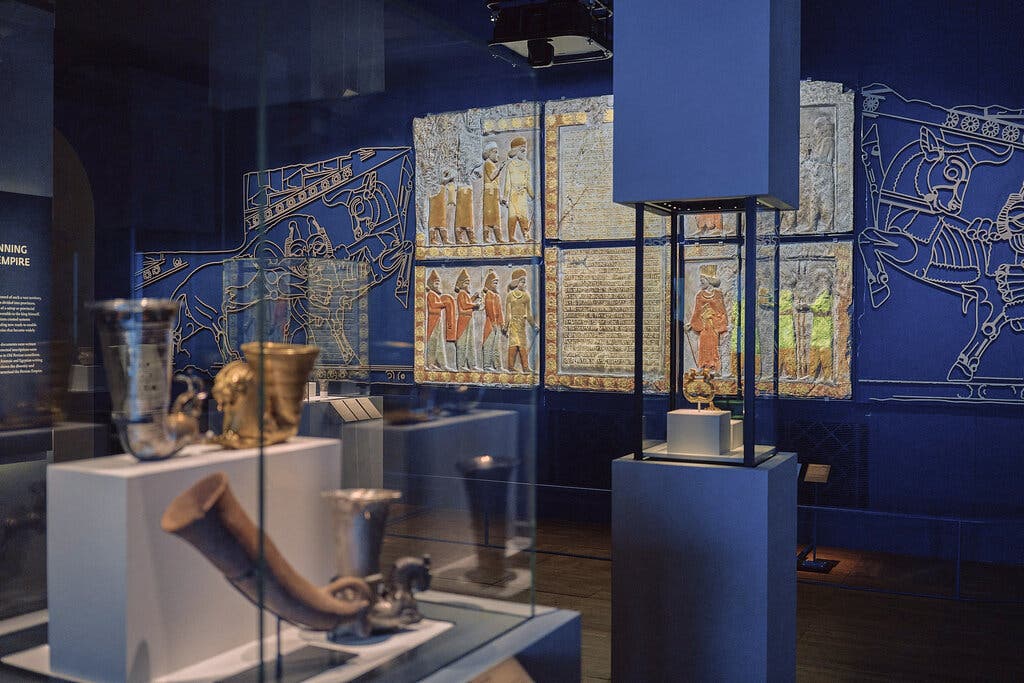
Artifacts from Iran, including intricate Persian carpets and delicate glassware, have found a new home in the Inner Mongolia Museum in Hohhot, northern China. These items, displayed since December, have drawn increasing attention following the ongoing conflict in the Middle East. The exhibition serves as a testament to China’s growing role as a safe haven for global heritage when it is most at risk.
The relics on display are part of a broader tour that has already visited Guangzhou and Nanjing before arriving in Hohhot. This exhibition showcases the art and culture of ancient Persia, a region once central to trade and cultural exchange along the Silk Road. Originally scheduled to close by the end of March, the exhibition was extended by a week to coincide with the Ching Ming Festival holiday.
Chinese social media users have shared images of the artefacts, with many encouraging others to visit the exhibition. One user remarked, “With the Golestan Palace now damaged, it feels even more urgent to visit rare exhibitions like this while we still can.” However, it remains uncertain whether the collection, which includes ceramics, metalwork, glassware, and miniature paintings, will travel to other Chinese cities.
A staff member at the Inner Mongolia Museum mentioned that it is unlikely the exhibition will be extended further, as the cooperation agreement had already expired. Meanwhile, Iranian authorities reported that over 130 historical sites have been damaged in attacks by the US and Israel. In March, Iran’s culture ministry also stated that 56 museums and monuments were affected by the strikes.
The Chinese foreign ministry expressed concern over the damage to Iranian cultural sites and urged all parties, particularly the US and Israel, to cease military actions and resume dialogue to protect irreplaceable cultural heritage. “World cultural heritage belongs to all humanity,” said the ministry’s spokeswoman Mao Ning.
In addition to the exhibition in Hohhot, Iranian artefacts are also on display in Shanghai at the Museum of Art Pudong as part of an exhibition featuring treasures from the Louvre in Paris. Earlier in 2024, Beijing’s Palace Museum hosted hundreds of Iranian and Saudi Arabian artefacts rarely seen in the West due to sanctions. The exhibition brought together 216 cultural relics collected by multiple museums in Iran.
Educational Value and Cultural Preservation
Fan Hongda, director of the China-Middle East Centre at Shaoxing University, highlighted the educational value of such exhibitions and their contribution to global preservation efforts. He noted that global understanding of the Middle East is often shaped by media coverage that focuses on conflict and war, leading to an incomplete picture of the region.
However, Fan observed a growing interest in the Middle East among certain groups in China, with cultural study trips to countries like Iran and Israel becoming increasingly common. He emphasized that cultural exchanges between China and Middle Eastern countries are considered low-hanging fruit for bilateral cooperation.
“Compared with political or military cooperation, cultural exchanges are often easier to advance. Both China and Middle Eastern countries have a rich history and there are many natural points of dialogue,” he said. “Cultural exchanges provide a foundation that can engage the public, foster a more objective understanding of each other, and stimulate interest. Once this mutual understanding is established, pursuing cooperation in other areas could become relatively simpler.”
Global Exhibitions and Cultural Collaboration
China has long been a destination for cultural exhibitions, especially when preservation efforts in the home countries face significant challenges. For instance, 231 sets of national treasures from Afghanistan have been touring globally since 2006, visiting 13 countries across Europe, Asia, and the Americas. These collections arrived at Beijing’s Palace Museum in early 2017, marking their first official presentation to Chinese museum-goers.
In 2021, an exhibition of 195 Syrian artefacts began a three-year tour of China, visiting over 10 cities and attracting more than one million visitors. These exhibitions underscore the importance of international collaboration in preserving cultural heritage.
China and Iran signed a memorandum of understanding in early 2023 to establish an institutional framework for broad cooperation in cultural heritage. The agreement aimed to deepen collaboration in areas such as joint archaeological projects, the conservation and restoration of cultural relics, and exhibition exchanges.
As these cultural exchanges continue to flourish, they not only preserve global heritage but also promote mutual understanding and cooperation between nations.