INEC Faces Accusations of Bias and Political Interference
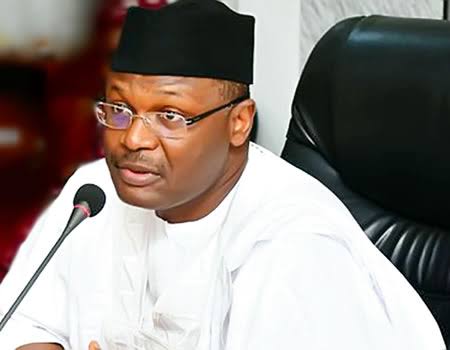
The Independent National Electoral Commission (INEC) has come under intense scrutiny following its decision not to recognize the David Mark-led National Working Committee (NWC) of the African Democratic Congress (ADC). This move has sparked widespread criticism from opposition political parties, civil society organizations (CSOs), and various groups and individuals who accuse INEC of acting as an agent of the ruling party in an attempt to hinder other parties’ participation in the 2027 elections. They have also called for the resignation of INEC Chairman Professor Joash Amupitan.
Allegations of Bias and Unfair Treatment
Soon after his appointment as INEC Chairman, Muslim Rights Concern (MURIC) and others demanded the removal of Professor Joash Amupitan, with many groups filing petitions to the National Assembly in early 2026. These groups alleged that Prof. Amupitan is biased against Muslims due to his authorship of a 2020 legal brief commissioned by Christian groups, which described violence in Nigeria as a ‘coordinated anti-Christian campaign’.
The ADC stated that the call for action became imperative as the commission’s chairman and commissioners “have taken side with the ruling All Progressives Congress (APC) and cannot be trusted to conduct the 2027 general elections.” Addressing journalists in Abuja on Thursday, the ADC national chairman, Senator David Mark, said they no longer have confidence in INEC.
Flanked by other leaders of the party, Mark said, “We demand the immediate resignation or sack of the INEC Chairman, Professor Amupitan, and all the national commissioners. We no longer have confidence in them. We are convinced that they are incapable of conducting any credible election.”
INEC’s Response to Criticism
INEC has rejected calls for the removal of its Chairman, describing such demands as unconstitutional and a threat to the independence of the electoral body. In a press release issued Thursday in Abuja and signed by its Chief Press Secretary, Adedayo Oketola, INEC stated that calls by some political actors for the chairman’s removal over the commission’s decision to comply with a Court of Appeal judgment were “a distraction” and “a direct assault on the independence of the nation’s electoral umpire.”
The commission emphasized that its actions were guided by the Constitution, noting that “the appointment, tenure, and removal of the Chairman and National Commissioners are strictly governed by Section 157 of the 1999 Constitution (as amended).” INEC explained that its decision to comply with the Court of Appeal judgment in the ongoing ADC leadership dispute was to avoid a repeat of past situations where elected officials were removed due to disobedience of court orders.
Legal Disputes and Party Leadership
Senator Mark explained that what INEC tried to do was the interpretation of what constitutes status quo ante bellum, which the Court of Appeal directed should be maintained, adding that from all authoritative counsel at their disposal, there is no legal interpretation or precedent that could possibly lead to the outcome that INEC seeks to foist on the party.
The ADC chairman accused INEC of pretending to be confused as to what constitutes the status quo ante bellum, saying “If this was so, under the circumstances, what one would have expected was for INEC to approach the Court of Appeal to request a judicial interpretation of what truly represents the status quo under the circumstances. But it did not do this.”
Security Measures and Protests
Over 20 patrol vehicles were deployed as ADC supporters staged protests outside INEC headquarters in Abuja. The security agencies maintained a heavy presence before, during, and after the protest. Our correspondent observed that more than 20 patrol Hilux vehicles belonging to the police, Nigeria Security and Civil Defence Corps (NSCDC), Nigeria Army, immigration, and the Department of State Services (DSS) were stationed along access roads leading to the commission’s headquarters.
Supporters of a faction of the party, led by Nafiu Bala, staged a protest demanding his recognition as the party’s National Chairman. The protesters carried placards with inscriptions such as “Obey the Court,” “INEC must recognize Nafiu Bala as Chairman,” and “No to impunity.”
Calls for Accountability and Neutrality
Legal experts and political figures have raised concerns about INEC’s actions. Clement Nwankwo, Executive Director of Legal and Policy Advocacy Centre, said INEC’s de-recognition of ADC leadership under the guise of obeying a court order raises serious red flags. He emphasized that INEC must remain neutral or risk undermining itself and the credibility of the 2027 elections.
Abeni Mohammed (SAN) added that public perception suggests possible external influence on the electoral body. He argued that the perception from Nigerians now, not just some of us lawyers, is that INEC is being teleguided to ensure there is no viable, strong opposition party to challenge the APC in next year’s election.
Legal Perspectives and Institutional Concerns
A Kano-based constitutional lawyer, Barrister Umar Usman Danbaito, said by law, it is illegal for anyone to take internal party disputes to court, stressing that both litigants and their lawyers risk heavy penalties under the Electoral Act. He emphasized that no individual or group has the legal right to render a political party leaderless through court action.
The PDP also criticized INEC for the decision, warning that no individual or institution should stretch the patience of Nigerians beyond its present bounds. Comrade Ini Ememobong, National Publicity Secretary of the PDP, accused the electoral umpire of partisanship, adding that democracy is at risk in Nigeria and that INEC and other national institutions must be careful.
Nationwide Protests and Demands for Change
The Obidient Movement called for the resignation of INEC Chairman and declared a nationwide protest over the delisting of the David Mark-led executives of the ADC. Yunusa Tanko, national coordinator of the Obidient Movement, said the group would commence a nationwide protest tagged #OccupyINEC. The group alleged that INEC, which should stand as an impartial guardian of the people’s will, is increasingly perceived as compromised under the present administration.
ADC Proceeds with Its Plans
National publicity secretary of the African Democratic Congress (ADC), Bolaji Abdullahi, said the party will go ahead with its congresses and convention despite the position of INEC on its leadership dispute. Abdullahi spoke on Thursday during an appearance on Arise TV, stating that the party had already notified INEC of its planned congresses and convention.
Final Thoughts and Reactions
Professor Chidi Odinkalu, former chairman of the National Human Rights Commission (NHRC), emphasized that it should be evident to a professor of law and #SAN that it is not the business of @inecnigeria to interpret the decision of the Court of Appeal. He urged those willing to enable the situation to make peace with it or dare it, highlighting the stakes in #NigeriaDecides2027.
The Conference of Nigeria Political Parties (CNPP) expressed concern over INEC’s decision, saying it has further exacerbated the already fragile state of Nigeria’s multiparty democracy. Deputy National Publicity Secretary of CNPP, Comrade James Ezema, warned that INEC’s actions appear to be compounding the crisis and called for reassessment of recent actions.
The All Progressives Congress (APC) backed the de-recognition of the leadership of the African Democratic Congress (ADC), claiming the David Mark-led executive hijacked the party. Felix Morka, APC national publicity secretary, described the legal battles involving the Mark-led ADC as self-inflicted and accused the faction of disregarding the party’s constitution.