Breaking Down Walls: An Ancient Luhya Ritual for Unusual Deaths
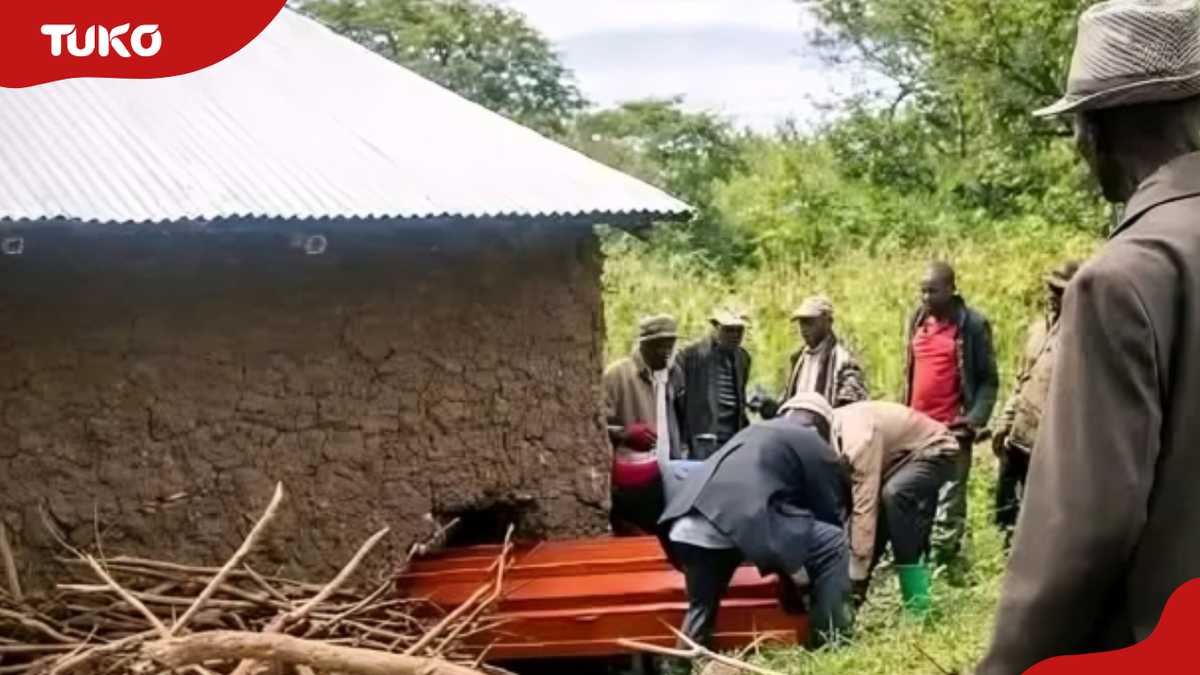
In certain regions of Western Kenya, funeral rites can take a dramatically unexpected turn, involving the symbolic breaking of a house wall to carry a coffin out. This solemn tradition, often overseen by community elders, is deeply rooted in the Luhya community’s beliefs about protecting the living from lingering spirits. This practice, reserved for deaths considered unusual or taboo, offers a fascinating glimpse into a culture that navigates the boundary between the physical and spiritual realms.
Understanding the “Unnatural” Death
Death is a universal certainty, but within the Luhya community, certain circumstances surrounding a person’s passing are deemed “unnatural” or “taboo” according to societal norms. When a death occurs under such conditions, the conventional exit—the doorway—is deemed insufficient. Instead, a section of the house wall is deliberately breached.
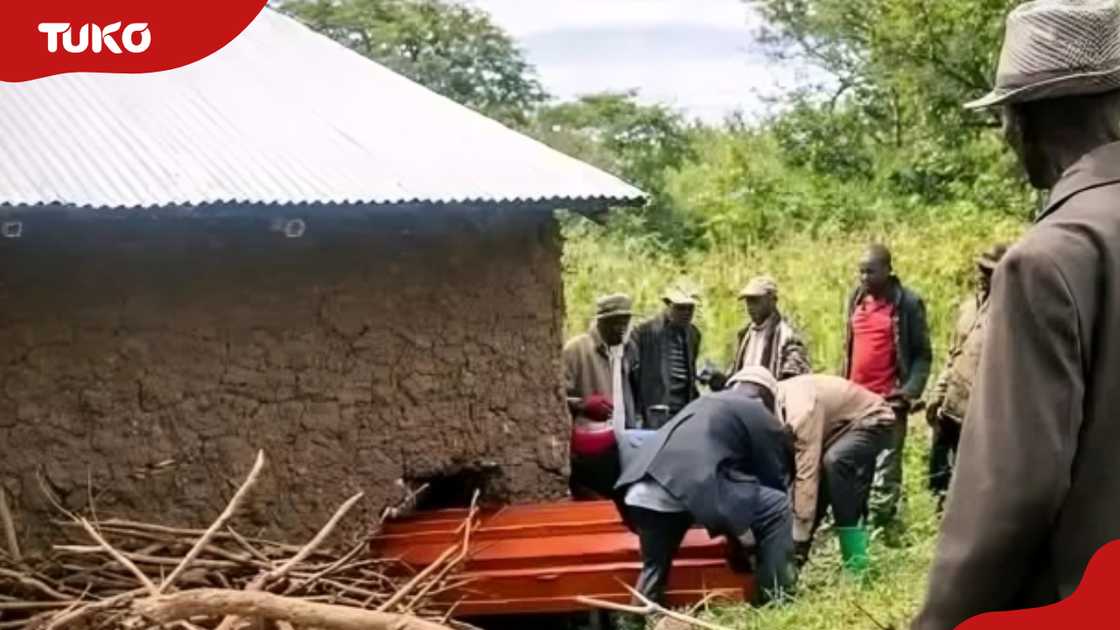
The act of passing a coffin through this newly created opening is not an expression of disrespect. Rather, it is a profound symbolic gesture intended to safeguard the living from what the community believes might follow the deceased. Among Luhya sub-tribes, including the Bukusu, Tachoni, and Kabras, this ritual signifies a death that carries a sense of unease, whether it be sudden, violent, or socially complicated. It transcends the mere act of burial, focusing instead on the management of the unseen forces believed to be at play.
The Symbolic Significance of a Broken Wall
The core tenet behind this practice is the belief that certain deaths disrupt the natural order so significantly that the spirit of the departed may remain, restless or disoriented. The fear is that if the spirit were to exit through the standard doorway, the same passage used daily by the living, it might find a way to return. To prevent this, a new, unfamiliar path is created.
“The wall is broken. The exit is unfamiliar. And symbolically, the spirit is denied a return route since the exit is sealed shortly after,” explains Herman Kamariki. This deliberate act of creating an unusual exit aims to sever any potential spiritual connection that could affect the living.
Instances Warranting the Ritual
The need for this ritual arises when the grief and circumstances surrounding a death deviate from the expected trajectory. Several specific scenarios often trigger this practice:
- Sudden or Unexplained Demise: Individuals who die suddenly, without prior illness or apparent cause, are often subjects of this ritual. The abruptness of their departure leaves a void of understanding that the community seeks to address spiritually.
- Victims of Violence: Deaths resulting from violence or conflict are also considered unnatural. The trauma and disruption associated with such an end are believed to leave a potent spiritual residue that requires careful management.
- Deaths Under Unclear Circumstances: When the exact cause or context of a death remains ambiguous, leading to lingering questions and unease, the broken-wall ritual may be employed.
- Parent Dying in a Child’s Home: A significant disruption to the natural order occurs when a parent dies in the homestead of their child, regardless of whether the child is male or female. Traditionally, parents are expected to pass on within their own homes, surrounded by their established authority and lineage. A parent dying in their child’s home is seen as a reversal of roles and a disruption that must be ritually corrected. This is why, if a parent falls seriously ill while visiting a child, they are often advised to return to their own home for treatment.
- Relationship Complications and Illicit Affairs: Complex interpersonal dynamics can also necessitate this ritual. For instance, if a man takes over the home of a widow after her husband’s death, and he is considered an “illegitimate” occupant of the house, a death within that home might trigger the ritual. Similarly, if a secret lover dies in the home of a married woman, the death is fraught not only with grief but also with social tension, secrecy, and the perception of wrongdoing, making the ritual appropriate.
- Unfulfilled Social Roles: The death of an adult who has not married or had children, and thus has not left a discernible “mark” on society in the traditional sense, can also be treated as incomplete. This perceived incompleteness may lead to the application of this ritual.
Additional Rituals and Community Roles
In some Luhya communities, further rites may accompany the broken-wall ceremony. These can include the controversial practice of sewing thorns into the body of the deceased, symbolizing the pain or unfulfilled expectations of a life that did not align with expected social roles.
The responsibility for these complex rituals does not rest solely with the immediate family. Maternal uncles often play a crucial role, providing a layer of cultural authority and detachment. Their involvement ensures that the process is handled with a degree of ritualistic integrity, acting as a buffer between the raw grief of the family and the demands of tradition.
Once the coffin has been removed through the breached wall, the house itself is irrevocably altered. The opening is swiftly sealed, or in some cases, the entire structure may be abandoned. What was once a dwelling becomes a site marked by rupture, both physically and spiritually.
Modern Interpretations and Fading Traditions
As modernization spreads, some of these deeply ingrained rituals are gradually fading as communities adopt new beliefs and practices. However, the underlying sentiment of respecting the spiritual balance between the living and the dead persists.
The tension between tradition and modernity was highlighted during the funeral of politician Cyrus Jirongo. A debate arose between Luhya elders who advocated for traditional rituals due to the controversial nature of his death, and former MP Fred Gumo, who chaired the funeral committee. Gumo argued against the proposed rituals, deeming them outdated and potentially distressing to the grieving family, urging for order and dignity to be maintained.
A Language of Care and Continuity
To those unfamiliar with the practice, the act of breaking a house wall for a funeral may appear startling or unsettling. However, within these communities, it is understood as a language of care, caution, and continuity. It reflects a worldview where life and death are not seen as separate entities but as deeply interconnected. In this perspective, the living have a responsibility to actively negotiate their safety and well-being with the unseen forces that shape their existence.
Therefore, when a wall is broken, it is more than just an act of demolition. It is a final, powerful message—a boundary drawn between two worlds, accompanied by the quiet hope of a family that, this time, the separation will hold, ensuring peace for both the living and the departed.