A Unique Perspective on Family and Tradition
In Kathmandu, on July 8, a film titled “Left-Handed Girl” captivates audiences with its intricate blend of visual poetry, family dynamics, and social realism. The story centers around I-Jing (Nina Ye), whose grandfather tells her, “Left is the devil’s hand,” as she grips her spoon with her left hand at the dinner table. This simple superstition becomes a significant element in the narrative, shaping the young girl’s perception of herself and her world.
This belief initially appears to be an insignificant detail within a family that is rebuilding itself in a new city. However, over time, it transforms into a private mythology that deeply affects I-Jing’s psychological development. Shih-Ching Tsou, who directed this film after years of working with Sean Baker on projects like ‘Take Out’, ‘Florida Project’, and ‘Red Rocket’, skillfully captures the tender and cruel aspects of family life, traditions, and love.
Emotional Depth and Character Complexity
The screenplay of “Left-Handed Girl” offers enough space and patience for each character to develop their emotional arc. Tsou and Baker avoid reducing characters to simplistic roles, ensuring that the grandfather is not portrayed as a villain and the mother is not elevated to a saint. This refusal to simplify anyone adds emotional honesty to the film.
The story follows Shu-fen (Janel Tsai), a single mother raising her two daughters, I-Jing and I-Ann. The film explores the complexities of life from childhood to adulthood, capturing the in-between moments. As I-Jing roams around her mother’s night market stall, her beliefs are significantly altered by her grandfather’s words, leading her to believe that her left hand is indeed associated with the devil. This belief leads her to shoplift using her left hand, making it responsible for her wrongdoings.
Cinematography and Visual Language
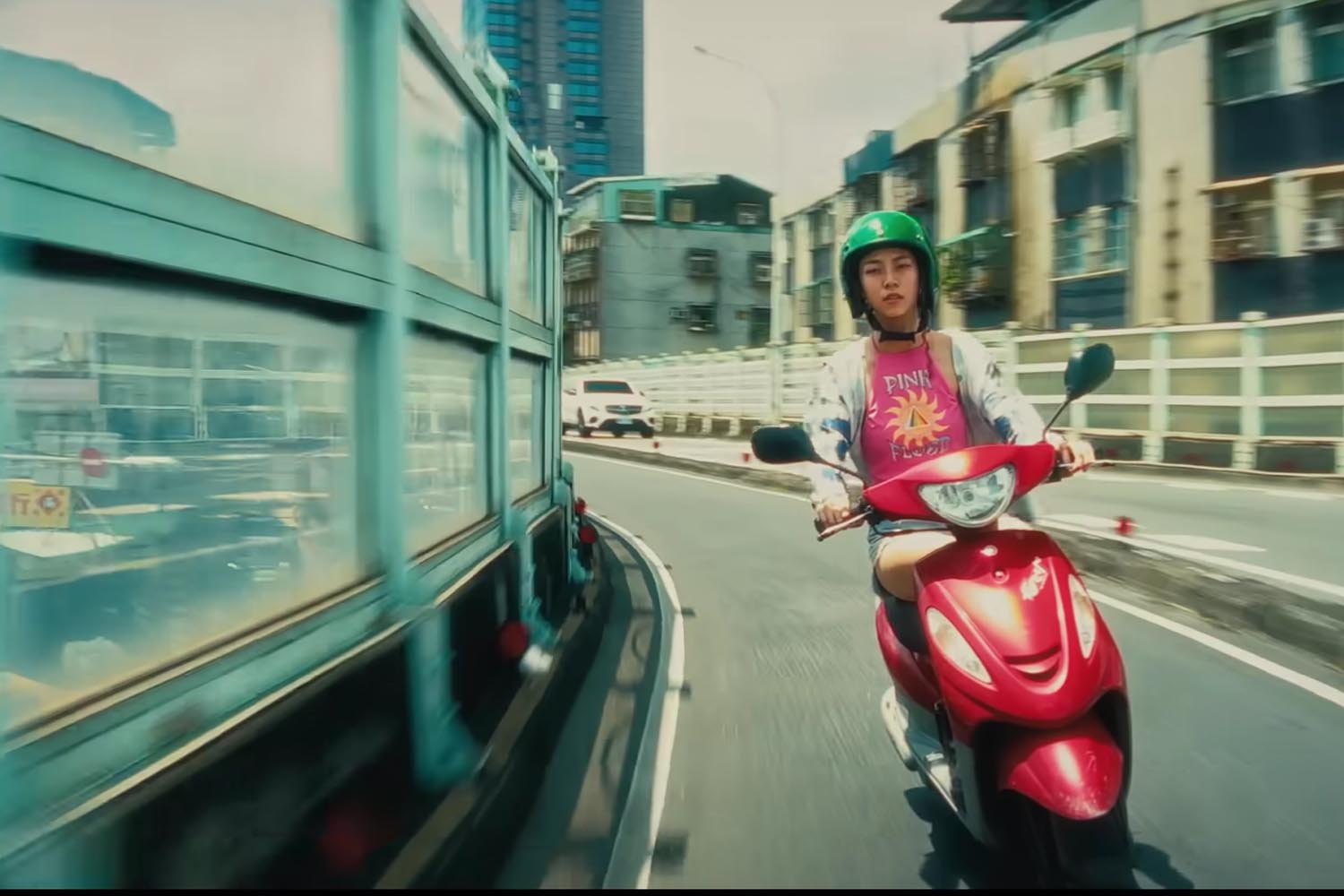
Shot entirely on an iPhone, the film adopts an intimate visual language that alternates between handheld camerawork and composed static shots. The camera frequently trails behind I-Jing, capturing the world from her perspective as she wanders through the crowded night market with childlike curiosity. Instead of striving for polished perfection, the iPhone cinematography embraces the noise of the city, even through the bright red, blue, and green lights.
Shu-fen, a subdued character navigating the market’s corner and her marital disputes, embodies resilience. Her everyday labor becomes a portrait of survival. At times, she is presented as the only refuge for her daughters, while at other times, her flawed supervision is overshadowed by the upbringing of I-Jing and her older sister I-Ann.
Character Development and Performances
I-Ann (Ma Shih-yuan), despite her intimidating exterior, is burdened by her own struggles. Beneath her guarded demeanor lies a teenager searching for stability and affection. Throughout the scenes, we learn that I-Ann, now a high school dropout, was once a prominent, inspirational figure at her school, earning top grades.
The performances feel exceptionally natural, making the film’s casting one of its notable strengths. Each actor inhabits their role with ease, particularly the young performers who bring sincerity and authenticity to even the simplest exchanges.
Narrative Rhythm and Climax
While the opening scenes initially feel rushed, the film gradually settles into a patient rhythm, immersing itself in the family’s everyday routines. The climax is introduced rather conventionally, bringing the family’s long-simmering tensions to the surface during a gathering. However, instead of relying solely on dramatic confrontation, Tsou uses the moment to expose each character’s vulnerabilities and grievances.
Every character is caught between duty and loneliness, and the director’s trust in the audience is remarkable. Tsou does not spell out every emotion; neither does she let the scenes fall silent and shallow. The depth and delicacy, following the character’s individual struggles, evoke in the viewers the desire to trace the meaning themselves.
Exploring Identity and Social Issues
I-Jing contradicts her nature by using her right hand to draw, while I-Ann navigates her past, juxtaposed with her trauma-driven recklessness. Shu-Fen, within socio-economic constraints, tries to become a mother with desires of her own. Each of these character-driven arcs is presented visually, through subtle gestures without the need for overt expressions.
Throughout the film, Tsou presents a poignant exploration of child psychology and the consequences of overlooking a child’s temperament. I-Jing constantly questions her surroundings. Expressions like “Kids do not know any better” and “Do not interrupt while adults are talking” demean her curiosity.
Cultural and Social Reflections
Driven by a longing to be noticed by her mother and sister, she seeks their attention and approval. Whether after getting an award in her class or winning something at the arcade, she eagerly tries to share her joy, which, in every attempt, meets indifference with repeated neglect.
Remnants of patriarchy also loom over the film’s dialogues. When Shu-Fen asks her parents for financial help, her mother remarks, “A married daughter is like water that is poured out,” diminishing her worth in line with traditional expectations that daughters are meant only for their husbands’ families and questioning familial relationships and women’s autonomy.
Final Thoughts and Availability
As Taiwan’s official submission for the 98th Academy Awards for Best International Feature Film, “Left-Handed Girl” is a compassionately crafted portrait of family and identity and a prominent example of craftsmanship and trust in the audience.
Left-Handed Girl
Languages: Mandarin, Taiwanese Hokkien
Year: 2025
Available on: Netflix