The Unseen Heat Crisis: Rural Africa Bears the Brunt of Escalating Temperatures
The common perception is that urban centres, with their dense infrastructure and industrial activity, bear the brunt of heatwaves. However, a groundbreaking scientific study reveals a starkly different reality, particularly for Africa, where rural communities are increasingly exposed to dangerous levels of heat, a crisis that is largely overlooked.
Scientists have long studied the health impacts of climate extremes. In a comprehensive analysis, a team of researchers employed ten widely-used global climate models. These models were meticulously adjusted to better reflect observed real-world conditions. The adjusted models were then used to project future heatwave exposure for both rural and urban populations across the globe. The decision to use multiple models was deliberate; by averaging projections from ten distinct models, the researchers aimed for greater reliability than any single model could offer.
The projections were run under two contrasting future scenarios: one where nations implement significant measures to curb emissions, and another where the reliance on fossil fuels continues largely unabated. This dual approach allowed for a clear understanding of how different emissions pathways influence the severity of heatwave exposure.
The study’s unique contribution lies in its granular analysis. Instead of treating the global population as a monolithic entity, the research tracked rural and urban communities separately, spanning every major region from 1979 to 2100. This disaggregated approach enabled a clearer understanding of how population growth and climate change interact to amplify the dangers of a warming world. Crucially, it illuminated the precise contribution of climate change versus migration patterns to the rising heat exposure in rural areas.
The findings underscore a critical synergy: population growth and climate change are not independent forces. In regions experiencing both escalating temperatures and substantial population increases, the number of people exposed to dangerous heat is set to worsen dramatically.
Africa’s Rural Heat Burden
Africa emerged as a region of immediate concern in the study’s findings. Even without accounting for future warming, the models indicated that rural communities across the continent were already experiencing between 20 and 1,000 person-days of heatwave exposure annually. A “person-day” is a metric that quantifies total heat exposure by multiplying the number of people affected by the duration of the heatwave. In stark contrast, urban African residents were recording fewer than 20 person-days per year.
The projections reveal that this disparity, or “heat gap,” between urban and rural residents in Africa is not only persisting but widening. In a future where countries enact meaningful climate action, rural heat exposure in southeastern Africa – encompassing nations like Tanzania, Malawi, Mozambique, Rwanda, and Burundi – is projected to surpass 200 million person-days by the end of the century. Urban exposure in the same region is expected to reach approximately 100 million person-days. This signifies that rural inhabitants will face nearly twice the exposure to dangerous heat levels compared to their urban counterparts.
To mitigate these escalating risks for rural populations, the study strongly advocates for urgent global reductions in fossil fuel emissions. Furthermore, governments are urged to expedite investments in early warning systems, bolster rural healthcare workforces to manage heatwave-related illnesses, and implement measures like providing shade and promoting agroforestry in farming communities.
Global Patterns of Rising Heat Exposure
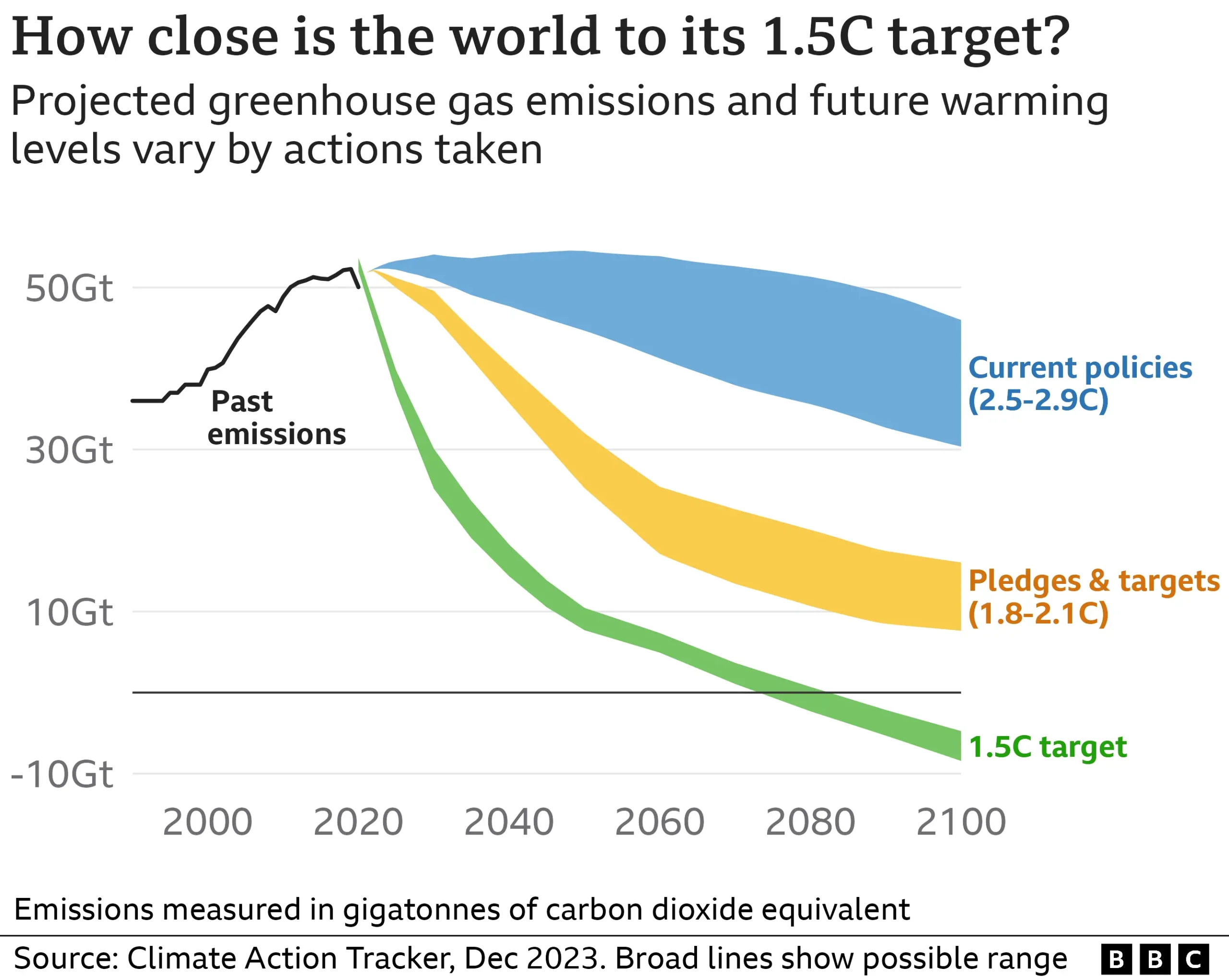
The researchers considered two of the four standard future scenarios commonly used in climate modelling. The first, termed “partial action,” represents a future where governments achieve some reduction in greenhouse gas emissions, but not enough to halt global warming entirely. The second scenario, a “high-emissions” pathway, assumes continued growth and unchecked pollution from fossil fuel industries, leading to rapid acceleration of global warming.
Under the partial-action emissions future, northern East Africa, including Ethiopia, Somalia, and Eritrea, is projected to experience around 50 million person-days of rural population exposure to dangerous heatwaves by 2100. Urban exposure in this region is estimated to be less than 30 million person-days. This translates to tens of millions of people in this region enduring repeated weeks of extreme heat with minimal protective measures.
West and Central Africa are identified as the next most severely affected regions. Countries such as Nigeria, Ghana, Senegal, Côte d’Ivoire, the Democratic Republic of Congo, Cameroon, and the Central African Republic will experience significant heat impacts. West and Central Africa are projected to face at least 8 million person-days of urban exposure, driven by the combined effects of climate change and population growth. Rural exposure in these areas is expected to be considerably higher, reaching 50 million person-days.
The most alarming finding from the study emerged under the high-emissions future. In this scenario, climate change becomes the overwhelmingly dominant driver of heat exposure. In southeastern and western Africa combined, the climate effect alone is projected to push rural heatwave exposure to approximately 70 million person-days. This stands in stark contrast to just 5 million person-days for urban populations in the same regions. These figures represent not incremental shifts, but a fundamental transformation of the continent, with rural communities bearing an accelerating heat burden that the rest of the world has largely failed to acknowledge.
Redefining Heatwave Risk
The study’s findings challenge a widely held assumption: that heatwave risk is primarily concentrated in urban areas. Across much of Africa and significant portions of South Asia, including Pakistan, India, and Bangladesh, rural populations face heatwave exposure levels that are comparable to, or even exceed, those experienced by urban dwellers. This holds true even in areas where rural temperatures are not the absolute highest recorded.
The danger is not solely determined by the peak temperature. It is intrinsically linked to the intensity of the heat in environments that offer little respite. The models accounted for this by considering where people actually live and work, not just where temperatures reach their zenith. The research highlights that it is the combination of extreme heat and the near-total absence of escape mechanisms that proves deadly.
A farmer in southeastern Africa cannot cease working when temperatures spike; the demands of agriculture remain. A herder moving livestock across open terrain in West Africa has no building to seek shelter in, no cooling centre, and no fan. A pregnant woman in a rural community, located far from the nearest clinic, faces prolonged heat exposure that is demonstrably linked to adverse birth outcomes, with no immediate medical intervention available. While urban residents, even in densely populated informal settlements with poor ventilation, possess some options for escape, rural workers lack these fundamental choices.
Deconstructing the Drivers of Risk
In southeastern, western, and central Africa, population growth emerges as a significant contributor to the increase in rural heat exposure in the near future (projected between the present day and mid-century). However, as the century progresses, climate change accelerates dramatically, eventually surpassing population growth as the principal driver. By the end of the century, the heat itself becomes the dominant force, and the rural communities situated in these regions will bear the full brunt of its impact. This distinction is crucial, as the two drivers necessitate different responses.
The Path Forward: Urgent and Tailored Solutions
The study stresses the urgent need for a multi-pronged approach. This includes enhanced planning, increased investment in rural infrastructure and services, and the implementation of heat protection measures. These actions must be undertaken concurrently with robust efforts to cut greenhouse gas emissions and strengthen rural healthcare systems.
The proposed solutions do not necessitate prohibitively expensive technology. Several practical measures can significantly aid rural populations:
- Accessible Heat Warnings: Disseminating heat warnings in local languages through community radio networks.
- Adapting Work Schedules: Shifting demanding agricultural labour to the early morning hours, before temperatures become extreme.
- Increasing Green Cover: Planting trees within and around farmland to reduce local temperatures and enhance crop yields.
- Empowering Healthcare Workers: Training rural health professionals to effectively recognize and treat heat-related illnesses before they become life-threatening.
These measures are not complex. What is fundamentally required is a conscious decision to acknowledge and address rural heat exposure as the serious and escalating public health crisis that it is.