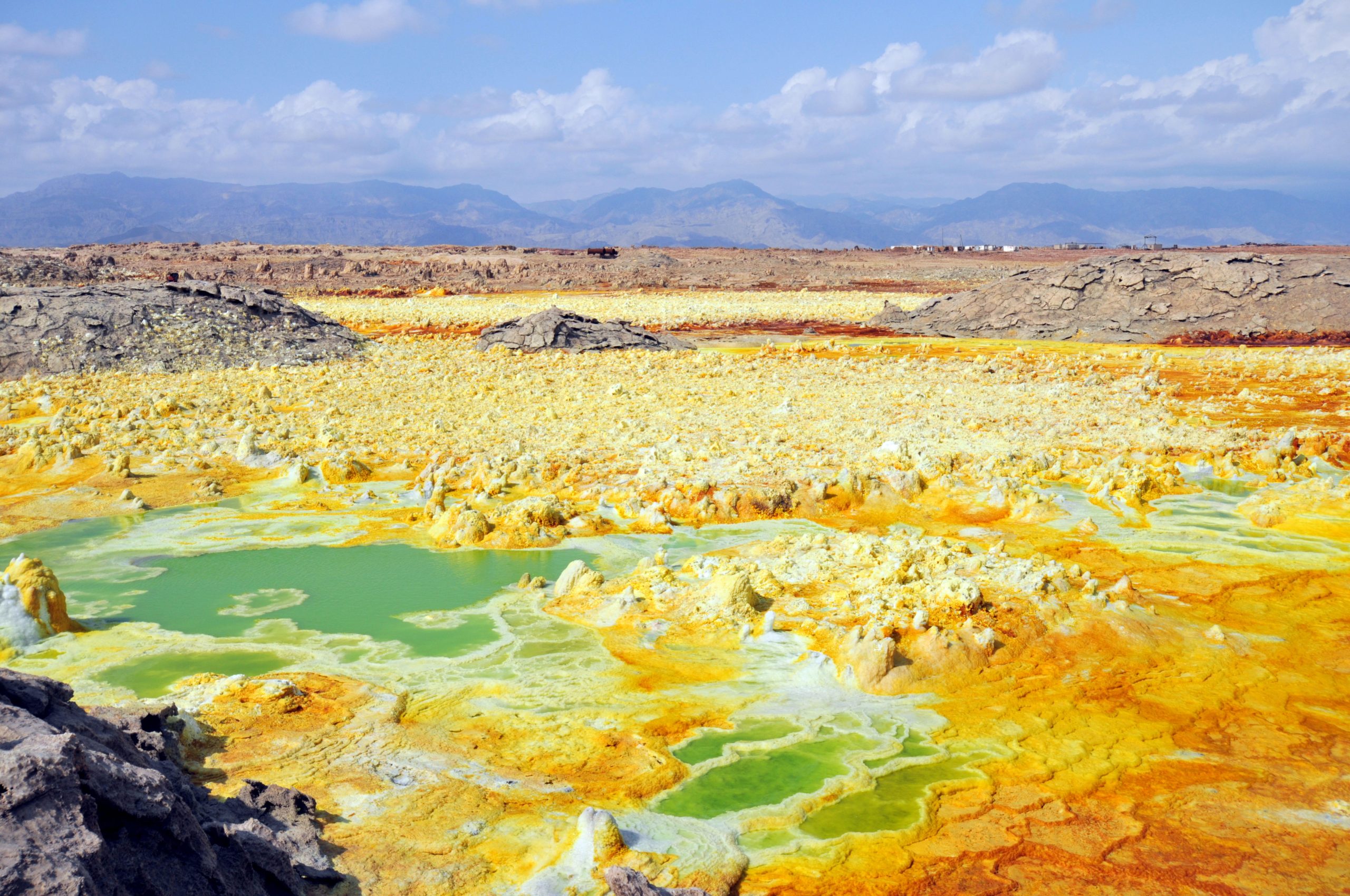
Africa is undergoing a dramatic geological transformation, slowly but surely tearing itself apart. This colossal continental split, occurring along the East African Rift (EAR), is set to eventually birth a new ocean, separating the eastern part of the continent from the rest over millions of years.
The process involves the Somalian plate, the eastern fragment of Africa, gradually pulling away from the larger Nubian plate, which forms the bulk of the African landmass. While the movement is imperceptible on a human timescale, occurring at a rate of mere millimetres per year, the cumulative effect over geological epochs is immense. Scientists predict that this slow separation will take tens of millions of years to culminate in a full oceanic divide.
This continental fracturing isn’t an isolated event. To the north, both the Nubian and Somalian plates are also receding from the Arabian plate, creating a complex, Y-shaped rifting system. The epicentre of this geological drama is the Afar region of Ethiopia, a unique location known as a “triple junction.” It’s one of the rare spots on Earth where three significant tectonic rifts converge: the Ethiopian Rift, the Red Sea Rift, and the Gulf of Aden Rift.
The East African Rift: A Continental Tear
The East African Rift system, which originated in the Miocene epoch approximately 25 million years ago, emanates from this Afar triple junction. It stretches for a staggering 2,174 miles, extending from the Red Sea down to Mozambique. The rift system is broadly divided into two main branches: the eastern rift, which carves its way through Ethiopia and Kenya, and the western rift, which follows an arc from Uganda through to Malawi.
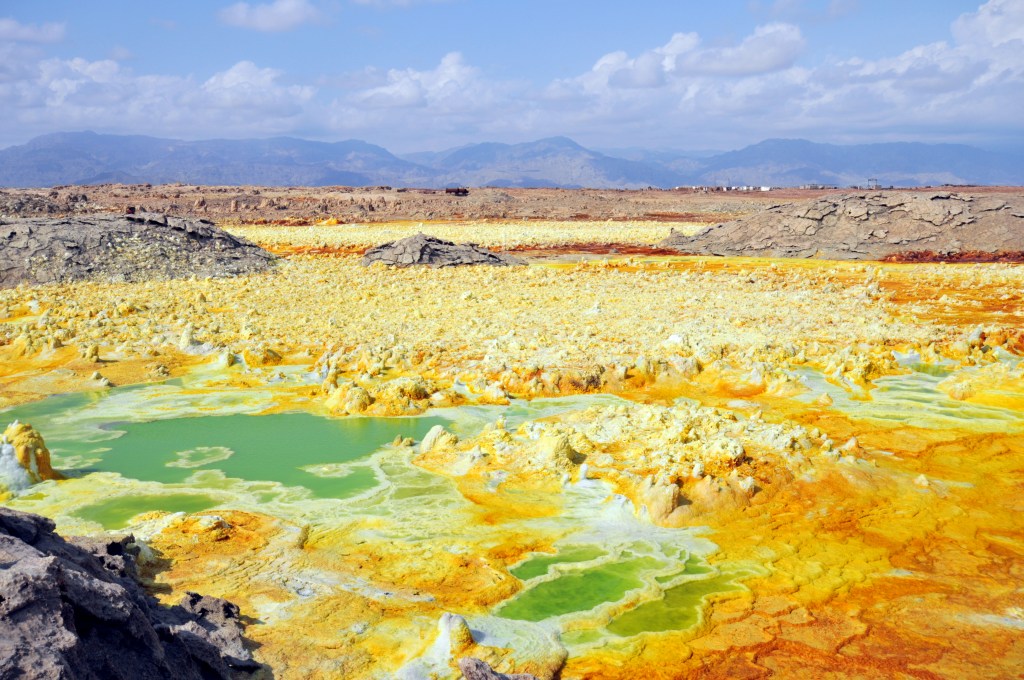
In the Afar region, the Earth’s crust is already significantly thinned, with parts of the landscape lying below sea level. Two arms of the rift are already submerged beneath the waters of the Red Sea and the Gulf of Aden. According to geological experts, once the land bridge connecting these submerged rifts dips sufficiently low, seawater will inevitably surge in, inundating the area and establishing a nascent ocean basin between the separating tectonic plates.
“The rate of extension is fastest in the north, so we’ll see new oceans forming there first,” explained D. Sarah Stamps, a geophysicist at Virginia Tech.
The Pace of Change and Its Implications
The tectonic plates are estimated to be moving apart at an average rate of about 0.28 inches per year. This glacial pace means that a gap substantial enough to accommodate a new ocean basin will only form after many millions of years. However, even this slow geological process can have more immediate impacts on human populations through increased seismic and volcanic activity.
The Earth’s crust is comprised of between 15 and 20 major tectonic plates that drift slowly over the planet’s molten magma mantle. For a long time, geologists have theorised that the Afar region is situated above a mantle plume – a colossal upwelling of hot material from deep within the Earth. This plume is believed to be a key driver in the process of tearing apart the overlying crust.
New Insights from Magnetic Data
Recent research has shed new light on the magnetic structure of the Afar region’s crust and the intricate mechanisms behind the African continent’s splitting. An analysis of magnetic data, originally collected in the late 1960s, suggests that the initial separation occurred between Africa and Arabia, following a singular fracture that led to the formation of the Gulf of Aden and Red Sea rifts. Subsequently, the African rift began to develop, likely propelled by a massive mantle superplume upwelling, and this process remains active today.
Pulsating Mantle: A Driving Force?
Further contributing to our understanding, a study published in Nature Geoscience proposed that the continental splitting might be driven by rhythmic, heartbeat-like pulses of molten rock ascending from the Earth’s interior. Emma Watts, the lead author of the study and a geologist, stated that their findings indicate the mantle beneath Afar is not a static or uniform entity, but rather pulses, carrying distinct chemical signatures.
“These ascending pulses of partially molten mantle are channeled by the rifting plates above,” Watts elaborated. “That’s important for how we think about the interaction between Earth’s interior and its surface.” This research underscores the dynamic and interconnected nature of geological processes, highlighting how deep-seated mantle activity directly influences surface-level continental rifting.