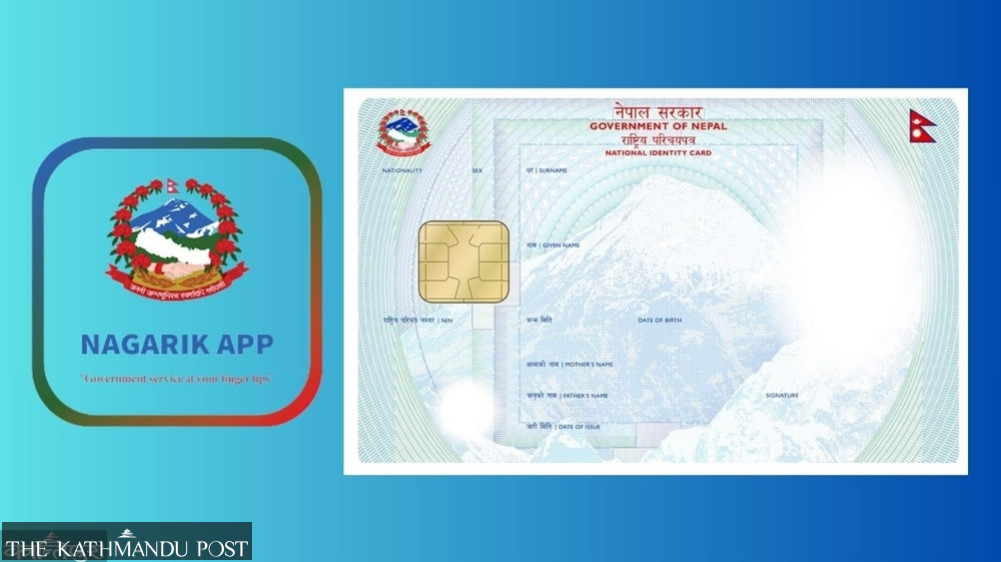
Nepal’s Digital Identity Ambition Meets Reality: The Nagarik App’s Stumbling Block
Kathmandu, March 23 – A user’s recent review on the Google Play Store for Nepal’s Nagarik App succinctly captured a sentiment echoing across the nation: “I am very disappointed with the Nagarik App,” wrote Nirmal Gaihre. “If digital documents cannot be used for official verification without showing a physical citizenship card, national ID, or passport, then what is the real purpose of this platform?” This sentiment highlights a significant chasm between Nepal’s aspirations for a digital future and the practical realities of its implementation.
While the Nagarik App, developed by the Department of Information Technology under the Ministry of Communication and Information Technology, was envisioned as a unified digital repository for crucial documents like citizenship certificates, driving licences, PAN cards, and voter IDs, its widespread acceptance for official verification remains a significant hurdle. Users frequently report technical glitches and login issues, but the most persistent complaint revolves around the continued demand for physical documents, even when digital counterparts are readily available and verified within the app.
This situation exposes a fundamental disconnect between Nepal’s digital ambitions and the legal and institutional frameworks governing everyday transactions. Despite the app’s capacity for real-time identity verification, numerous banks, hospitals, and government offices still insist on paper copies, underscoring a gap between forward-thinking digital initiatives and entrenched bureaucratic practices.
Glimmers of Progress: Where Digital Acceptance is Taking Hold
Despite the widespread challenges, pockets of success offer a glimpse into the potential of Nepal’s digital identity platform. In Kathmandu, traffic police have embraced the Nagarik App, moving away from inspecting physical driving licences to scanning QR codes. Officials at the Koteshwar Police Station report that this digital verification system has not only streamlined enforcement but also significantly reduced administrative burdens.
Sujan Magar, a traffic policeman, noted, “It’s been more than a year since we allowed riders to use digital ID. Vehicle taxes can be checked and paid directly from the app, and traffic fines are issued digitally through the e-Chalan system.” He further elaborated on the system’s positive impact on transparency, stating, “Earlier, some officers could charge extra. Now that’s not possible. It also reduces delays and face-to-face friction.”
These examples, while currently exceptions, powerfully illustrate the benefits of aligned digital systems. They highlight the potential for increased efficiency, transparency, and reduced friction in public services.
The Interoperability Challenge: Bridging the Gap
The successful implementation in areas like traffic enforcement and tax services points to a broader challenge facing Nepal’s digital governance push: interoperability. Officials acknowledge that the underlying technology of the Nagarik App is robust enough to support cross-agency digital verification. However, the primary obstacles lie in varying legal mandates and the institutional readiness of different bodies.
Shree Chandra Shah, director general of the Department of Information Technology, pointed to existing frameworks like the “Digital Nepal Framework 2.0” and “Good Governance Regulations,” which he believes provide the necessary legal basis for digital document acceptance. He cited the Inland Revenue Department (IRD) as an example, where taxpayers can now verify their identity and settle taxes through the app, a service that previously necessitated multiple in-person visits.
Shah explained that while the app’s system enables service providers to digitally verify government-issued documents, individual agencies may still be bound by existing laws that mandate the presentation of physical documents. “It should work because the system is there in the Nagarik App,” he stated. “The regulations and guidelines say it can be used for official purposes, including at banks, hospitals and government offices. Everyone is supposed to act according to those regulations.”
However, the Department of Information Technology lacks the authority to enforce compliance when agencies refuse to accept digital identifications. “There are certain guidelines and we aren’t in a position to take direct action,” Shah admitted. “We can only act according to what is provisioned in the Act.”
The crux of the issue, as Shah elaborated, lies in the persistence of outdated legislation. “Regulations cannot override an Act,” he explained. “If an existing law requires a physical citizenship card, that cannot be bypassed until the Act is amended.” This creates a scenario where digital systems can outpace the legislative frameworks that govern them, leading to a lag in adoption.
Factors Driving Adoption and the Path Forward
According to Shah, the successful adoption of digital identification hinges on three critical factors: citizen demand, service provider readiness, and system integration. The progress observed in traffic enforcement and tax services demonstrates the positive outcomes when these elements are harmonised.
Project officials also emphasize that the Nagarik App was initially conceptualised for digital service delivery rather than as a complete substitute for physical documents. Santosh Aryal, project manager of the Nagarik App, clarified, “In reality, the Nagarik App is primarily for digital operations. If you are receiving a government service and need identification verification, that is the purpose of the app. However, you cannot simply show a photo in the app as a substitute for a physical citizenship card.”
The intended method of verification involves secure, system-based processes like QR code scanning, which access verified data rather than simply displaying an image. “If you go somewhere that legally requires a physical document, they may or may not accept it because there is currently no official mandate,” Aryal noted.
While progress is being made, with hospitals now recognising digital health insurance cards and traffic police issuing fines digitally, broader acceptance from institutions like banks remains under discussion. Aryal stressed that true interoperability ultimately depends on collaborative efforts across ministries and agencies that own the data integrated into the app. “While the Department of Information Technology operates the app, the components within it belong to various agencies. It would be much easier if a mandate were set for all these agencies.”
He believes that technical capacity is not the primary barrier. “We have the technical manpower. What is needed is the willingness from ministries and agencies to integrate their systems.” Future plans include expanding services to include passport renewals, with the ultimate goal of allowing citizens to complete all service-related interactions without needing to visit physical offices.
Legal Recognition and Privacy-Aware Data Sharing: Key Enablers
Digital governance experts identify legal recognition, institutional mandates, and privacy-aware data sharing as the principal barriers to widespread adoption. Niraj Bhusal, a digital governance expert, stated, “There are both legal and institutional gaps. Legally, we need to explicitly recognise Nagarik App documents so they have legal standing.”
Bhusal recalled earlier initiatives to integrate banking services, such as opening bank accounts via the app by scanning a QR code to pre-fill data. However, he noted that the original citizenship card was still required for final approval, highlighting how processes were simplified but legal requirements persisted.
He advocates for a system of transactional verification, where service providers can scan a QR code and securely verify identity through a backend system, potentially enhanced with multi-factor authentication like one-time passwords. “If a traffic policeman scans the QR code in your app, they can see your details and even issue a fine directly in the system. We need a similar mechanism for other services. If I go to a bank, I should be able to generate a QR code that the bank scans to verify my data via OTP.”
Bhusal also underscored the critical importance of limited data sharing to safeguard user privacy. “If I am at the airport, the airline only needs to verify that the name on my ticket matches my ID. They don’t need access to all my personal details.” Designing systems that share only essential data would not only boost efficiency but also mitigate the risk of data breaches.
A formal government mandate, such as a notification in the Nepal Gazette, would significantly accelerate adoption by creating a clear obligation for institutions. Bhusal believes that while original documents might be necessary initially, digital IDs in the app should suffice for secondary services.
The technology behind the app is already capable of secure verification through methods like watermarking and dynamic QR codes, which redirect to government portals for authenticity checks—a more robust method than physical stamps.
For the present, the discrepancy between the app’s capabilities and its actual adoption persists. While some agencies are embracing the Nagarik App, many institutions continue to demand physical verification, compelling citizens to carry both physical and digital documents. As Bhusal aptly puts it, “The Nagarik App should be a branch in your pocket for government services, much like mobile banking apps have transformed financial access. It should be useful, inclusive and secure.”