From Viral YouTube Short to A24 Feature: The Unsettling Descent into “The Backrooms”
What began as a nine-minute found-footage horror clip on YouTube, crafted by a then-16-year-old director Kane Parsons, has morphed into a full-blown feature film produced by the acclaimed A24. The original, titled “The Backrooms,” captivated audiences with its terrifying premise of a man lost in an infinite maze of empty yellow rooms, quickly amassing a staggering 78 million views and spawning a dedicated YouTube series. Now, Parsons, who was born in the same year YouTube launched, has helmed a cinematic adaptation boasting a cast that includes two Oscar-nominated heavyweights: Chiwetel Ejiofor and Renate Reinsve.
The allure of “The Backrooms” lies in its uniquely disorienting and mind-bending atmosphere, a quality that evidently resonated with both the online masses and the seasoned actors involved. Ejiofor portrays Clark, a disillusioned architect managing a discount furniture warehouse in the United States. Following a marital breakdown, he finds himself living at his workplace. One fateful night, an unusual glowing light in the basement leads him to discover a portal, a shimmering anomaly in a wall that transports him into an endless labyrinth of brightly lit, eerily uniform yellow rooms.
Director Kane Parsons was just 16 when he posted The Backrooms on YouTube.
Clark becomes consumed by the exploration and cartography of this uncanny subterranean expanse. His therapist, Dr. Mary Kline, played by Reinsve, initially dismisses his accounts as delusion. However, when Clark misses an important appointment, Dr. Kline feels compelled to investigate, inadvertently drawing herself into the unsettling reality her patient describes.
While the film may offer a less conventional narrative structure, with plot taking a backseat to atmosphere, this is precisely where “The Backrooms” carves out its distinctive niche. Parsons has consistently acknowledged the conceptual origins of the project, tracing it back to a 2019 photograph shared on 4Chan that ignited a viral creepypasta thread. Creepypasta, for the uninitiated, refers to internet-generated horror narratives, not a particularly spooky pasta dish.
Parsons’s adaptation takes this foundational concept and elevates it with a masterful, unsettling use of sound design. The incessant hum of fluorescent strip lighting, in particular, evokes a Lynchian quality, despite Parsons’s assertion that he has never seen a David Lynch film. Echoes of Charlie Kaufman’s existential dread, Chekhov’s exploration of human futility, and even the familiar otherworldly dimensions of “Stranger Things’” Upside Down and the recent video game horror “Exit 8” can be detected. Yet, under the mentorship of established figures like James Wan and Osgood Perkins, Parsons demonstrates a precocious and technically assured talent that is distinctly his own.
There’s not much plot, which may frustrate some. But the plot’s not the thing. There’s a unique quality to Backrooms. Parsons has always conscientiously noted that the concept isn’t originally his; it began as a 2019 photo on 4Chan that inspired a creepypasta thread (that’s internet-generated horror content, not a spooky bowl of spaghetti).
Parsons picked it up and ran with it. There’s a brilliant, unsettling use of sound, particularly the hum of fluorescent strip lights, that feels very David Lynch, even though Parsons says he’s never watched Lynch.
There are echoes, too, of Charlie Kaufman, Chekhov, and, less surprisingly, Stranger Things’ Upside Down and recent videogame horror Exit 8. Yet despite being mentored by James Wan and Osgood Perkins, Parsons has a precocious, technically assured talent that’s entirely his own.
The sheer scale of the production is remarkable. Over 30,000 square feet of “Backrooms” sets were constructed for the shoot, reportedly to such an extent that cast and crew members occasionally found themselves disoriented and lost on set. As the characters navigate these disorienting spaces, they encounter a surreal assortment of decaying office furniture, discarded clothing, a deceased seagull, and doorways comically small, reminiscent of “Alice in Wonderland.” These surreal elements serve to heighten the encroaching sense of genuine terror.
Decoding the Yellow Labyrinth: What Do the Backrooms Represent?
The central question that lingers is: what exactly are these rooms, and what do they symbolise? While Parsons did not pen the script himself, the thematic undercurrents would likely gain approval from his therapist mother. Dr. Mary’s therapeutic philosophy, as conveyed to her clients, centres on the idea that “We all have our loops, our habits, that keep us stuck.” Her ultimate aim is to liberate individuals from past traumas, thereby freeing them from the cycle of repetition. This raises profound questions: are the Backrooms a manifestation of neural pathways, a physical embodiment of trapped trauma, or something else entirely? The deliberate ambiguity is precisely what imbues “The Backrooms” with its intriguing and transfixing power.
A New Breed of Horror
The film delivers on the visceral scares, incorporating solid jump scares early on that effectively echo the found-footage aesthetic of the original YouTube sensation. Several sequences are built on agonizing tension, where the characters must maintain absolute silence for fear of attracting unseen horrors. However, this is not conventional horror. “The Backrooms” feels like a bold step into uncharted territory, offering an experience that is both familiar and startlingly new.
The verdict is clear: with its potent blend of solid jump scares and an unnervingly effective use of sound, “The Backrooms” transcends traditional horror, presenting a fresh and innovative cinematic experience.
Upon the film’s conclusion, the influencer-heavy preview audience I attended with seemed more contemplative than boisterous, as if we had collectively experienced something profoundly strange and inexplicable. It’s a testament to the film’s lingering impact that a part of us, it seems, is still wandering those endless yellow corridors.
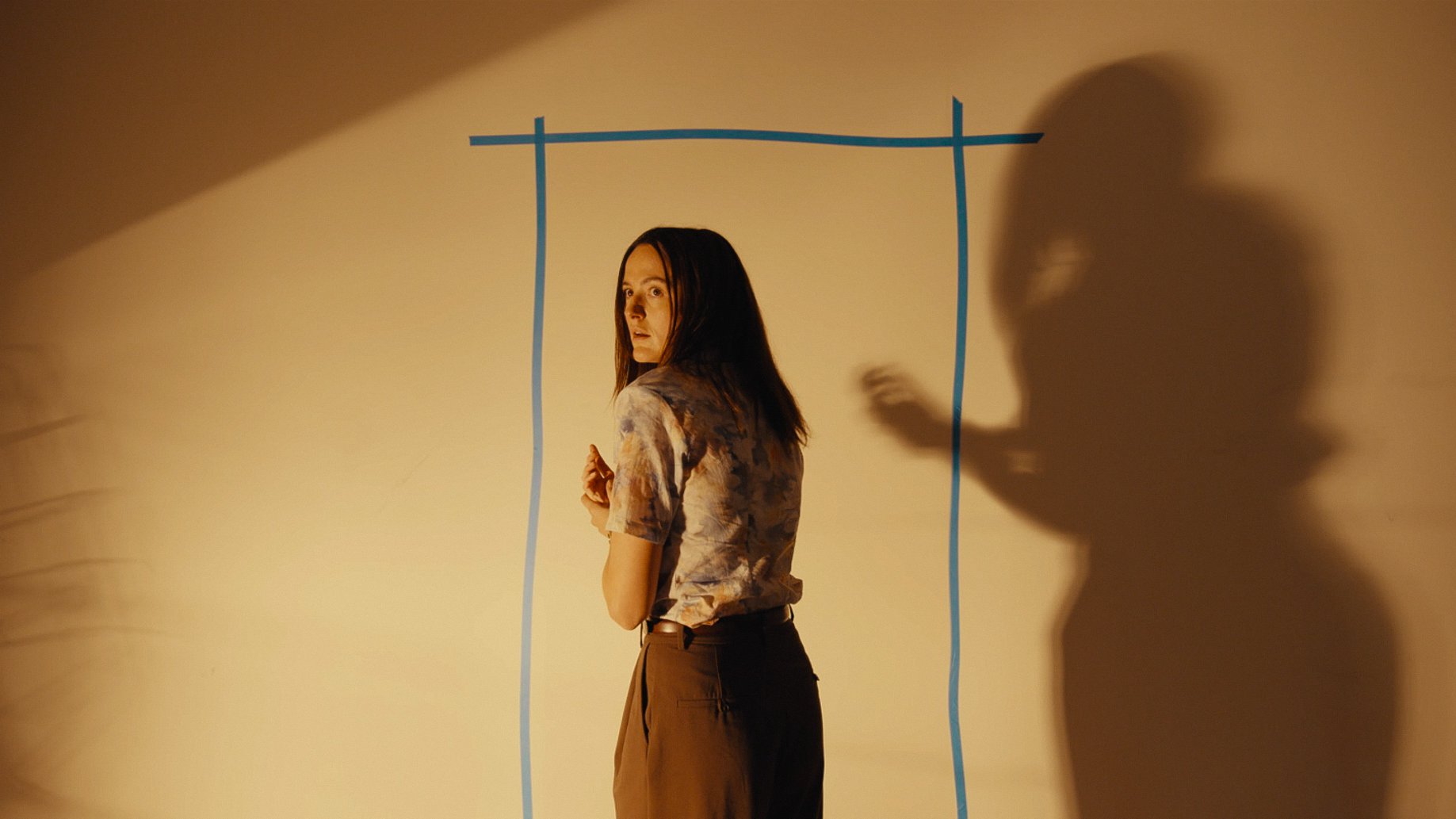
The atmosphere is extraordinary. Over 30,000 square feet of Backrooms were built for the shoot, reportedly leading to people getting lost on set. Moving through them, the characters encounter half-sunken office furniture, heaps of old clothes, a dead seagull and Alice in Wonderland-tiny doorways, as real terror closes in.
“The Backrooms” is scheduled for release in UK cinemas on May 29.