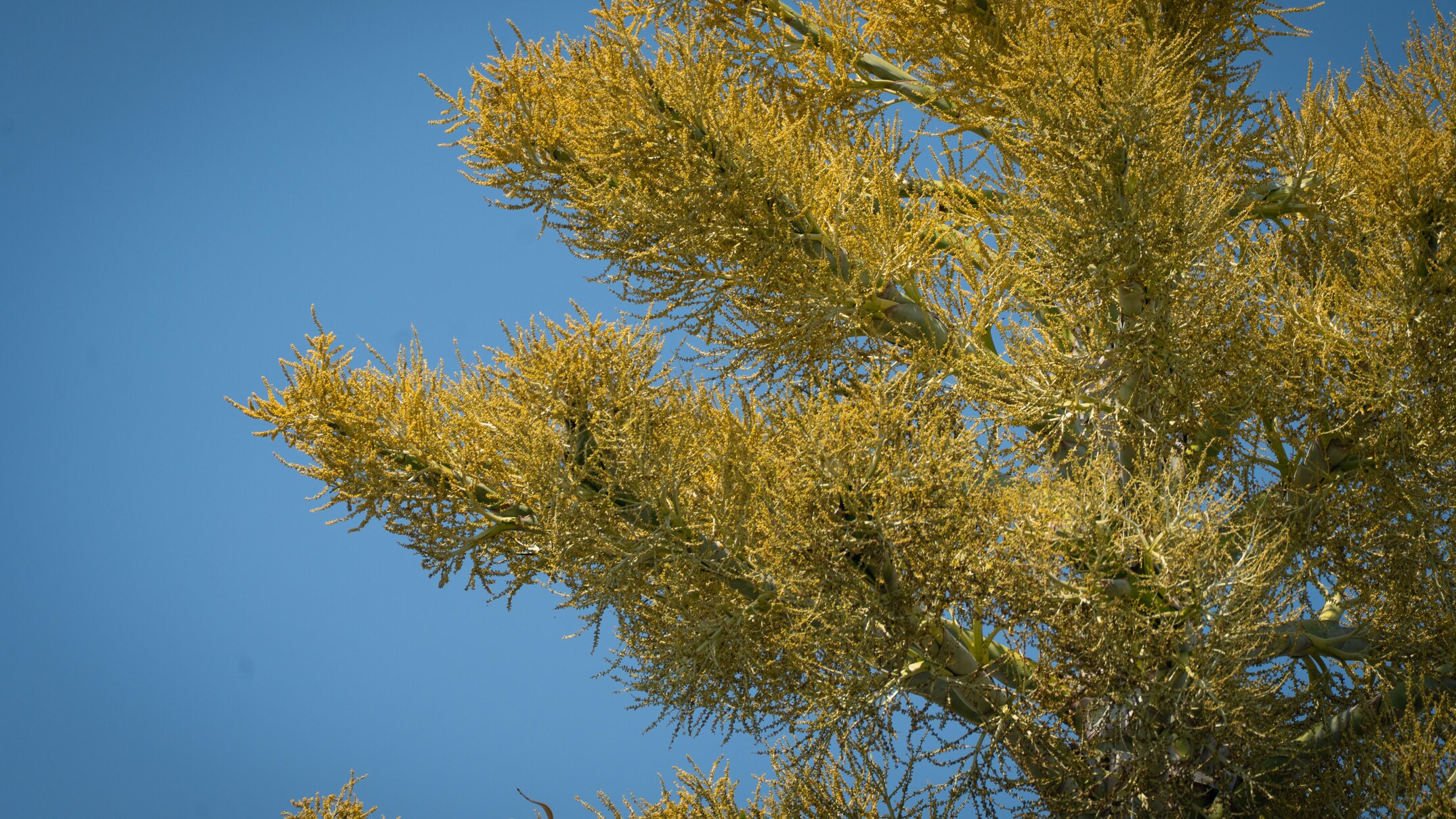
Darwin is currently witnessing a botanical spectacle rarely seen across Australia: the simultaneous flowering of nearly two dozen Gebang palm trees. These ancient specimens, scientifically known as Corypha utan, are a fascinating species known for a unique life cycle. According to Nick Cuff, chief botanist at the Northern Territory Herbarium, Gebang palms are monocarpic, meaning they flower only once in their entire lifespan.
This solitary flowering event is a monumental undertaking for the trees. They invest all their energy into producing a massive inflorescence, a structure bearing thousands, or even millions, of individual flowers. This grand display is crucial for reproduction, as it will eventually lead to the development of fruit. However, this extraordinary effort comes at a cost: once the fruit has set and fallen, the palm trees will inevitably die.
While Gebang palms are distributed across a wide swathe of Asia, their presence in Australia is more restricted, primarily found in the tropical wetlands of Arnhem Land and Cape York. The appearance of these particular palms in Darwin’s public gardens offers a glimpse into their history and the dedication of those who introduced them.
The Journey to Darwin: A Tale of Two Botanists
The exact narrative of how these Gebang palms came to grace Darwin’s landscapes is a story with a couple of key players. Local botanical author John Brock has vivid memories of collecting these very plants decades ago. While working as a seed collector for the NT government, he was fortunate enough to embark on several expeditions to Arnhem Land. During one of these trips, he brought back a piece of the Arafura Swamp to Darwin.
“In the mid-1980s, I collected several hundred or thousands of seeds — like round golf ball nuts — and brought them back,” Brock recounted. He estimates that the palms currently in bloom are likely between 30 to 40 years old, aligning perfectly with the period he brought the seeds back.
Another individual with a significant role in introducing these palms to Darwin is former agricultural scientist Rob Wesley-Smith. He was involved with the NT government in the 1970s and recalls noticing a cluster of Gebang palms in Darwin’s botanic gardens. He shared a poignant observation: “One of them was huge and it was flowering just before Cyclone Tracy came, as though it knew that it should reproduce before the cyclone might have killed it,” he said. Tragically, the cyclone did arrive, and that particular palm was blown over.
Undeterred by this loss and keen to ensure the survival of the species in Darwin, Wesley-Smith saw an opportunity during a work trip to Arnhem Land’s Arafura Swamp. “I was invited out to give some support to a cattle project … and I was determined to get some seeds when I came back,” he explained. “With the plane waiting for us, I got them and brought them back to Darwin.”
While the precise circumstances of their arrival might be a delightful mystery, both Brock and Wesley-Smith express immense satisfaction in witnessing these magnificent trees in their full glory.
A Synchronised Spectacle: Why Now?
The current mass flowering event has sparked curiosity, with botanists pondering the reasons behind the synchronised blooming. Nick Cuff of the NT Herbarium admits that the exact cause remains somewhat unclear. “Whether it’s just a factor of them all reaching their age of maturity at this point in time, or some specific cue in the environment, [we’re not sure],” he stated.
John Brock highlights the rarity of such an event. “Darwin people should come to Lake Alexander and Vestey’s Lagoon in their own good time and see this over the next few weeks,” he urged. He elaborated on the infrequent nature of these displays, noting, “It’s a one-off event, even out bush; it might only happen every 20 or 30 years in cycles.”
Melodee Brencher, an arborist with the City of Darwin, is among those keen to witness this botanical marvel. While she has observed individual Gebang palms flowering in the past, the scale of the current event is unprecedented. “One or two [flower and die] every couple of years, but this time there’s like 20 of them throughout Darwin that are flowering,” she commented. She described the experience as “bittersweet,” acknowledging the awe-inspiring nature of a once-in-a-lifetime event while also recognising the impending demise of these majestic trees.
A Changing Landscape and Ensuring a Future
Although Gebang palms are not officially classified as a threatened species in the Northern Territory, Indigenous rangers in Arnhem Land’s Arafura Swamp have voiced concerns about a potential decline in local populations. Nick Cuff suggests that several environmental factors could be contributing to this.
“Given some of the places in which they occur are very low-lying in relation to the coastline, if we did see any significant changes in sea level, that might change the balance between salt and fresh water that they experience,” he explained. He also pointed to potential impacts from wildlife in their wetland habitats, such as buffalo and pigs.
However, the Gebang palms currently flowering in Darwin offer a beacon of hope. John Brock observed that amongst the blooming trees, there are already many healthy young and intermediate-sized palms. “So it’s been regenerating already,” he noted, indicating a promising future for the species in the region.
The City of Darwin is also committed to nurturing a new generation of Gebang palms. “We’re going to collect some seeds and grow some more,” confirmed Melodee Brencher. She praised their suitability for Darwin’s climate, stating, “They’re a really good palm in Darwin, they do really well and they’re quite stately in the landscape.” This proactive approach ensures that the legacy of these magnificent monocarpic palms will continue to grace Darwin for years to come, even after their spectacular, solitary flowering.