Rhododendron Season Tarnished: Gulf Conflict Casts Shadow Over Nepal’s Annapurna Region
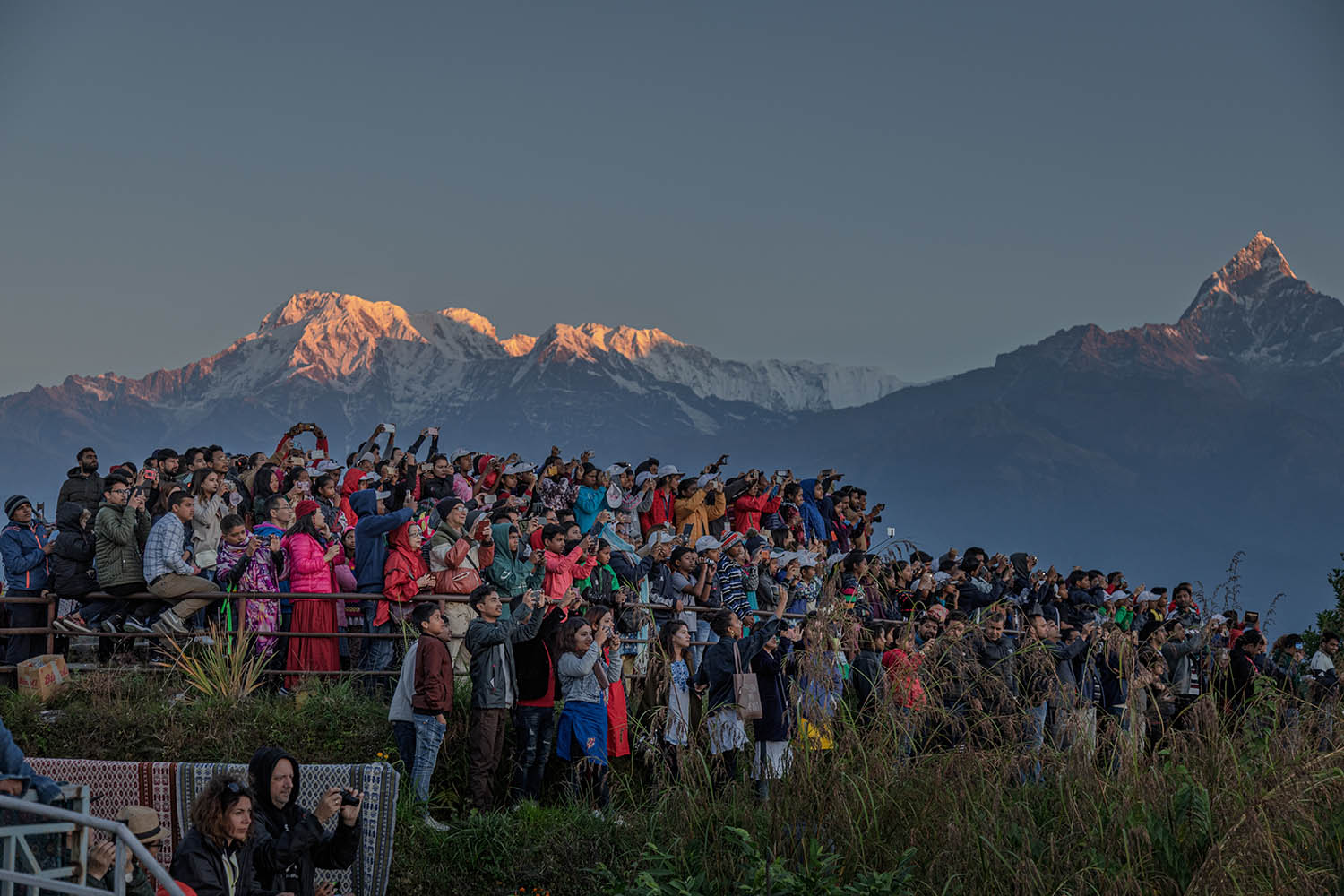
The typically vibrant rhododendron-filled hills of Ghorepani in Nepal’s Annapurna region, a highlight of the spring trekking season, are experiencing an unusual quietude this year. While February usually sees this scenic area abuzz with trekkers, the unfolding geopolitical situation in West Asia has significantly dampened the spirits of the tourism industry. The popular Ghorepani-Poon Hill trek, renowned for its breathtaking panoramic views of the Annapurna and Dhaulagiri mountain ranges, captivating sunrise vistas, and the iconic rhododendron blooms, is witnessing a stark decline in visitors.
The trekking route, which commences from Nayapul in Kaski and winds through picturesque villages like Birethanti, Ulleri, Banthanti, and Nangethanti before reaching Ghorepani, is a cornerstone of Nepal’s tourism appeal. From Ghorepani, trekkers typically spend a night before undertaking an early morning hike to Poon Hill to witness a spectacular sunrise. The extended trail, linking Ghorepani to Tadapani and Ghandruk, and further on to Annapurna Base Camp, is particularly favoured by international trekkers seeking an immersive Himalayan experience.
However, by the second week of March, a discernible drop in the number of American and European tourists along these well-trodden paths has become evident. The primary driver behind this downturn is the ongoing conflict in the Persian Gulf, which has sent ripples of apprehension across the global travel landscape.
Impact on Pokhara and the Wider Annapurna Region
The escalating war in West Asia has begun to exert a significant negative impact on tourism in Pokhara and the broader Annapurna region, even as the spring season, a peak period for arrivals, should be in full swing. The decline in American and European trekkers is directly affecting the livelihoods of hotels, restaurants, and trekking businesses that rely heavily on this demographic.
Krishna Acharya, chairperson of the Gandaki chapter of the Trekking Agencies’ Association of Nepal, reports a concerning trend: approximately 50 percent of foreign tourists who had planned their visits for March have cancelled their bookings. “Most cancellations have come from American and European tourists transiting through Dubai and Qatar,” Acharya stated, highlighting the direct link between the conflict zones and travel disruptions. While some European travellers have explored alternative routes via Istanbul, Turkey, these rerouted journeys have not been sufficient to offset the overall decline in visitor numbers.
“This is the second peak season for tourism, but the Gulf war has devastated the sector,” Acharya lamented. He noted that large group bookings have been particularly affected, with even those planning trips for April adopting a cautious “wait-and-see” approach. Acharya further warned that Nepal’s tourism recovery will remain precarious until the situation in West Asia stabilizes, underscoring the sector’s vulnerability to external geopolitical events.
A History of Challenges Hampering Tourism Recovery
Nepal’s tourism industry has faced a series of formidable challenges in recent years, creating a cycle of recovery and relapse. The global COVID-19 pandemic brought international travel to a virtual standstill, starkly revealing the nation’s considerable dependence on foreign visitors. As the sector began to rebound, a series of air and road accidents raised fresh safety concerns, tarnishing Nepal’s reputation among risk-averse travellers.
Further compounding these issues were domestic disruptions. The Gen Z protests, youth-led demonstrations amplified through social media, projected an image of instability during crucial tourist seasons, deterring some visitors and tour operators from solidifying their travel plans.
Operational bottlenecks at Tribhuvan International Airport in Kathmandu, the country’s primary international gateway, have also been a persistent source of frustration for airlines and passengers. Congestion, frequent delays, and limited infrastructure have constrained Nepal’s capacity to accommodate a surge in arrivals, even when demand is present.
While Nepal has invested in two new international airports aimed at alleviating pressure on Kathmandu, a lack of effective marketing strategies has led to their underutilization, with analysts describing them as “white elephants.”
Perhaps the most damaging incident to Nepal’s global image was the fake rescue scam, which attracted widespread international scrutiny. Reports of tourists being unnecessarily evacuated by helicopter for financial gain have ignited ethical concerns and eroded trust among travel insurers and international partners. This has resulted in more stringent insurance policies and, in some instances, a reluctance among tourists to choose Nepal as a destination.
These challenges have not occurred in isolation. Instead, they have coalesced, with one issue often emerging as another begins to subside, leaving the tourism sector in a perpetual state of flux. “The Gen Z protests affected the previous season, and now the Gulf war has hit tourism again,” Acharya observed. “This could have long-term consequences. Authorities need to come up with new strategies to attract tourists.”
Shifting Market Focus and Future Strategies
Traditionally, tourists from the United States, Australia, and European nations such as Germany, France, Austria, and the Netherlands constitute the primary visitor base for the Annapurna region. However, in Pokhara currently, Indian, Korean, and Japanese tourists are more prominent than their Western counterparts.
At Bar Peepal Resort in Lakeside, Pokhara, a destination typically favoured by European visitors, occupancy rates usually hover around 85 percent during this peak season. This year, however, due to cancellations linked to the Gulf conflict, occupancy has plummeted to approximately 50 percent. Jitu Gurung, a resort operator, noted that large groups of 12 to 15 tourists have been cancelling their March bookings. While April reservations remain largely intact, many visitors are adopting a cautious stance. “Even European tourists who had already reached India are returning home without coming to Nepal due to uncertainty caused by the war,” Gurung stated. “If this situation continues through April, Pokhara’s tourism industry could face a serious crisis.”
In response to these evolving dynamics, Mani Raj Lamichhane, chief of the Gandaki Provincial Office of the Nepal Tourism Board, advocates for a strategic pivot towards East Asian markets. “We need to intensify promotional campaigns in countries like Thailand, Malaysia, Singapore, Korea, and Japan. The Tourism Board has already been working in that direction,” Lamichhane said. He also emphasized the importance of fostering an environment that encourages Indian tourists to explore Nepal’s trekking routes.
Furthermore, Lamichhane suggested targeting countries with direct flight connectivity, as well as emerging markets such as Vietnam, Cambodia, Australia, and New Zealand. This diversification of target markets is crucial for sustaining tourism inflows amidst ongoing geopolitical uncertainties and ensuring the long-term resilience of Nepal’s vital tourism sector.