Incheon International Airport Claims Top Spot in Global International Passenger Traffic
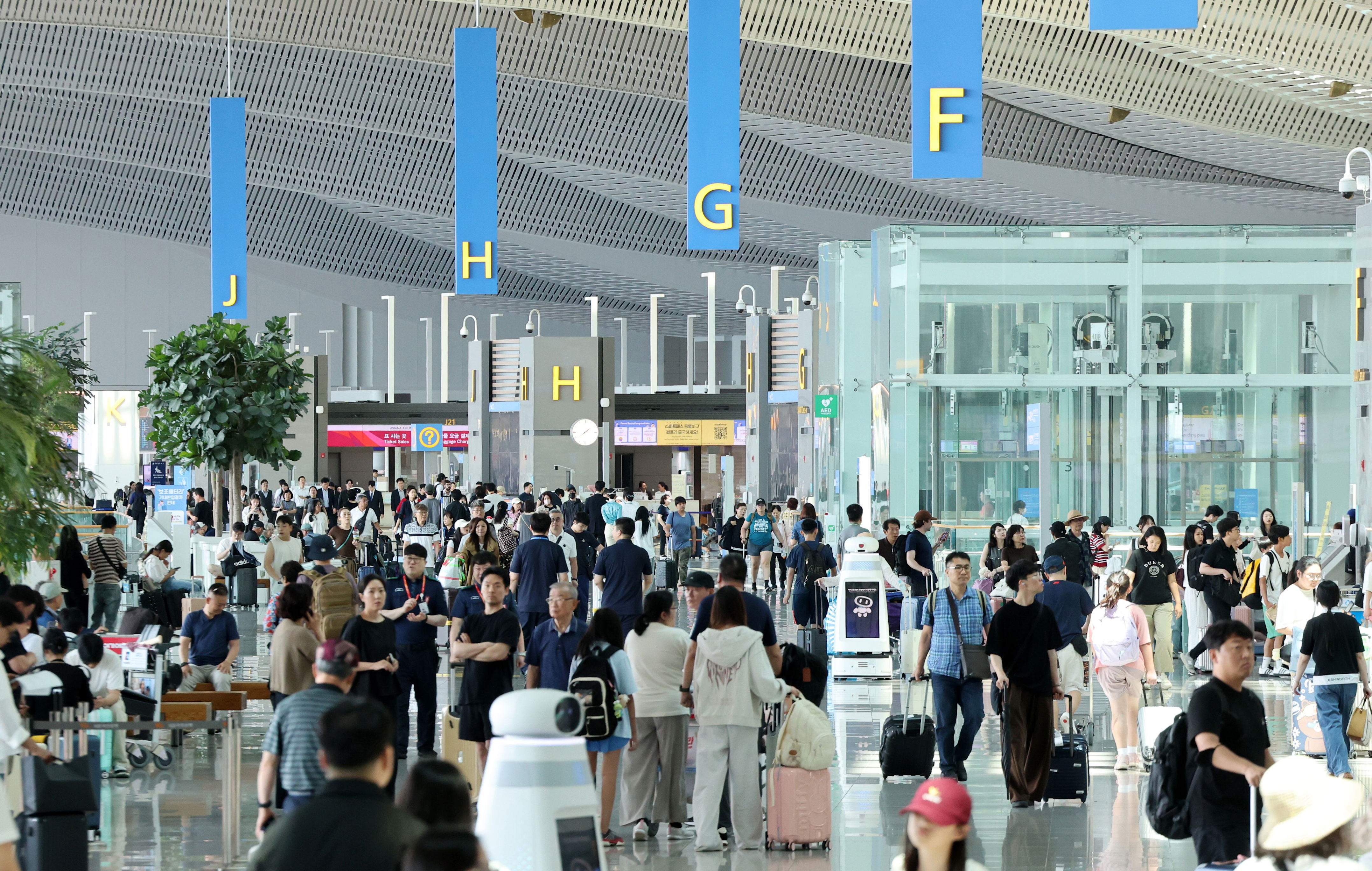
Incheon International Airport has made history by securing the top position globally in terms of international passenger traffic during the first quarter of this year. This marks the first time since its opening in 2001 that the airport has achieved such a feat, surpassing Dubai International Airport in the United Arab Emirates (UAE) and London Heathrow Airport, which had previously shared the lead for over a decade.
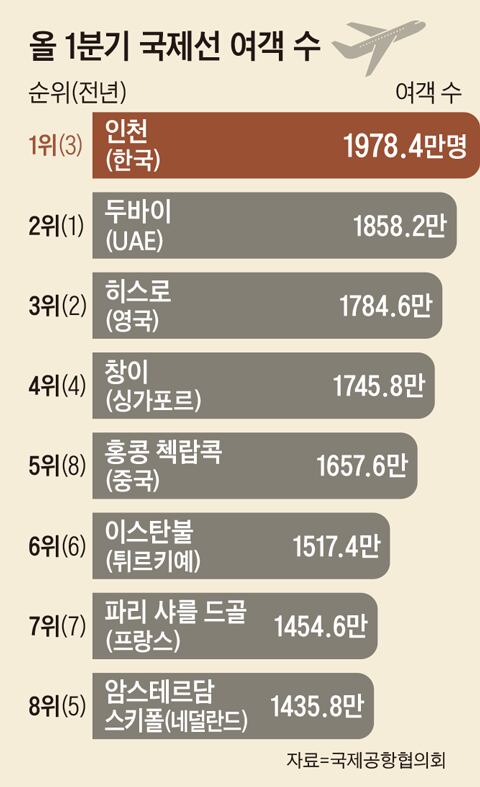
According to data released by the Airports Council International (ACI) on the 7th, Incheon Airport recorded 19.784 million international passengers during the first quarter, making it the highest among 1,234 international airports worldwide. Dubai Airport, which led last year with 18.582 million passengers, and Heathrow Airport, which ranked second with 17.846 million, followed closely behind. Incheon had climbed to fifth place in 2019 but saw its ranking drop significantly due to the impact of the COVID-19 pandemic. It recovered to eighth place in 2023 and maintained third-place rankings in 2024 and the previous year.
Professor Kang Kyungwoo from Hanyang University’s Logistics Department noted, “The number of international passengers is one of the most critical metrics for evaluating an airport. Despite challenges like the Iran war, overtaking Heathrow Airport to secure first place is a significant achievement.”
A Strategic Approach to Growth
When Incheon Airport opened in 2001, Japan and Hong Kong dominated Asia’s airport landscape. As a latecomer, Incheon was expected to face stiff competition from Japanese and Hong Kong airports, as well as the rapidly growing Chinese airports. However, while other major airports stagnated, Incheon took a proactive approach by expanding its infrastructure, leveraging information and communication technology (ICT) for faster procedures, and building a dense air network to attract a large number of transit passengers.
Currently, Incheon Airport offers flights to 158 cities, a figure that significantly outperforms Hong Kong (139 cities), Japan’s Narita (86 cities), and Shanghai Pudong in China (92 cities).
Aggressively Expanding Infrastructure: The ‘Smart Airport’ Model
Experts attribute Incheon Airport’s rise to global first place in just 25 years to its timely expansion based on accurate demand forecasting. Once global airports reach their capacity limits, they often experience declining passenger numbers and reduced airline operations, which can severely undermine their competitiveness. Therefore, preemptive facility expansion through accurate passenger predictions is crucial.
Incheon Airport, which initially had a capacity of 40 million people, invested 3 trillion Korean won the following year to begin its second-phase expansion, aiming to accommodate 54 million passengers. This was followed by a third phase designed to handle 77 million people and a fourth phase completed in November 2024, which increased capacity to 106 million people.
These expansions directly contributed to passenger growth. As of the 7th, Incheon Airport’s cumulative passenger count surpassed 1 billion, averaging 108,000 daily users. This is the fastest record among major global airports, beating Munich Airport (33 years and 10 months), Singapore’s Changi Airport (35 years and 5 months), Japan’s Narita Airport (39 years and 2 months), and Dubai Airport (58 years and 2 months) to reach 1 billion passengers.
Efficient Management and Financial Independence
Establishing the Incheon International Airport Corporation as a dedicated operator, separate from Korea Airports Corporation, which manages regional airports, is also cited as a key factor in enhancing competitiveness. This structure enabled swift decision-making and focused resource allocation for infrastructure expansion.
Most of the costs for Incheon Airport’s expansion were financed by the corporation itself. The total project cost for phases 1–4 amounted to 18.017 trillion Korean won, with only 18% (3.2874 trillion Korean won) coming from the national treasury, and the remaining 82% secured through corporate bonds.
Focusing on Transit Passengers and Streamlined Procedures
From its inception, Incheon positioned itself as a “Northeast Asia hub airport,” focusing on attracting transit passengers. Increased transit traffic drives sales at duty-free shops and food outlets and expands air routes, which are essential for airport competitiveness.
According to Incheon International Airport Corporation, the number of transit passengers at Incheon Airport increased from 7.2047 million in 2023 to 8.0466 million last year.
Another strength of Incheon Airport is its streamlined entry and exit procedures. The airport has installed 523 “Smart Pass” devices that allow check-in and boarding without presenting passports or boarding passes, using pre-registered biometric data. The baggage inspection system has also transitioned to a 3D method, eliminating the need to remove laptops and personal items from bags—a feature many overseas airports have yet to adopt.
The airport reported that, excluding peak periods like holidays, the average time for departure was 34 minutes and for arrival 28 minutes as of May last year. This is faster than the International Civil Aviation Organization’s (ICAO) recommended times (60 minutes for departure, 45 minutes for arrival).
External Factors Contributing to Success
External factors also played a role in Incheon’s success. Japan’s demand was split between Narita and Haneda airports, while Hong Kong lost passengers to mainland Chinese airports. Chinese airports faced challenges due to COVID-19-related entry restrictions. Incheon’s focus on international routes concentrated passenger traffic, prompting airlines to gradually increase flights, creating a virtuous cycle where passengers chose Incheon for more transit options.
Membership Benefits and Subscription Offers
For readers interested in additional benefits, there are membership programs available. For instance, a monthly membership costs 5,900 won, while newspaper readers can enjoy it for 2,900 won. Subscribers can access 8 different newspapers and magazines worth up to 55,000 won. Additionally, members receive 7,000 points that can be used like cash for shopping.