Pep Guardiola’s Future at Manchester City: A Lingering Question Mark
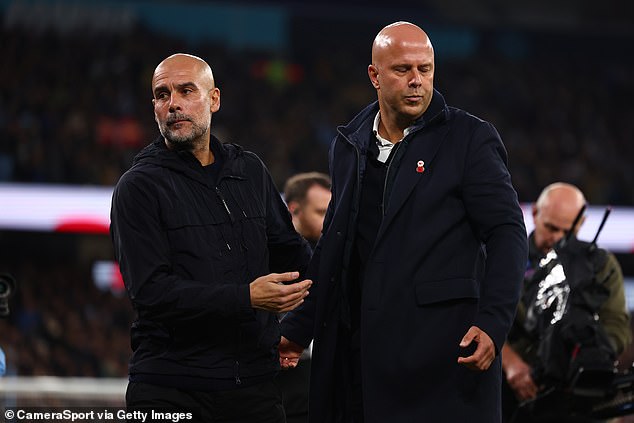
As Manchester City secured what was anticipated to be the decisive goal in their Carabao Cup semi-final second leg against Newcastle, manager Pep Guardiola offered a subtle yet telling reaction. Instead of an explosive display of emotion, he turned, a brief smile gracing his lips, and raised two clenched fists towards the executive boxes of the Etihad Stadium. This measured response is characteristic of Guardiola’s approach; goals, for him, often signify a validation of his meticulous methods rather than a purely visceral outpouring of joy.
Guardiola is renowned for his relentless self-examination and his ability to challenge the very fabric of the game. While his impressive trophy cabinet, boasting three Champions League titles and league championships across three major European leagues, might suggest a man who has conquered football, those close to him indicate that such a sentiment is far from his reality. For Guardiola, the pursuit of a deeper, purer understanding of the sport remains an ongoing, all-consuming quest.
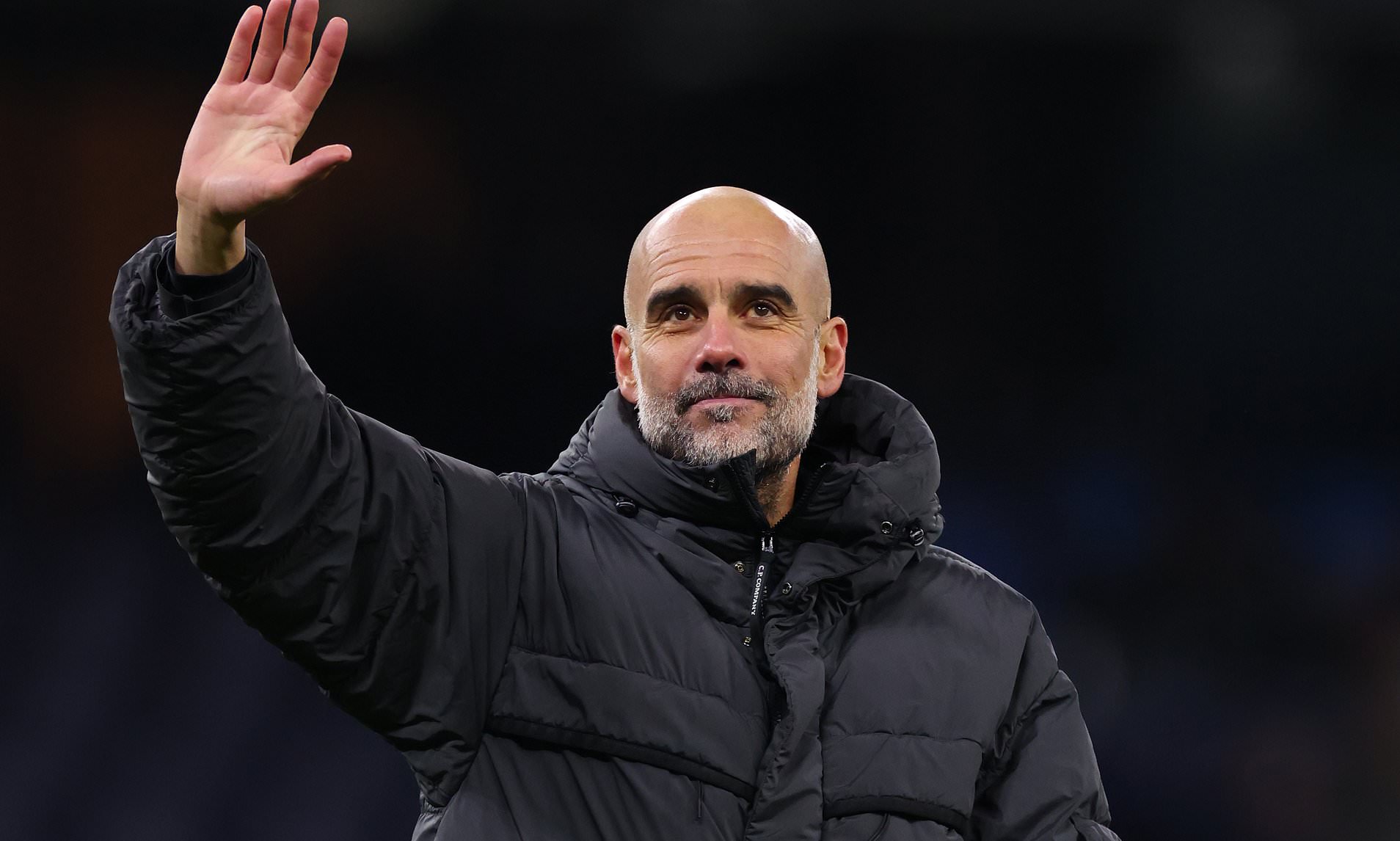
This insatiable drive now brings a significant question to the forefront: will this journey continue at Manchester City beyond the current season? With a year remaining on his contract after this campaign, Guardiola has, understandably, attempted to quell the escalating speculation surrounding his future. When directly questioned about his intentions, he reiterated his previous stance: “No, because I have one more year (on my) contract. It’s the same answer I answered two months ago. It’s the same.”
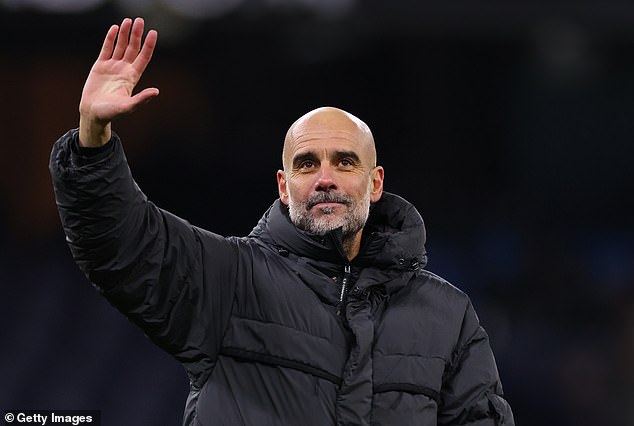
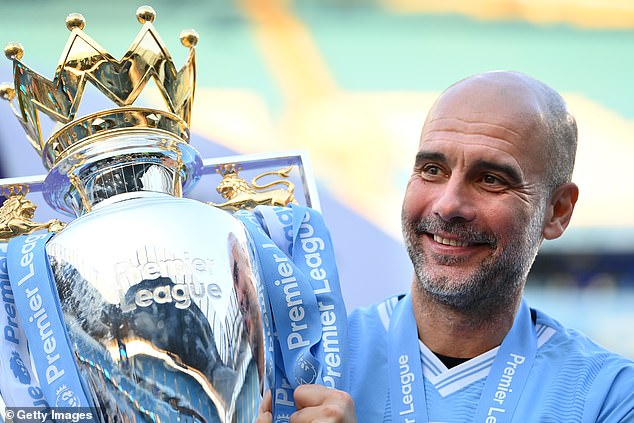
While Guardiola hinted at his commitment prior to Christmas, this assurance has not entirely dispelled the underlying uncertainty, either within the club or among the wider football community.
Manchester City, however, is not caught unprepared. The club has reportedly identified potential successors, with names like Enzo Maresca, Vincent Kompany, and Xabi Alonso frequently admired within the Etihad hierarchy. The executive team’s primary unknown is the precise timing of when these succession plans will need to be activated. This relaxed approach stems from past experience; City has navigated the prospect of life after a transformative manager before.
The club has not actively sought to suppress rumours about potential replacements, recognising the futility and indeed disingenuousness of such an endeavour. Maresca’s name is often mentioned due to his impactful tenure as Guardiola’s assistant, while Kompany represents a romantic “homecoming” narrative that aligns with the club’s foundational vision under Abu Dhabi ownership in 2008. City is acutely aware of other prominent clubs, including a fierce local rival, that have faltered due to a lack of strategic foresight in managerial transitions, and they are determined to avoid a similar fate.
A Manager Under Scrutiny
In the public sphere, Guardiola continues to present a complex persona. While inner turmoil has long been a recognisable facet of his managerial style, his recent public behaviour has been notably more pronounced than usual. This season, he has directed verbal barbs at referees and critics who suggest his success is solely attributable to financial might. His extended monologue on global affairs during a recent press conference also stood out as one of his most remarkable and candid appearances in his decade at the helm, drawing commentary and criticism from beyond the football world, even from within his own club’s Jewish fanbase.
“Why should I not express what I feel?” was his succinct defence of his outspokenness, a sentiment club officials have learned to accept rather than challenge.
Those who have had the opportunity for more intimate interactions with Guardiola this season report little deviation from his core focus. “What obsesses him more than anything is getting this team to win,” a football source from outside the club shared. “From that point of view, there remains just about nobody like him. The rebuild has been huge and probably came at him quicker than he expected. He won’t want to go anywhere until this set of players is where he wants them to be. That’s what he talks about. The football. Not the other stuff. It’s always the football.”
Navigating a Shifting Landscape
City’s recent dip from the Premier League summit has evidently surprised Guardiola as much as it has anyone else at the club. The team’s regression last season, a sudden and unexpected decline from their treble-winning form, has perhaps punctured Guardiola’s aura of invincibility. At times, he has appeared exposed and even vulnerable.
The team’s performances have shown concerning trends, particularly in the second half of matches. Since the turn of the year, they have cumulatively conceded 8-3 in the final 45 minutes of games, and they narrowly avoided surrendering a two-goal lead against Tottenham last weekend. The current City squad bears little resemblance to that of a year ago; only four players who started against Wolves in January 2023 featured in the corresponding fixture against Chelsea this year. Following a hard-fought Champions League victory against Real Madrid in December, Guardiola himself acknowledged that his developing squad would require significant improvement to contend for major honours this season.
When asked about his team’s readiness, he responded, “At the top, top…no. We have moments, real moments, but not enough consistency to be there. But 14 games left in the Premier League is an eternity, from my experience. It’s a lot. Everything can happen.”
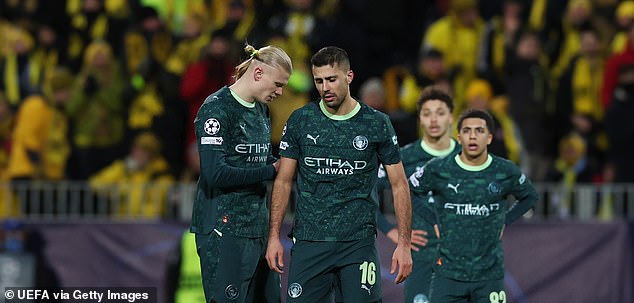
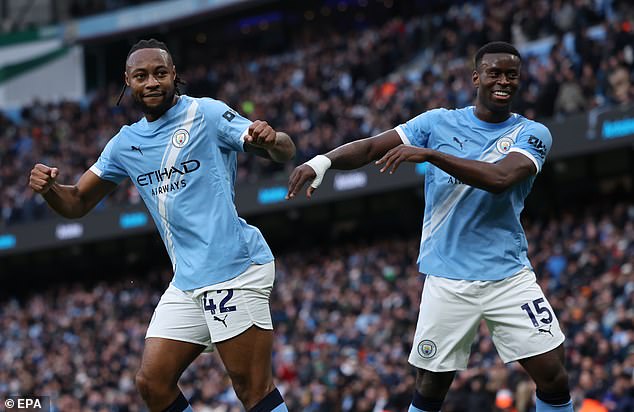
The arrival of two January signings, defender Marc Guehi and winger Antoine Semenyo, has been seen as a boost, and perhaps contributed to Guardiola’s recent defence against the popular narrative of City’s boundless spending power. He suggested this week that his club ranked seventh in net spend over the last five years, a figure that was slightly inaccurate; they are, in fact, sixth, with a net outlay of £324.7m, placing them just ahead of Nottingham Forest and behind Newcastle, Tottenham, Arsenal, Manchester United, and Chelsea.
Like many at City, Guardiola harbours a sense of frustration with what he perceives as unfair public perceptions. He also feels that his club does not receive the same level of mainstream media attention as its more historically established rivals, Liverpool and Manchester United. He has, in the past, publicly commented on the perceived bias of certain media outlets and even playfully admonished a respected journalist for attending a Manchester United press conference over his own.
This dynamic reflects a broader aspect of modern Manchester City’s identity. Despite their significant on-field achievements over the past 15 years, the club may not yet possess the same established prestige as some of Europe’s traditional powerhouses, a fact they are well aware of. Furthermore, some observers suggest that City’s influence within the corridors of power in English football is not commensurate with their success, particularly in light of the ongoing Premier League investigation into alleged financial rule breaches, a saga that has spanned a substantial portion of Guardiola’s tenure.
Guardiola, a manager who has historically carried the burdens of his profession with immense gravity – requiring a sabbatical after four demanding seasons at Barcelona and a shorter break after his time at Bayern Munich – has surprised many by his prolonged stay in England. His longevity has undoubtedly been bolstered by the presence of close friends within the club’s hierarchy, including former director of football Txiki Begiristain and chief executive Ferran Soriano. Begiristain himself, upon his departure, admitted he had long ceased trying to predict his friend’s future plans, having once imagined they might leave together but ultimately giving up on deciphering the timeline.
The Road Ahead
On the pitch, Guardiola’s immediate challenge lies in Sunday’s encounter at Anfield, a venue that has historically posed difficulties for his teams. This season, the clash between City and Liverpool is not merely a contest between England’s two preeminent clubs, but a battle between two sides forging new paths through a Premier League that has presented evolving challenges for both.
When questioned about the increasing difficulty of winning matches in England, Guardiola’s response was characteristically nuanced, hinting at a man who sometimes perceives slights where none exist, and perhaps a touch of feeling under-appreciated. “Yeah, maybe you are saying that to make 98 points as we did to win the Premier League is not hard enough,” he retorted. “So I don’t agree with you, to be blunt. To win with 100 points or 98 points or 96 or 95 points, to win over Liverpool with Jurgen Klopp or United with Ole (Gunnar Solskjaer) or Jose (Mourinho), or Chelsea with (Thomas) Tuchel or (Antonio) Conte, I’m not saying it was easy. The people believe I had to do it a lot. ‘Ah it’s taken for granted’. Of course it’s tough. Every season is tough. The managers are better, the players. The teams invest a lot. Sorry to tell you, not just Manchester City. Of course every season is getting more difficult, but I think not just for us, for all the teams.”
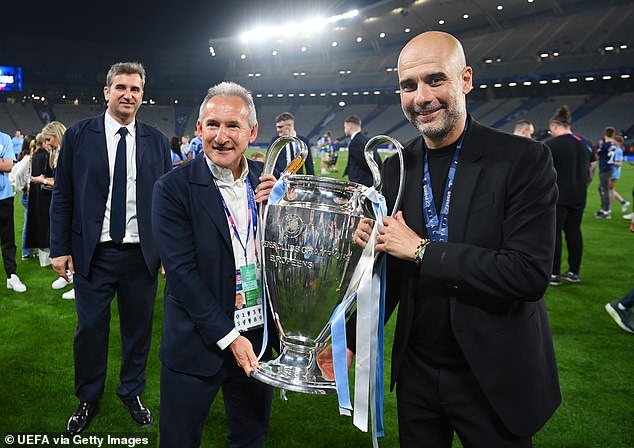
The eventual departure of Guardiola will undoubtedly usher in a fascinating period of evolution for Manchester City. The club has, for a decade, been intrinsically built around one man, who has been afforded a level of influence and autonomy that is unlikely to be replicated.
Currently, City faces its own identity challenges, striving to balance its status as an elite club with its commitment to its core fanbase, many of whom hail from less affluent areas of Manchester. Matchday revenues, for instance, do not always align with those of their rivals, and on occasion, seats remain empty, as was observed during the Carabao Cup semi-final second leg, a consequence of supporters pushing back against ticket pricing. These are not unique challenges, but they are pertinent to City’s current trajectory.
Guardiola’s indelible mark on English football is undeniable. His departure will leave a void, not only through his innovative style of play but also through his development of English talent like Phil Foden and John Stones. His standing among his managerial peers is exceptionally high. He has consistently demonstrated a capacity to see the bigger picture, a quality that perhaps distinguished him from contemporaries like Jürgen Klopp. Numerous managers across various divisions owe him a debt of gratitude, whether through shared coaching insights or, at times, professional references.
On the training pitches at the state-of-the-art City Football Academy, his players have largely noticed little change. He continues to operate with a meticulous, almost obsessive, control, oscillating between instilling confidence and offering constant, sometimes overwhelming, input.
Regarding the future, the players remain in the dark. However, the memory of Guardiola’s powerful declaration in the same press conference seat, following the announcement of the Premier League’s 115 charges nearly three years ago, still resonates. “I am not moving from this seat,” he proclaimed with unwavering conviction, a statement that arguably fuelled his team’s charge towards a fourth successive league title. Back in February 2023, his words left no room for doubt. Today, despite his measured pronouncements, the situation feels considerably less clear.