Former Taipei Mayor Sentenced to 17 Years, Banned from Politics
A significant political upheaval has occurred in Taiwan with the sentencing of former Taipei Mayor Ko Wen-je to 17 years in prison on charges of bribery and misuse of political donations. The conviction represents a severe setback for Ko, who founded and led the Taiwan People’s Party (TPP), the third-largest political force on the island. The ruling also includes a six-year ban from holding public office, effectively ending any aspirations Ko might have harboured for a presidential run in 2028.
Ko, who competed in the 2024 presidential election and finished last in a three-way contest, has maintained his innocence throughout the legal proceedings. Reports indicate he did not enter a guilty plea, and his defence has consistently labelled the accusations as “political manipulation.” He notably refused to provide testimony during the trial.
The TPP has been in discussions with the larger Kuomintang (KMT) party regarding potential alliances for the upcoming November local elections. Such cooperation could have been a strategic move to challenge the ruling Democratic Progressive Party (DPP) in the 2028 general election. However, Ko’s conviction and subsequent ban from public office cast a long shadow over these potential collaborations and the TPP’s future electoral prospects.
Details of the Charges and Verdict
Prosecutors had sought a more severe combined sentence of 28 and a half years for Ko, citing a range of alleged offences committed during his tenure as Taipei Mayor from 2014 to 2022. The core accusations include:
- Bribery: Ko is accused of accepting NT$17.1 million (approximately US$530,000) from Sheen Ching-jing, the chairman of Core Pacific Group. This alleged bribe was reportedly in exchange for granting an illegal increase in the floor-area ratio for a development project.
- Embezzlement of Political Donations: The former mayor is also implicated in the alleged embezzlement of over NT$68 million in political donations intended for the TPP and an associated company.
- Misuse of Funds: Furthermore, Ko is accused of diverting approximately NT$8.27 million in donations meant for a social welfare foundation towards his presidential campaign.
The court’s decision directly impacts Ko’s eligibility for future political office. Taiwan’s election laws stipulate that individuals convicted of corruption, or facing charges that could lead to death sentences, life imprisonment, or imprisonment exceeding 10 years, are barred from becoming candidates. Legislators from the ruling DPP have commented that Ko’s sentence “effectively eliminated” the TPP from the 2028 presidential race.
Political Ramifications and Reactions
The legal case against Ko has been a prominent feature of Taiwanese politics for some time. He was detained and held incommunicado for a year before being released on a record-breaking NT$70 million bail in September. Following his detention, Ko stepped down as TPP chairman in January 2025, with Huang Kuo-chang taking over the leadership. Huang has also publicly stated his belief that the charges against Ko were politically motivated.
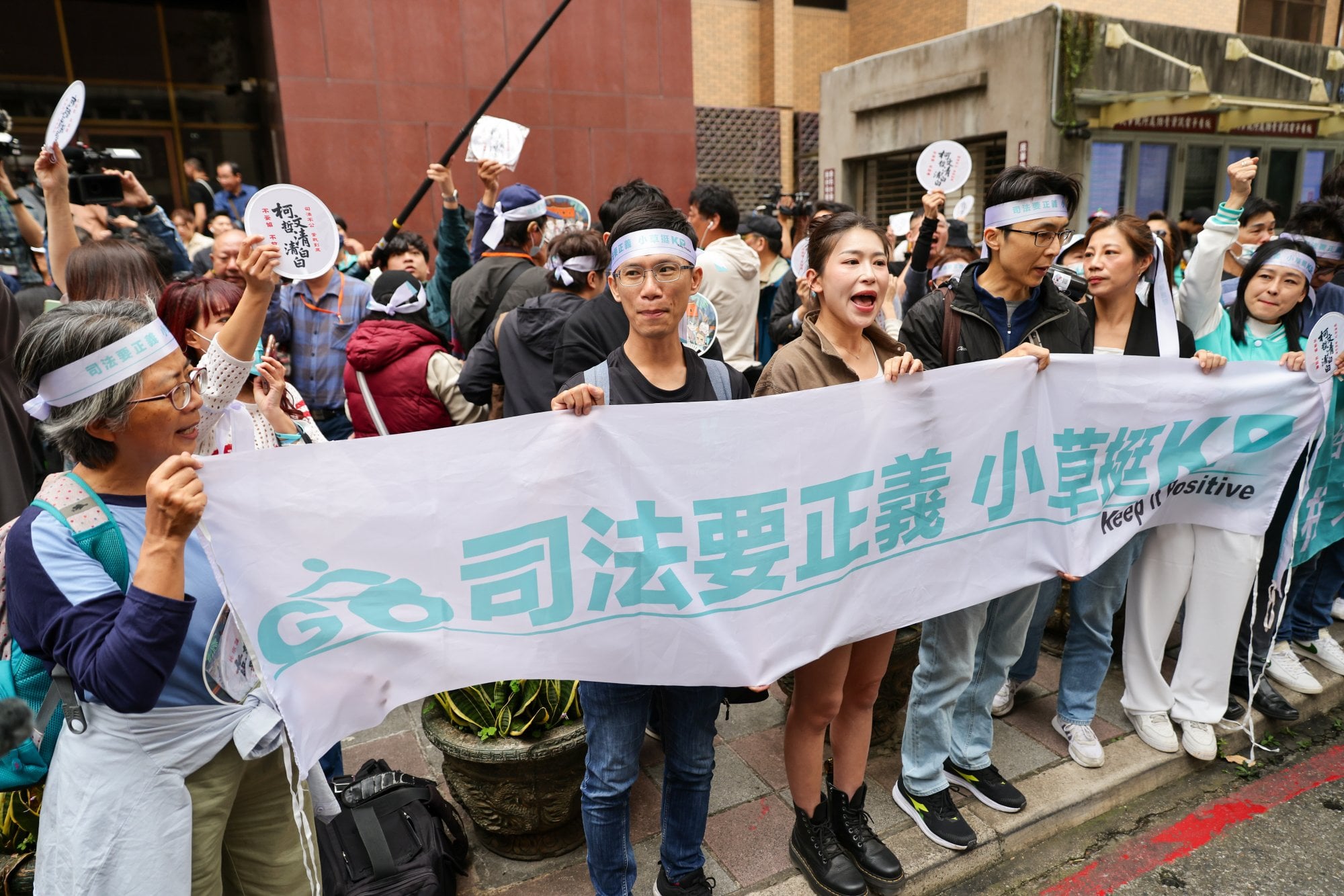
The verdict was delivered amidst a visible police presence outside the courthouse, with dozens of Ko’s supporters gathering to protest. Footage showed them waving banners and chanting slogans against the ruling.
The KMT, which had recently approved a cooperation agreement with the TPP for the upcoming local elections, saw its leader, Cheng Li-wen, voice strong support for Ko. Cheng described the trial as “ruthless judicial persecution,” underscoring the deep political divisions surrounding the case.
The conviction of a prominent opposition figure like Ko Wen-je is likely to reshape the political landscape in Taiwan, particularly as parties strategize for upcoming local elections and the crucial 2028 presidential contest. The TPP, now without its founder at the helm and facing the disqualification of its former leader, will need to navigate this new reality and redefine its path forward in the island’s competitive political arena. The implications for potential KMT-TPP cooperation also remain a significant point of discussion.