Balendra Shah, widely known as Balen, is employing a unique strategy to challenge the established communist parties in Nepal, aiming to outmaneuver them on their own turf. Historically, Nepal’s Marxist-Leninist movements have resonated with the populace through poignant songs addressing poverty and inequality. Iconic artists such as Raamesh Shrestha, JB Tuhure, and Jivan Sharma have long held a special place in the hearts of Nepalis for their enduring anthems like ‘Gai ta bandhyo’ and ‘Aama didi bahini ho’.
The song ‘Gai ta bandhyo’ experienced a resurgence in popularity in the 1990s after its inclusion in the successful Nepali film Balidan. Following Nepal’s transition to a republic, a development partly attributed to the revolutionary spirit fostered by such music, Balen reinterpreted the song with a contemporary music video. This reimagining, however, carried a subtle critique, suggesting that the very revolutionaries who had faltered in governance were now the subject of mockery. A recurring theme throughout the song is the lament that “there is nobody to speak for the poor.”
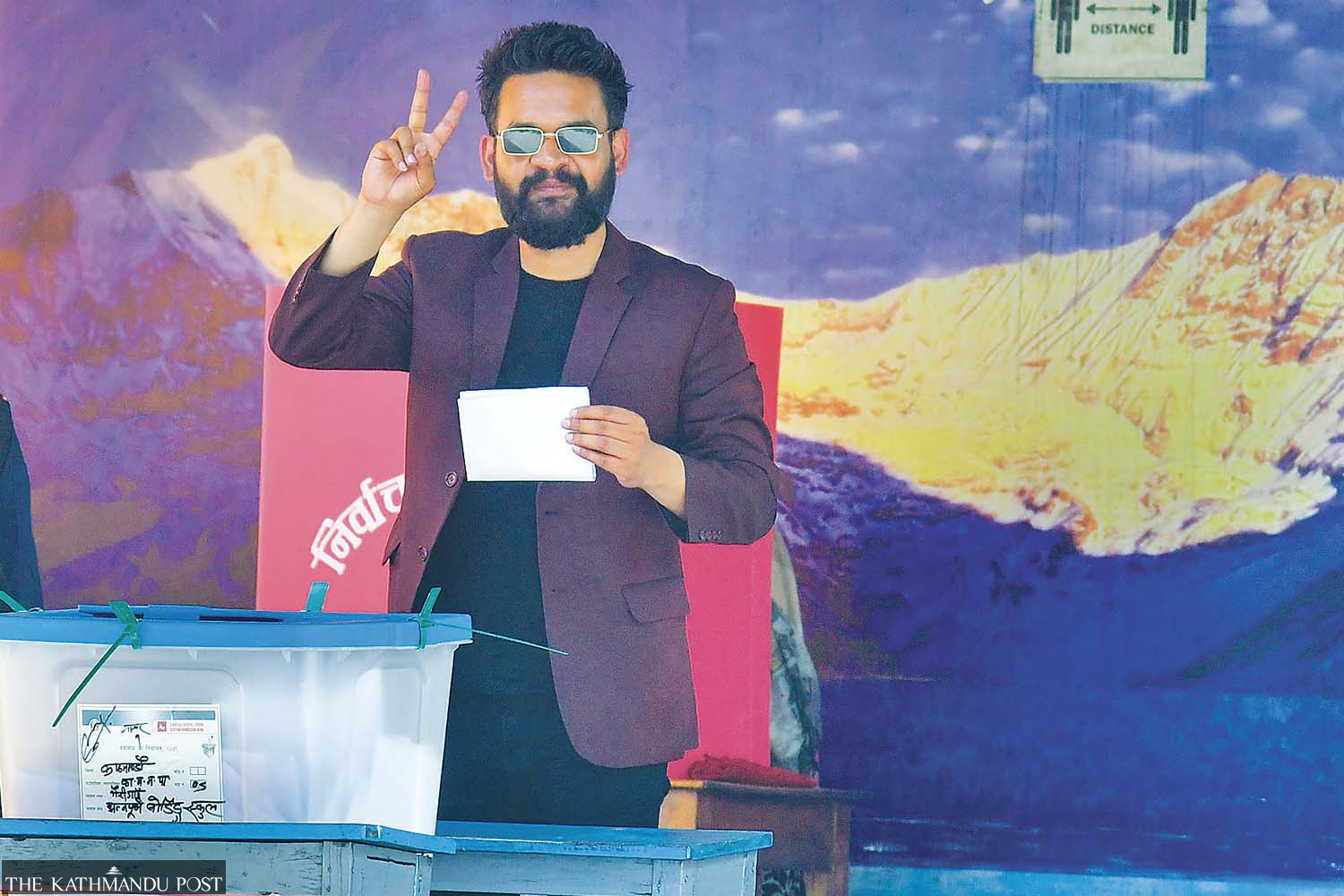
Balen is currently contesting the March parliamentary elections in the Jhapa-5 constituency, where his primary opponent is KP Oli, a prominent communist leader in Nepal. Oli is recognized as one of the leaders of the Jhapa Naxalite movement, which saw the redistribution of land to cultivators in the eastern Tarai district during the 1970s. He subsequently spent a significant period incarcerated for his political activities, only to be released when the banned Marxists and Congress parties intensified their opposition to the partyless Panchayat system in the late 1980s.
Oli has held the position of Prime Minister on multiple occasions. His tenure concluded in September following a youth-led protest movement, often referred to as the Gen Z revolt. Some political observers characterize him as a highly skilled manipulator of Nepali politics, drawing parallels with the late Nepali Congress leader Girija Prasad Koirala. Another significant rival, Pushpa Kamal Dahal, a Maoist leader whose insurgency achieved a debatable success, is not typically perceived as possessing the same level of political acumen as Oli, yet he also played a role in Oli’s downfall.
Balen emerged as a prominent figure in the wake of the September protests, his profile significantly elevated. He has been linked by some to the arson at Singha Durbar, the seat of Nepal’s government, which was ravaged by fire. In an earlier social media post, Balen had issued a threat to set the central secretariat ablaze if traffic police again impounded vehicles operated by the Kathmandu Metropolitan City Office, which he led as mayor.
In the 2017 parliamentary elections, Dahal and Oli were political allies, leading to the formation of strong communist governments at both the federal and provincial levels. The subsequent inability of their unified communist party to govern effectively within the federal structure, internal conflicts during the COVID-19 pandemic that exacerbated public suffering, and a series of government changes following the party’s split created an opening for younger figures like Balen to enter the political arena.
Balen had been actively campaigning for years before his successful bid for Kathmandu mayor in 2022. Rabi Lamichhane, a vocal journalist known for delivering his brand of justice on television, also transitioned into politics for the parliamentary elections held later that year.
Oli’s missteps are seen as having paved the way for the emergence of both these political newcomers. Balen’s mayoral opponent from Oli’s CPN-UML party was Keshav Sthapit, the former chief of Kathmandu metropolis, who was perceived as out of touch with contemporary issues. A younger candidate like Sunita Dangol, who secured a landslide victory in the deputy mayor race, might have even been capable of defeating Balen in the mayoral contest itself.
In the previous election, Oli’s party fielded candidates against Balen. This time, Balen has directly challenged Oli by campaigning in Jhapa, Oli’s home constituency.
Balen’s political persona complements that of Lamichhane, who embodies the “angry young man” archetype in Nepali politics. Currently associated with Lamichhane’s Rastriya Swatantra Party (RSP), Balen is largely spearheading the party’s electoral campaign. This is a notable shift, as Balen had previously been critical of the RSP, along with other domestic and foreign entities, on social media. His current political endeavors represent a more focused and intensified expression of his activism.
Political movements typically coalesce around a visible leader. The Gen Z revolt was catalyzed by the Oli government’s restrictions on social media. Some young individuals formally registered their intent to organize peaceful protests against these measures. The tragic killings of 19 youths in police shootings on September 8th ignited what became the most significant act of destruction against Nepal’s state apparatus in its history. By that point, Balen’s social media pronouncements had become so influential that he was able to direct the actions of the protesting youth. Following his directives, the Nepali Army intervened to negotiate a resolution, guiding the nation through its sole urban revolt.
While Lamichhane was released from custody, reportedly with aspirations of leading a government in the aftermath of the revolt, Balen declined an offer from the youth to become Prime Minister.
It appears that Balen is not inclined to accept a position that has come to him so readily. Instead, he seems determined to achieve it through a more arduous path, with his immediate objective being to defeat another potential prime ministerial candidate, Oli, from the UML.
Oli has faced significant historical setbacks on three occasions: enduring 14 years of imprisonment with chronic illnesses, and requiring an evacuation from Baluwatar via an army helicopter. Despite the challenge posed by Balen, he is currently projecting an image of resilience. Ultimately, it will be up to the electorate to decide who will represent them.
Defeating Oli alone will not automatically place Balen in the Prime Minister’s office at Singha Durbar. For Balen to become Prime Minister, the RSP, under Lamichhane’s leadership, must emerge as the largest political party.
Balen’s campaign itinerary has included tours of the eastern hills to connect with voters in Jhapa. His visits to far-western districts are a clear effort to bolster his prospects for the prime ministership.
The precise outcomes following March 5th remain uncertain, even for individual voters, let alone for political commentators and self-serving politicians. The coming weeks will reveal which parties will capitalize on the electoral sentiment and which will be swept aside. Balen’s perceived aura of invincibility is now being tested at the ballot box.
Oli has been employing various tactics to postpone the elections, positioning his party as the bulwark against what he terms “destructive forces.” Growing increasingly anxious about a potential defeat, Oli even attempted to form electoral alliances with Dahal’s coalition of leftist parties, but these efforts proved unsuccessful. Dahal appeared to have played a role in fueling the Gen Z movement and sought to benefit from it subsequently, but now faces elections without a guaranteed victory.
Balen, for his part, has been vocal in criticizing the failures of the established political leaders. The question remains whether he can effectively counter allegations that he was slow to dispatch fire engines to combat the fires at Singha Durbar and the Supreme Court.
While the principles of revolution might suggest that Oli’s repeated victories in Jhapa are unlikely, if he manages to defy expectations, the intensity of Balen’s political fervor will be put to the test.