National Outcry Demands Justice in Tragic Child Abuse Case
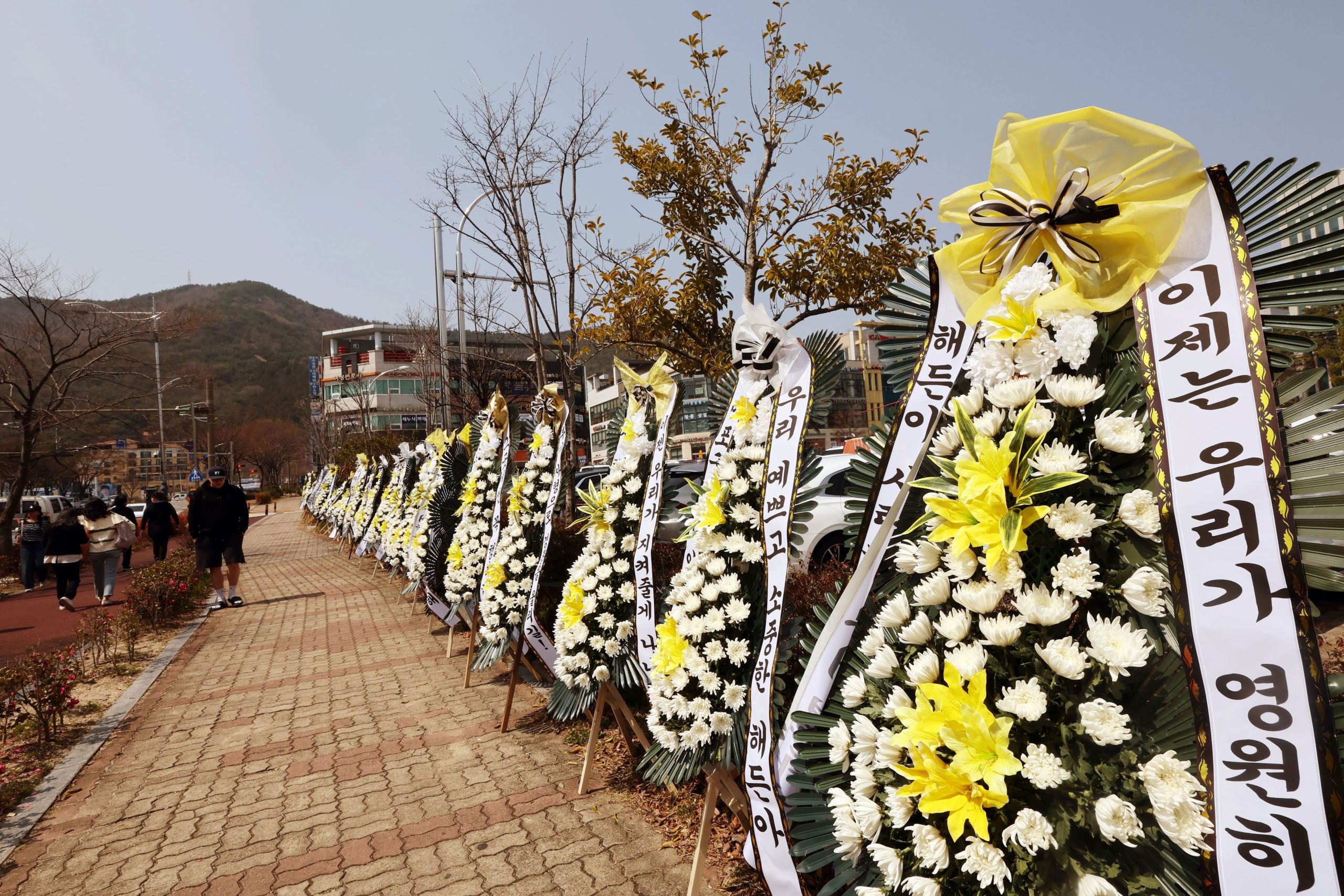
The Gwangju District Court’s Suncheon Branch became a focal point of national grief and outrage on the 26th, as the trial of parents accused of the horrific abuse and death of their 133-day-old infant unfolded. Outside the courthouse, a somber procession of over 130 funeral wreaths, dispatched from across South Korea – including cities like Seoul, Incheon, Daejeon, Jeju, Sejong, Paju, and Andong – stood as a poignant testament to the widespread public anguish.
The messages adorning these wreaths spoke volumes of the collective despair and condemnation: “Child abuse is clear murder,” “Abuse that could only end with death,” and deeply personal pleas like “Haedeun (pseudonym), we love you. Receive only love now. From your aunt in Incheon, who has many sons,” and the heartbreaking sentiment, “Come to your aunt in your next life.” These sentiments underscore a nation’s plea for accountability and an end to such preventable tragedies.
Among those gathered to witness the proceedings were Park Seung-tak, 36, and Shin Yeon-ji, 32, a couple who had travelled from Jinju, South Gyeongsang Province. Their impassioned words echoed the sentiments of many: “Children are vulnerable beings who cannot even ask for help when abused. We urge the court to impose the maximum penalty.” Their presence, like that of many others, highlighted a community’s demand for justice for the infant.
The trial, presided over by Judge Kim Yong-gyu of the Criminal Division 1, focused on the charges against A, the 30-year-old biological mother, accused of child abuse murder. Her husband, B, who faces charges related to neglecting to intervene in the abuse, also stood trial.
The indictment against A details a horrifying incident on October 22nd of the previous year. At their home in Yeosu City, South Jeolla Province, at approximately 11:43 a.m., A allegedly subjected her four-month-old son to abuse, ultimately leaving him in a baby bathtub with the shower running, leading to his death. The case gained national attention and ignited public fury after home camera footage documenting the abuse was disseminated through media channels.
During the sentencing hearing, the prosecution sought severe penalties, requesting life imprisonment for A and a 10-year prison sentence for B. These demands reflect the gravity of the charges and the perceived severity of the parents’ actions.
Devastating Autopsy Findings
The autopsy report painted a grim picture of the infant’s final moments. The cause of death was determined to be hemorrhagic shock and organ failure, a direct consequence of extensive traumatic injuries. The infant suffered an astonishing 23 fractures and widespread brain hemorrhages throughout his body, indicating a sustained and brutal pattern of abuse. Further compounding the tragedy, the biological father, B, was reportedly found to have visited a prostitution establishment on the very day the child died, a detail that has added to the public’s sense of shock and betrayal.
Legal Ramifications and Defense Arguments
The prosecution’s case, bolstered by video evidence secured through a search and seizure of A’s residence, detailed an alleged 18-minute period of indiscriminate assault on the child on the day of the crime. This led to the charge of child abuse murder. The legal framework distinguishes this charge from child abuse resulting in death. Child abuse murder carries a statutory penalty of death, life imprisonment, or a minimum of seven years imprisonment. In contrast, child abuse resulting in death typically carries a penalty of life imprisonment or a minimum of five years imprisonment. This distinction highlights the prosecution’s belief in the intentionality and extreme cruelty of the mother’s actions.
During the trial, A offered a partial admission, acknowledging that she had hit her son. However, she vehemently denied any intent to kill, attributing her actions to suffering from postpartum depression. Reports indicate that she submitted numerous letters of reflection to the court, a common practice in legal proceedings, in an attempt to seek leniency. The court has scheduled the sentencing hearing for the 23rd of the following month at 2 p.m.
Public Demonstration for Justice
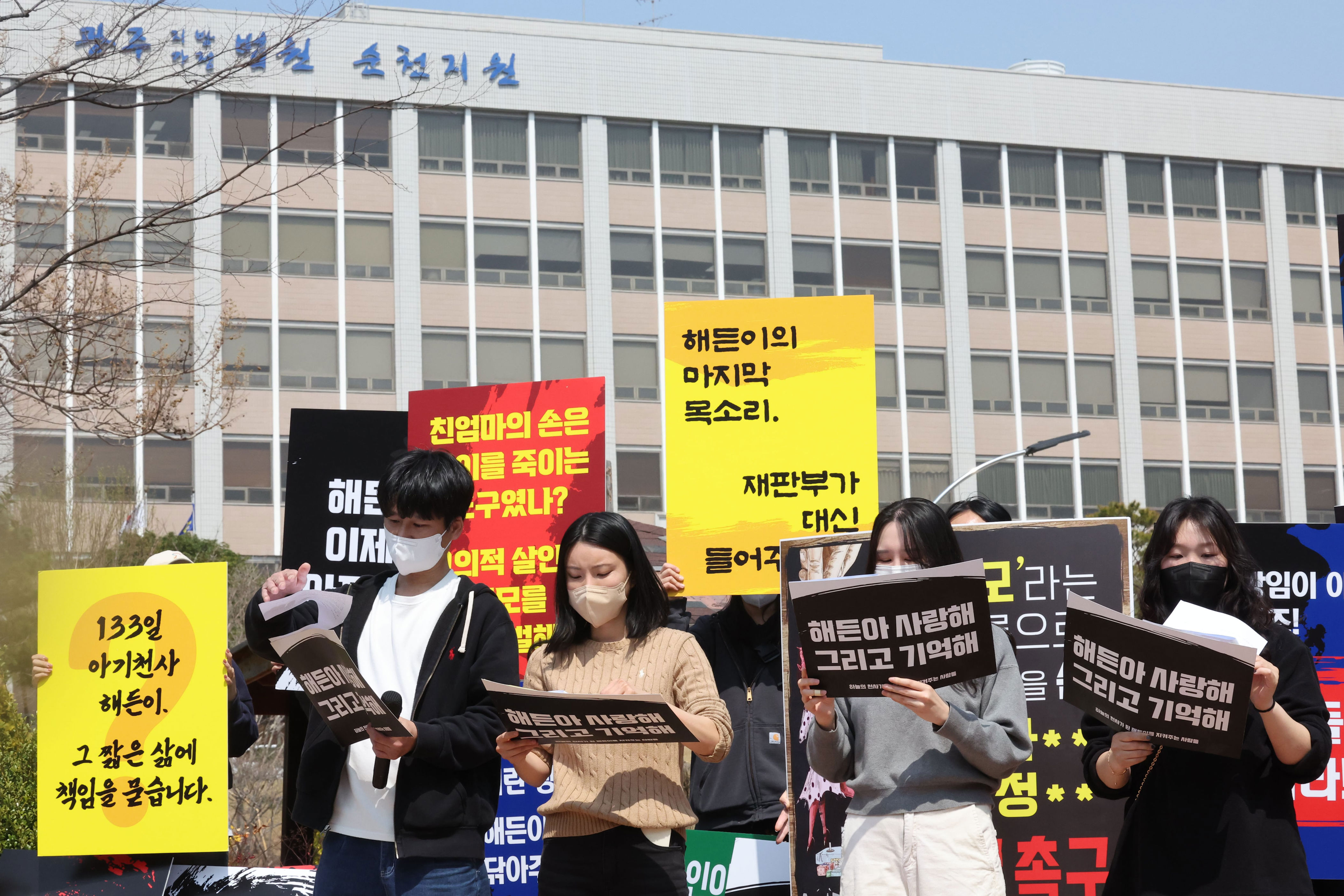
Prior to the trial, a powerful rally was held outside the courthouse, with citizens demanding the maximum penalty for the couple. Approximately 20 individuals, who had voluntarily gathered from various parts of the country, voiced their demands for stringent punishment. Standing before the court, they declared, “Letters of reflection are meaningless for a child who has already left the world due to abuse. Every child has the right to be loved and happy. Punish the perpetrators severely.” This demonstration underscored the deep-seated belief within society that such acts of violence against the most vulnerable must be met with the harshest possible consequences. The collective voice of these citizens serves as a stark reminder of the nation’s commitment to protecting its children and holding accountable those who fail in this fundamental duty.