A Political Earthquake in Nigeria
Nigeria has witnessed numerous political defections, but some exits go beyond mere shifts in party numbers. They rupture the very foundation of political belief, shake the architecture of identity, and leave millions feeling politically homeless overnight. Rabiu Musa Kwankwaso’s resignation from the New Nigeria People’s Party (NNPP) is one such moment. On the surface, it may appear as a standard “strategic realignment,” a carefully crafted phrase used to mask elite movements. However, beneath this polished language lies something far more significant. It marks a sudden dislocation for millions whose loyalty had long transcended party lines and was deeply tied to the man himself.
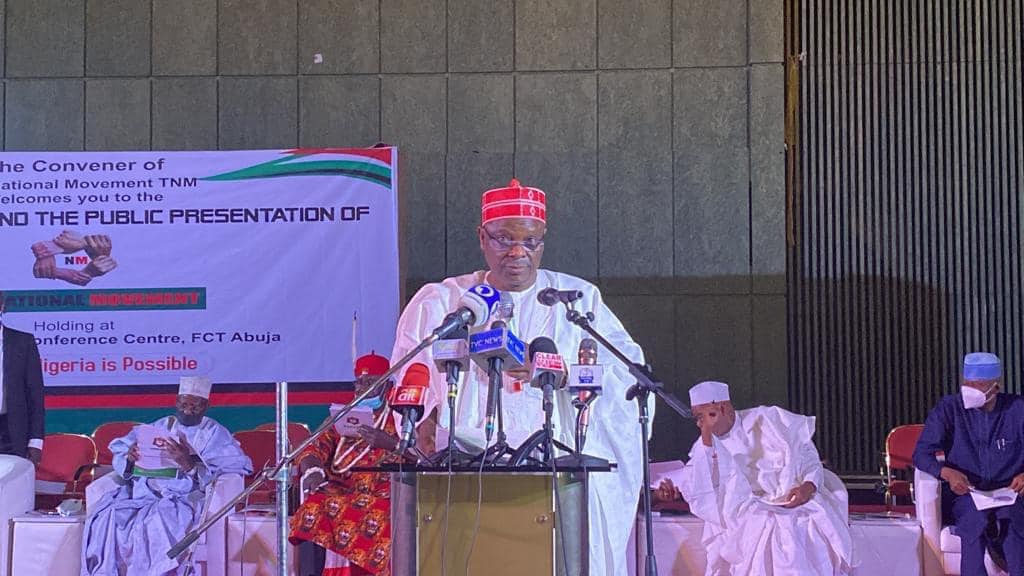
In Kano and across the northern belt, the red cap was never just a symbol of branding—it was a symbol of memory, pride, social status, and generational inheritance. When such a central figure moves, followers do not simply switch parties; they are forced to renegotiate their political identity in the public sphere. This is not just a resignation. It is a political earthquake, with tremors that will be felt far beyond the headlines.
The Identity of a Movement
For years, the NNPP was more than an institution; it was the visible embodiment of the Kwankwasiyya movement. It was a force built on grievance, northern aspiration, discipline, and the unmistakable symbolism of the red cap. In Kano and beyond, many followers did not merely vote for a party—they found a sense of belonging within Kwankwaso himself. Now, with the center having moved, Nigeria is once again forced to confront the dangerous emptiness of political parties built around individuals rather than ideas.
Political parties in a serious democracy are meant to outlive the leaders who guide them. They should carry convictions beyond ambition, preserve ideology beyond personality, and offer ordinary citizens a stable political home that does not collapse with every shift in elite direction. Yet, in Nigeria, parties often fail this basic democratic test. They are structures in name, but vessels in practice. The moment the most powerful figure exits, the walls begin to tremble.
The Consequences of Defection
Kwankwaso’s movement has crossed platforms before, and each migration has quietly reinforced the same lesson: the party is temporary, the man is permanent. This lesson, repeated over the years, has now returned with consequences too large to ignore.
What becomes of the ward loyalist who fought local political battles under the NNPP banner? What happens to the young supporter who defended the movement in hostile spaces because they believed it represented a durable alternative in national politics? What of the millions who invested not just votes but emotional identity into something they thought had institutional permanence?
They now find themselves in a wilderness of uncertainty. In Kano, where the red cap long ceased to be mere political branding and became a public language of belonging, this rupture cuts deeper than party paperwork can explain. For many, Kwankwaso’s movement was not simply a voting platform—it was memory, pride, social location, and a generational inheritance passed from political elders to younger loyalists who wore its symbols as proof of identity.
The Hidden Violence of Defections
Some will follow him without hesitation, as loyalty in personality politics often behaves like inheritance. Others will feel the quiet sting of betrayal—not because leaders don’t have the right to realign, but because ordinary followers are rarely included in the decision-making process. They simply wake up to a new political destination and are expected to move their convictions overnight.
This is the hidden violence of defections in Nigeria. For the elite, it is strategy. For the grassroots, it is displacement. And every time this happens, democracy pays the price. Trust weakens. Participation thins. Cynicism deepens.
The ordinary voter begins to suspect that their loyalty was never tied to principle, only to the movement of one powerful figure. Once that suspicion takes root, democratic participation starts to feel less like citizenship and more like spectatorship, where the most important decisions are made far away from those who bear their consequences.
The Timing of the Resignation
What makes this moment even more consequential is its timing. With 2027 already casting its long shadow across the political landscape, this resignation is almost certainly the first public tremor of a broader season of coalition building, whispered alignments, and elite recalculations. Kwankwaso himself says he is moving toward a platform that offers “the best opportunity to effectively change the nation,” signaling national ambition beyond the formal exit itself.
But the most important question is not where he is going. It is what this departure reveals about where Nigerian democracy still stands. A system where millions can be uprooted from one political identity to another by the decision of a single man is not yet a democracy of institutions. It remains a democracy of fealty, where personalities cast longer shadows than party constitutions, and where movements risk becoming transport systems for elite ambition.
The Haunting Truth
The real tragedy is not that Kwankwaso left the NNPP. The real tragedy is that his leaving instantly throws into question the meaning, future, and emotional coherence of the movement itself. In a mature political system, no single resignation should be powerful enough to make millions feel politically homeless by nightfall.
Yet here we are. The headlines said Kwankwaso resigned. But the deeper story is that millions may have gone to bed unsure where their politics now lives. That is not merely strategy. That is the wilderness of personality rule.