Political Controversy Over Hospital Safety and Transparency
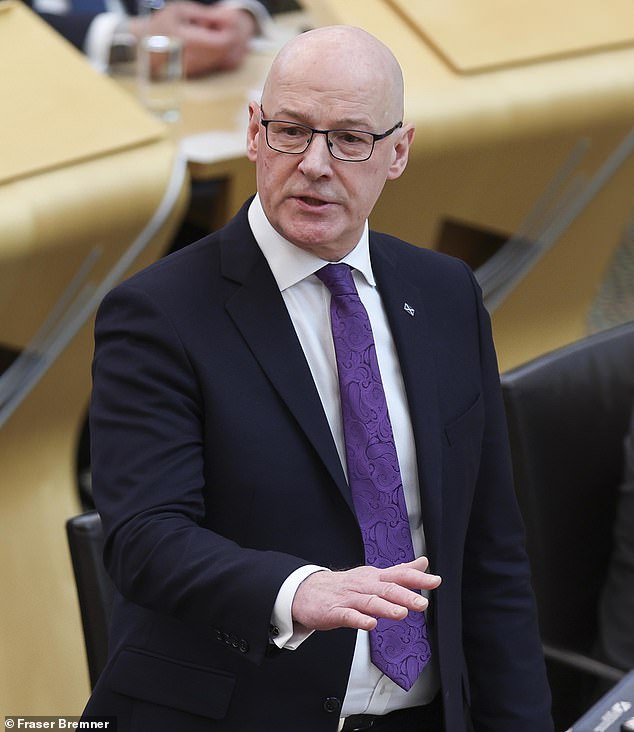
A growing political storm has erupted over the handling of safety concerns at Ward 4B of the Queen Elizabeth University Hospital (QEUH) in Scotland. New evidence has emerged suggesting that senior officials, including First Minister John Swinney and Health Secretary Neil Gray, were aware of fungal infections among patients on the ward but failed to disclose this information publicly.
According to newly obtained documents, two confirmed cases of hospital-acquired fungal infections were reported on February 26. These infections were caused by fungi Exophiala dermatitidis and Mucor velutunosus. Additionally, there were two suspected cases. Despite this, both ministers continued to assert that the hospital was safe during parliamentary questioning and public statements.
- The Scottish Mail on Sunday obtained documents revealing that the First Minister and Mr. Gray were informed about the fungal infections on February 26.
- On March 4, while being questioned about the room closures on the ward, neither minister mentioned the infections. Instead, they insisted the hospital was safe.
- A briefing sent to Mr. Gray on March 2 provided details of the infections and noted that swabs taken from a room with black marks on the ceiling were negative, but further testing was ongoing.
Public Outcry and Calls for Accountability
The revelations have sparked outrage among opposition leaders and families affected by the hospital’s issues. Jackie Baillie, deputy leader of Scottish Labour, described the situation as “staggering” and accused SNP ministers of lying to journalists and Members of the Scottish Parliament (MSPs).
- Maureen Dynes, whose husband Tony died in 2021 after contracting two infections on Ward 4B, expressed frustration with the lack of transparency.
- She stated that the government and health board had repeatedly assured her family that the hospital was safe, despite ongoing investigations into water and mold issues.
- Dynes called for immediate action to prevent more families from suffering similar losses.
Ongoing Concerns and Lack of Communication
Despite the evidence of infections, NHS bosses did not address patient infections when questioned by journalists. On March 7, a reporter asked the health board about the healthcare infection alert (HIIAT) and whether any patients were infected. No response was received.
- A spokeswoman for NHS Greater Glasgow and Clyde (NHSGGC) stated that the board does not provide information on individual patients or small groups when numbers are below five to ensure confidentiality.
- The statement also claimed that key facts about the safety of Ward 4B were highlighted on the board’s website and denied any attempts to minimize the seriousness of the issue.

Criticism of Government Actions
Opposition leaders have criticized the Scottish Government for its lack of transparency and accountability. Dr. Sandesh Gulhane, Scottish Tory health spokesman, described the situation as “damning evidence of yet more secrecy and cover-up from SNP ministers.”
- He emphasized that the public and Parliament were kept in the dark about the risks faced by patients on Ward 4B.
- Gulhane urged John Swinney and Neil Gray to stop hiding behind an independent inquiry and instead provide the truth about the hospital’s issues.
Government Response and Continued Investigations
A Scottish Government spokeswoman reiterated that ministers are deeply sorry for the issues patients have experienced at the QEUH and are in close contact with NHS GGC regarding Ward 4B. They receive regular updates to maintain an accurate picture of developments.
- However, the government has not directly addressed the allegations of withholding information about the infections.
- The focus remains on ongoing investigations into the conditions at the hospital and the need for improved transparency and accountability.