A New Study Examines the Historical and Scientific Evidence for the Resurrection of Jesus
The resurrection of Jesus Christ is a central tenet of Christianity, with the Bible recording that he rose from the dead three days after his crucifixion. This event has been the foundation of Christian faith for centuries and continues to be a subject of intense debate among scholars, theologians, and skeptics alike. While some view it as a matter of faith, others seek to understand whether it can be verified through historical and scientific analysis.
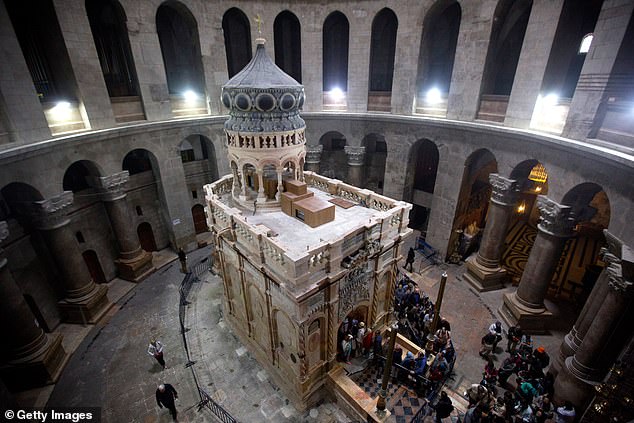
A recent study by Pearl Bipin, an engineer at the National Institute of Technology in Goa, India, has examined long-standing theories that challenge the historicity of the resurrection. The research focused on four key pieces of evidence: the empty tomb, the reported appearances of Jesus after his death, the transformation of his followers, and the conversion of former skeptics. According to Bipin, these elements are supported by multiple early sources and were recorded close to the time of the crucifixion, making them significant in historical analysis.
The report also considered psychological explanations such as hallucination or conspiracy theories, but argued that these fail to fully account for the full range of events described in the accounts. Using philosophical reasoning and legal-style standards of evidence, including probability modeling, the study concluded that the resurrection remains the most coherent explanation for the available historical data.
Establishing a Secular Foundation
To build a secular foundation for the investigation, the study turned to non-biblical sources to confirm the existence of Jesus. One of the earliest references comes from the Roman historian Tacitus, who wrote in the early second century that a man named Christus was executed during the reign of Emperor Tiberius under Pontius Pilate. This account is considered one of the strongest independent confirmations of Jesus’ existence and execution by Roman authorities.
The report also highlighted writings from Jewish historian Flavius Josephus, who mentioned Jesus while describing the execution of James, identified as his brother. These references, along with other ancient accounts, form what the author calls a “framework of certainty” that Jesus lived, was executed, and inspired a movement that continued to spread after his death.
Forensic Medicine and the Swoon Theory
Beyond historical texts, the study explored forensic medicine to examine whether Jesus could have survived crucifixion—a theory known as the “Swoon Theory.” This suggests that Jesus never truly died but merely lost consciousness and later revived. However, the report argues that this claim ignores medical evidence of his death and the impossibility of freeing himself from the tomb in such a weakened state.
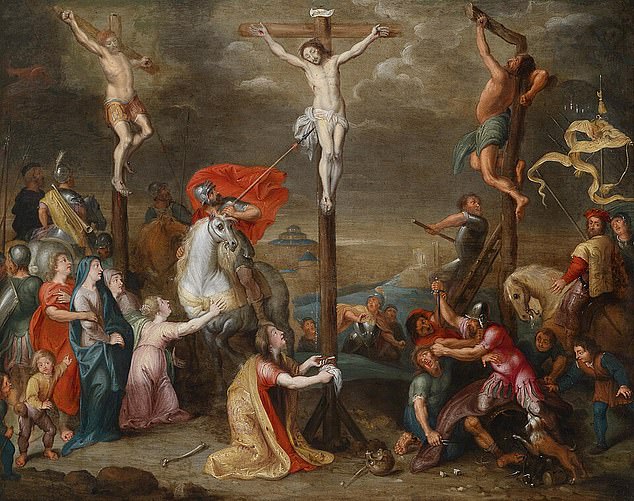
Crucifixion, as described in the study, was a method designed to ensure death through trauma, blood loss, and eventual suffocation. Victims were often scourged beforehand, causing severe lacerations and shock, before being nailed to a cross in a position that gradually prevented breathing. They were forced to push upward on pierced limbs to inhale, a process that became increasingly difficult as exhaustion set in, eventually leading to suffocation and cardiac failure.
One of the most striking details cited in the investigation involves a description from the Gospel of John stating that a Roman soldier pierced Jesus’ side, producing what was described as “blood and water.” The report interpreted this as a possible sign of fluid buildup around the lungs and heart, a medical condition associated with traumatic injury and cardiac failure. Bipin suggested this separation of fluid and blood is consistent with severe trauma and heart failure, supporting the argument that death had already occurred or was imminent at the time of the wound.
The Minimal Facts Approach
The study shifted focus to what it calls the “minimal facts” approach, a method used by some historians to identify events that are widely accepted by scholars regardless of religious belief. Among those facts are claims that Jesus’ tomb was found empty, that his followers reported seeing him alive after his death, and that early believers were transformed from fearful individuals into outspoken advocates willing to risk persecution.
The report also highlighted the conversion of former skeptics, including individuals who initially doubted Jesus’ claims. For example, the Gospels state that James, Jesus’ brother, was initially a skeptic, yet early Christian history and writings by the historian Josephus later described him as a leader of the Jerusalem church who died as a martyr. Similarly, Paul, once a zealous persecutor of Christians, underwent a sudden conversion after claiming to encounter the risen Jesus, a transformation the report describes as historically significant because he had everything to lose by changing sides.
Psychological Explanations and Bayesian Reasoning
Bipin also explored psychological explanations, such as hallucination theories, suggesting that grief or emotional stress caused followers to believe they had seen Jesus alive. However, the study argued that hallucinations are typically individual experiences and do not occur simultaneously among large groups. He pointed to accounts describing appearances to multiple people at once as evidence that psychological explanations alone may not fully account for the reported events.
Another major component of the investigation involves probability analysis using Bayesian reasoning, a statistical method that evaluates how likely a hypothesis is when compared with competing explanations. When factors such as historical records, eyewitness accounts, and the sudden rise of Christianity are considered together, the resurrection hypothesis is described as having strong explanatory power compared with alternative theories, according to the study.
Despite its bold conclusions, the report acknowledged that the resurrection remains one of the most contested events in history. Skeptics noted that many of the arguments presented rely heavily on interpretations of ancient texts rather than modern physical evidence. Others caution that historical reasoning alone cannot definitively confirm supernatural events, leaving the ultimate conclusion open to interpretation.