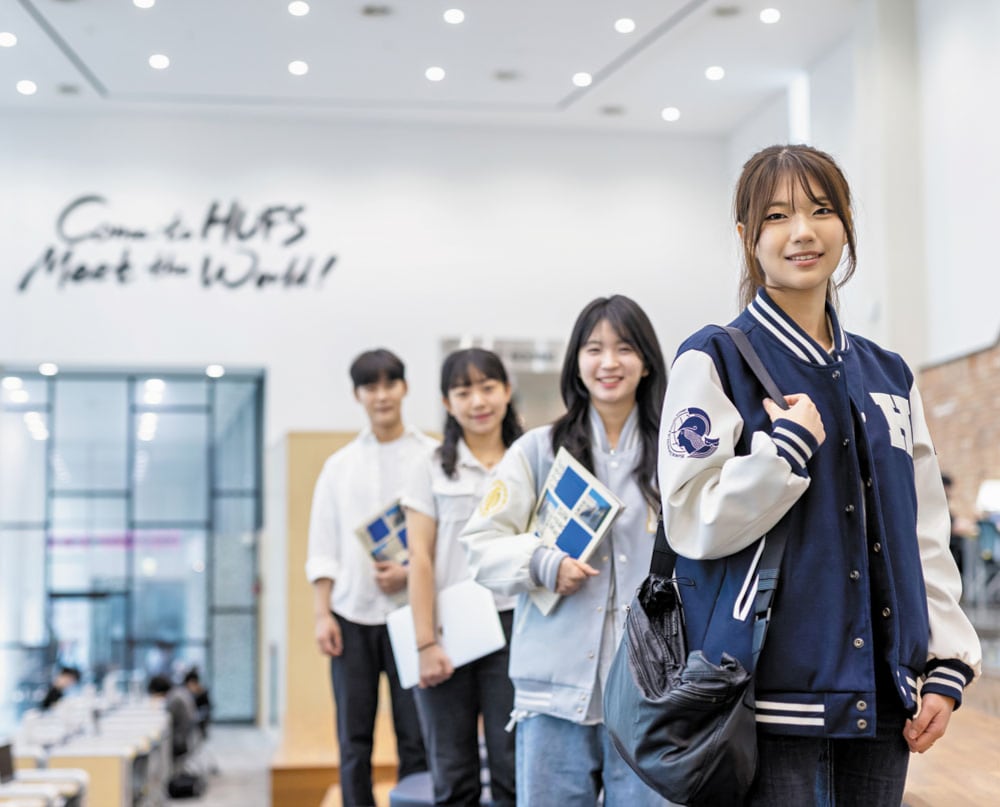
Hankuk University of Foreign Studies Charts a New Course with AI-Driven Convergence Education
Hankuk University of Foreign Studies (HUFS) is embarking on a transformative journey, integrating artificial intelligence (AI) and data technology with its long-standing strengths in foreign languages and global area studies. This strategic pivot aims to create a unique convergence education model, preparing students for the demands of future industries and a rapidly evolving global landscape. The university’s vision extends beyond simply adopting new technologies; it seeks to cultivate interdisciplinary talent by weaving AI and data competencies into the rich fabric of language and humanities education.
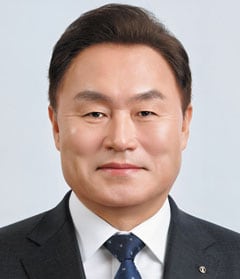
This ambitious vision for AI education innovation gained significant clarity with the inauguration of Kang Ki-hoon as the 13th president on March 6. President Kang articulated a clear mission: to elevate HUFS into a “global knowledge innovation hub university.”
A New Era for HUFS: The First STEM-Oriented President
President Kang Ki-hoon marks a historic milestone as the first president in HUFS’s history to possess a STEM (Science, Technology, Engineering, and Mathematics) background. In his inaugural address, he declared, “I will develop Hankuk University of Foreign Studies into a global knowledge innovation hub university that connects the world and opens the future.” He identified four core pillars for this future: language, humanities, AI, and data.
Addressing concerns about the perceived crisis facing humanities and languages in the age of AI, President Kang asserted, “The ability to communicate with the world, insights into understanding cultures, and sensitivity to respect diversity are, in fact, irreplaceable values that have become even more critical.” He emphasized that the university would leverage its accumulated traditional strengths to build new competitive advantages.
To achieve this, President Kang outlined four key strategies:
- Realizing an AI Campus: Transforming the university’s physical and digital infrastructure to support AI integration.
- Establishing a Virtuous Cycle Ecosystem for Education, Research, and Industry: Fostering a dynamic environment where learning, discovery, and practical application are interconnected.
- Securing a Sustainable Financial Foundation: Ensuring the long-term viability and growth of the university.
- Data-Driven Responsible Management: Utilizing data analytics to inform and enhance university operations and decision-making.
Forging an AI Campus Through Industry-Academia Collaboration
HUFS is actively forging strategic partnerships to accelerate its AI transformation. A significant development is the recent business agreement with Naver Cloud. This collaboration will encompass the development of AI infrastructure, the creation of a smart campus environment, joint research initiatives, and dedicated talent cultivation programs.
Furthermore, the university is collaborating with LG CNS to enhance industry-academia personnel exchanges. This includes the promotion of contract departments, the cultivation of global AI talent, and joint research in areas like AI Transformation (AX) and Digital Transformation (DX). Through these contract departments, HUFS plans to integrate companies’ practical AX experiences and case studies directly into its curriculum. The university will also expand opportunities for overseas project participation, leveraging its extensive global network. This approach aims to nurture graduates who possess both advanced technological capabilities and strong global communication skills.

Pioneering ‘AI Convergence Departments’ and Experiencing High Demand
The impact of this new direction is profoundly evident in HUFS’s educational offerings. The university has established an AI convergence college system, featuring innovative departments designed to blend specialized fields with AI expertise.
At the Seoul Campus, the following departments have been introduced:
-
Language & AI Convergence Department: This department focuses on language-based AI education, including natural language processing and speech processing. It aims to cultivate talents who possess a deep understanding of both linguistic nuances and technological applications. The demand for this program is exceptionally high, as evidenced by its remarkable early admission competition ratio of 183.71 to 1 for the 2026 academic year (essay-based selection).
-
Social Science & AI Convergence Department: This department extends AI convergence education across various social science disciplines, encompassing politics, economics, sociology, and media. It focuses on developing professionals capable of leveraging AI for data-driven decision-making, policy analysis, and insightful social commentary.
The Global Campus also features AI convergence departments, broadening the scope of interdisciplinary learning:
- AI Data Convergence Department: This program equips students with the skills to analyze and interpret complex datasets, applying AI techniques to extract valuable insights across diverse fields.
- Finance & AI Convergence Department: This department integrates AI methodologies into financial studies, preparing students for roles in FinTech, quantitative finance, and data-driven financial analysis.
The College of Engineering at the Global Campus, home to departments such as Semiconductor Electronics Engineering and Computer Engineering, is also adopting HUFS-style convergence education. This approach goes beyond purely technology-centric learning, incorporating language proficiency, international sensibility, and cultural competence. The goal is to foster engineers who are capable of global collaboration, navigating international markets, and executing complex international projects.
Student-Centric Innovation: Designing Their Own Futures
HUFS’s commitment to educational innovation is deeply embedded in its student-centered academic systems. Initiatives like the “Learner-Designed Convergence Major” empower students to actively participate in shaping their educational paths by designing their own major names and curricula. This fosters a sense of ownership and allows for highly personalized learning experiences.
Additionally, the “Micro-Degree” program offers students the opportunity to acquire specific practical skills through short-term, intensive courses. This flexibility enables students to adapt their skill sets rapidly in response to the ever-changing demands of the industrial environment.
President Kang concluded by stating, “We will add innovation upon tradition and design the future upon connections.” He envisions HUFS setting a precedent for universities in the AI era, forging a new educational model where language and AI, humanities and data, converge to create future leaders and innovators.