Australia is set to achieve substantial cost reductions through its decision to acquire three secondhand American nuclear-powered submarines for the AUKUS program, opting against the purchase of even a single brand-new vessel. Defence Minister Richard Marles has highlighted this choice as a strategic move prioritising “simplicity” in the ambitious, multi-decade security pact.
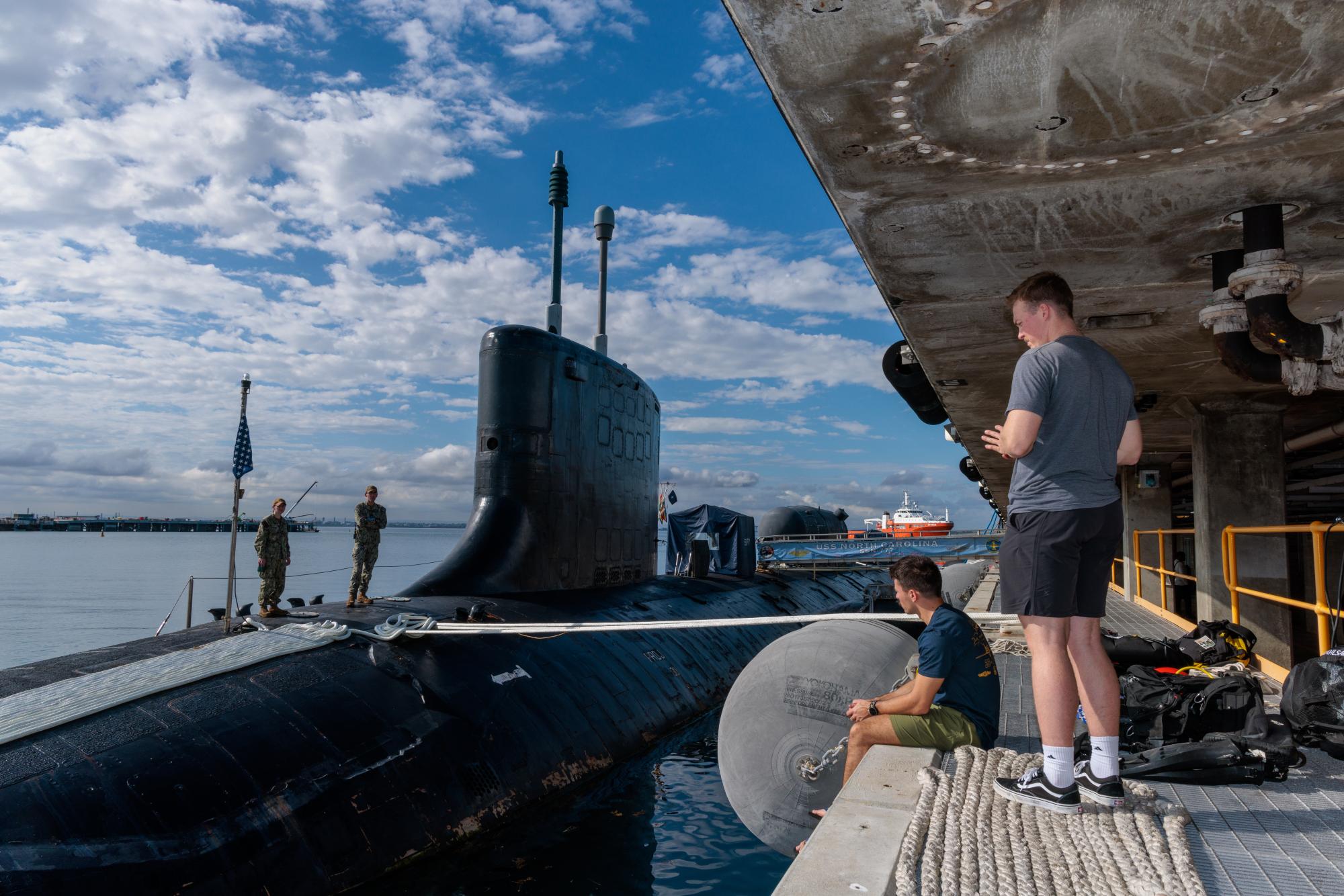
While Marles acknowledged that the fundamental cost of the AUKUS deal, projected to exceed $370 billion, would not see a dramatic alteration, the shift to exclusively acquiring “in-service” submarines is expected to streamline training and operational logistics for Australian crews from the early 2030s. This approach contrasts with an earlier expectation of purchasing one new and two secondhand Virginia-class submarines.
“We are trying to find every cost-effective option as we walk down this path,” Marles stated on the sidelines of the Shangri-La Dialogue in Singapore. “This is a very useful financial contribution to the cost of the overall program, but actually at the heart of this is chasing simplicity.”
Marles has sought to frame the overall cost of AUKUS as a manageable portion of the nation’s economic output, estimating it at just 0.15% of GDP over the lifespan of the agreement. Following discussions with his US and UK counterparts, Pete Hegseth and John Healey, the Defence Minister emphasised that integrating and training Australian personnel would be significantly easier and more efficient. This is because crews will not need to familiarise themselves with two different types of American-made submarines before the bespoke SSN AUKUS model becomes operational around 2042.
The AUKUS Submarine Timeline
The initial Virginia-class submarine from the United States is slated for arrival in Australia in 2032. Subsequent vessels are expected to arrive at four-year intervals, ensuring a staggered introduction of capability ahead of the Australian-built indigenous submarine’s readiness.
“Chasing simplicity is at the heart of why we have pursued this,” Marles reiterated, expressing confidence in the achievability of the AUKUS timeline.
Extending the Life of Existing Capabilities
To bridge the gap until the AUKUS fleet is fully operational, Australia is extending the service life of its current fleet of 30-year-old Collins-class submarines. The six submarines, constructed in Adelaide, will remain in active service for an additional ten years.
Addressing Production Challenges
The United States is actively working to double its production rate of Virginia-class submarines. This is a crucial endeavour not only to bolster its own naval capacity but also to facilitate the AUKUS program. Current American shipyards produce approximately 1.1 to 1.2 Virginia-class submarines annually, a rate significantly below the target of 2.33 per year needed to meet the program’s ambitious schedule.
“We have a sense of confidence about the production rates getting to where they need to get to,” Marles commented. He also highlighted the direct Australian contribution to this effort, noting that “about 200 Australian tradespeople [are] at Pearl Harbor, working on getting Virginia-class submarines out to sea for the US Navy. That’s a part of increasing the number of sea days for the US Navy with their Virginia-class submarines.”
Internal Disquiet and Alternative Perspectives
Despite the government’s assertions, there is growing apprehension within sections of the Labor Party regarding the AUKUS deal. Marcus Strom, the national convener of Labor Against War, has voiced his concerns, suggesting that Marles is being compelled to accept “dodgy Pete Hegseth’s second-hand subs as ‘significant savings’.”
Strom argues that from the American perspective, the delivery of Virginia-class submarines to Australia is a secondary concern. He posits that “For America, AUKUS is about gaining forward operating bases against China for nuclear weapons-capable subs and bombers – and forcing Canberra to pay billions in tribute for the privilege.”
Similarly, Arthur Rorris, secretary of the South Coast Labour Council, which opposes the establishment of a nuclear submarine base at Port Kembla, has asserted that the proposed facility was never intended for Australian submarines. Instead, he claims it “would be ceded to the United States Navy as a staging post for their 7th fleet.”
Expanding AUKUS Beyond Submarines
Beyond the submarine acquisition, the second pillar of the AUKUS agreement involves a joint development of advanced weapons systems and sensors for underwater drones. This initiative aims to bolster capabilities in protecting vital undersea cables, conducting surveillance operations, and executing strike missions against enemy targets.
Pete Hegseth indicated that Australia has committed to accelerating infrastructure projects at its bases to support an “enhanced US force posture.” This aligns with the broader push by former US President Donald Trump for allies to increase their defence spending, with Trump advocating for spending beyond 3% of GDP. Hegseth welcomed this increased “burden sharing” from Australia.
“Last year, President Trump directed that we move full steam ahead on AUKUS, and I’m proud to say that we’ve made great progress,” Hegseth remarked.