Australia’s Surprising Calm Amidst Global Fuel Crisis: A Delicate Balancing Act
While a significant conflict unfolds in the Middle East and a critical shipping lane faces blockade, Australia appears to be largely maintaining its ‘business as usual’ facade. In fact, national petrol stocks are reportedly higher than pre-conflict levels, with prices currently hovering below the $2 per litre mark. This relative stability, a stark contrast to the anxieties felt in many other parts of the world, can be attributed to a confluence of factors, including government intervention, astute international diplomacy, and a touch of good fortune.
Government Intervention Provides Immediate Relief
A key contributor to this seemingly serene situation is the Australian government’s temporary reduction of the fuel excise tax. This measure, which removed 26.3 cents per litre at the pump, coupled with the subsequent reduction in Goods and Services Tax (GST) payable on that excise, has provided a tangible financial buffer for Australian motorists. This direct intervention has undoubtedly softened the immediate impact of global price fluctuations.
China’s Unexpected Appetite for Reserves
One of the most significant, and perhaps unexpected, factors bolstering Australia’s fuel security is a dramatic shift in China’s oil import strategy. In recent decades, China has embarked on an ambitious program to build substantial strategic reserves of not only oil but also essential commodities like metals and fertilisers, preparing for potential global disruptions.
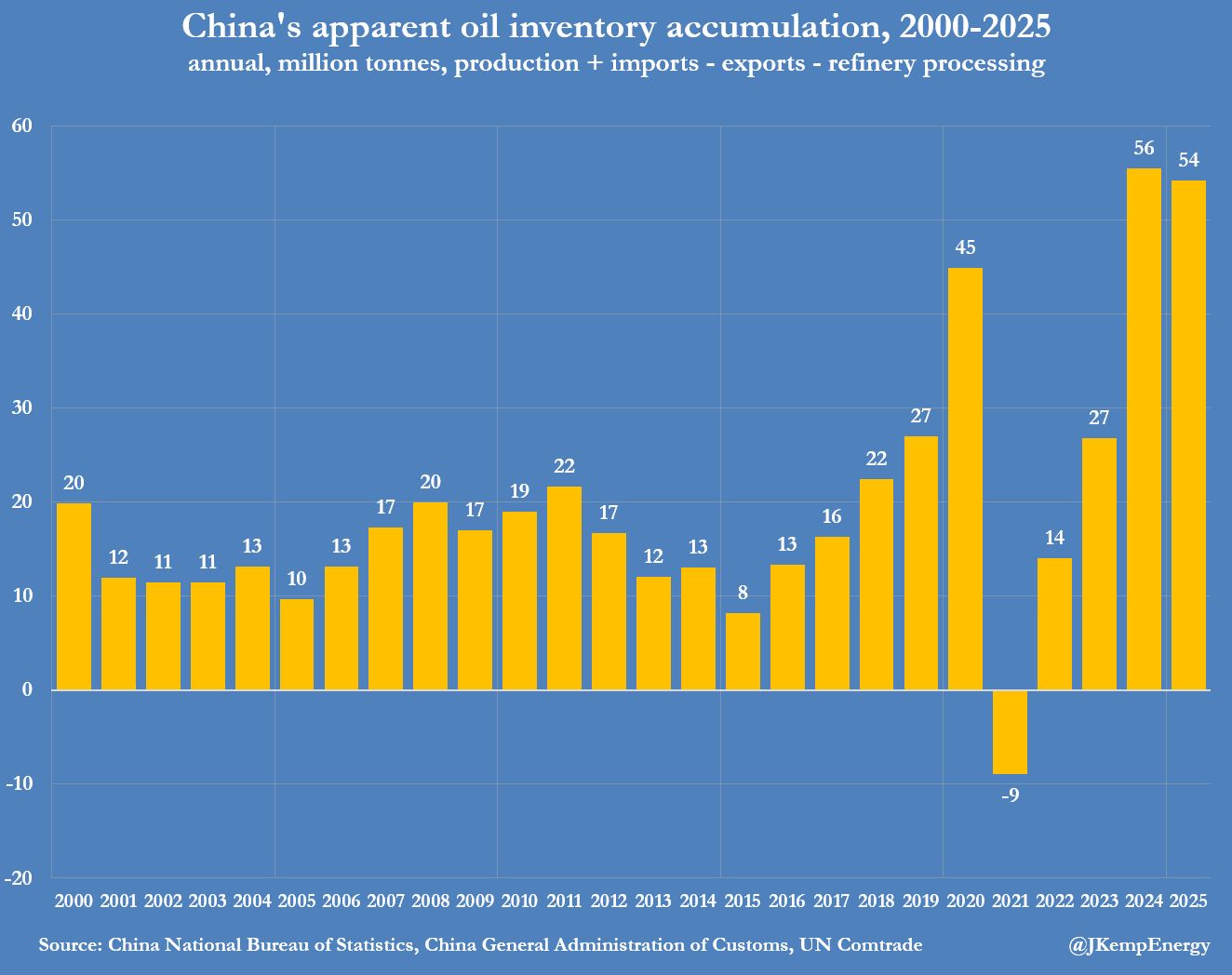
This foresight has translated into a notable decrease in China’s fuel and oil imports. Data analysed by JP Morgan indicates a year-on-year decline of 5.5 million barrels per day in net imports of oil, fuel, and related products over the past 30 days. While some of this reduction can be attributed to a decrease in refined fuel exports and a slower pace of reserve accumulation compared to previous years, the overarching trend suggests China is actively drawing down its existing oil stockpiles. The precise reasons for this strategic depletion and its long-term implications remain a multi-trillion-dollar question, with the answers seemingly held only by China’s leadership.
Fuel Conservation Efforts Abroad Benefit Australia
Even as international tensions escalate, several of Australia’s key fuel suppliers are actively implementing fuel conservation measures domestically. India, a growing source of fuel for Australia, has seen its Prime Minister, Narendra Modi, urge citizens to significantly reduce fuel consumption. His address, promoting public transport, carpooling, and minimising non-essential travel under the slogan “Nation First, Duty Above Comfort,” highlights a national effort to conserve resources.
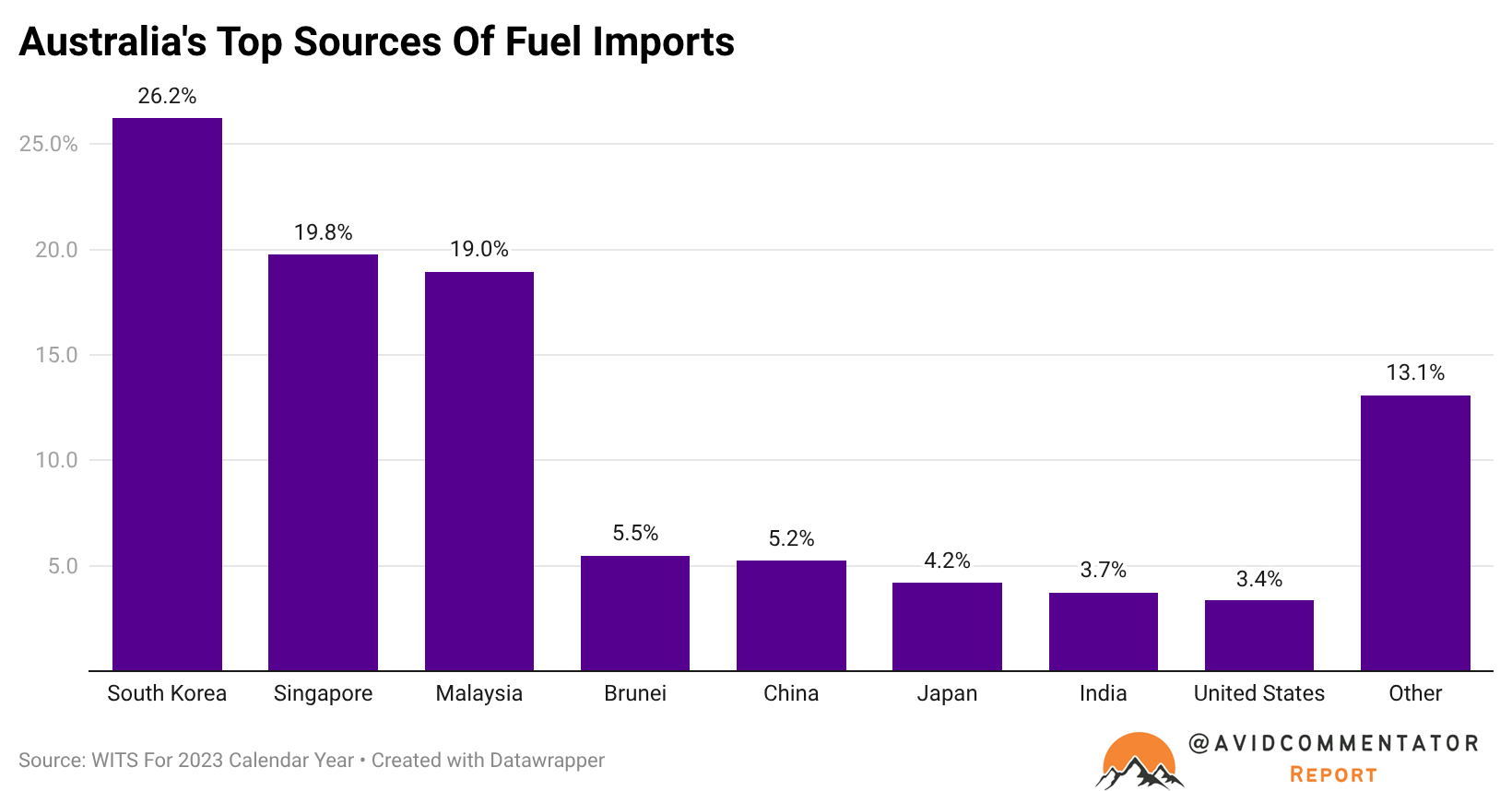
Despite these domestic calls for austerity, India continues to be a vital supplier of fuel to Australia. Australia’s reliance on Indian fuel imports has steadily increased, rising from 3.7 per cent in 2023 to 8 per cent in the current period.
Similarly, South Korea, another major fuel provider for Australia, is also engaged in widespread fuel conservation campaigns. President Lee Jae Myung has implored citizens to “save every drop of fuel” and participate in energy-saving initiatives, warning that the current crisis is a “massive storm whose duration is uncertain.” In 2023, South Korea was Australia’s leading source of imported fuel, supplying a substantial 26.2 per cent of the nation’s needs. The commitment to conservation in these key supplier nations, while necessary for their own security, indirectly contributes to a more stable global fuel market, benefiting Australia.
Approaching a Potential Tipping Point
The current calm in Australia stands in stark contrast to the significant challenges faced by many of its regional neighbours. This raises a critical question: at what point will nations be forced to prioritise domestic fuel security over export commitments, leading to shortages for international customers?
Australia’s leverage over other energy commodities, such as coal and liquefied natural gas (LNG), may offer a degree of insulation. However, with no immediate end in sight for the Middle Eastern conflict, maintaining pre-war fuel supply volumes is becoming increasingly difficult. The United States, a significant exporter of fuel, has heavily drawn down its readily available inventories, with distillate oil stocks reaching multi-decade lows.
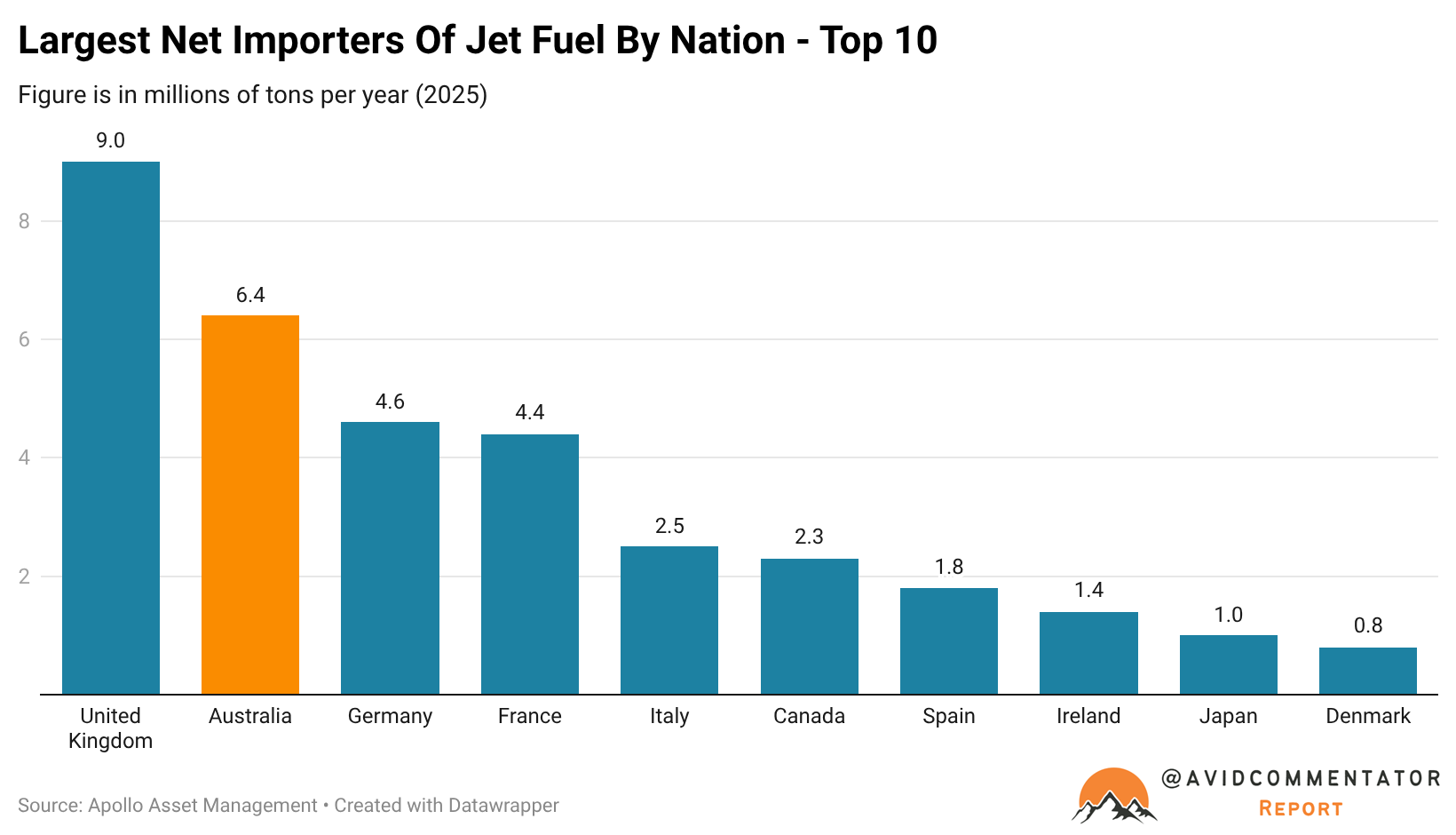
As global fuel tanks dwindle, Australia’s competitive landscape for securing essential cargoes is shifting. Initially, Australia was competing with developing Asian nations for fuel. Now, as the crisis deepens, wealthier European nations like Britain, Germany, and France are becoming direct competitors for vital resources like jet fuel. The longer the conflict persists, the more intense this competition will become, with a shrinking supply of available fuel cargoes being sought by an ever-increasing number of economically powerful nations.
Commonwealth Bank Issues Stark Warning
The optimistic pronouncements from some quarters regarding an imminent resolution to the conflict have been repeatedly met with the reality of its ongoing nature. The Commonwealth Bank has issued a grave warning about the potential consequences for Australia if the current situation deteriorates.
Chief Economist Luke Grant has highlighted that the “rapid inventory drawdowns of oil and other refined products have acted as a shock-absorber, shielding businesses and consumers from higher prices and preventing wide-spread demand destruction across advanced economies. However, these emergency inventories are being quickly depleted.”
The bank forecasts a significant surge in oil prices, potentially reaching US$150 per barrel by mid-June to mid-July, surpassing previous peaks. This price shock is expected to fuel inflation, dampen economic growth, and reintroduce the prospect of fuel shortages and restrictions in Australia. The bank further warns that a complete collapse of any ceasefire could lead Iran to broaden its retaliatory actions to a wider range of economic targets, triggering a “severe market reaction.” The increasing likelihood of such an outcome suggests that Australia’s current period of relative calm may be a precarious one.