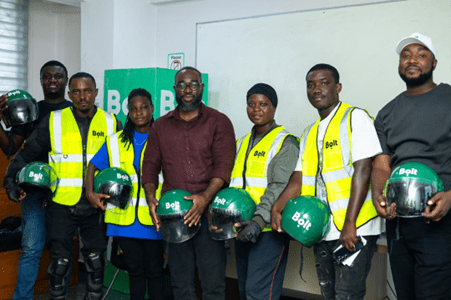
Bolt Ghana is proactively enhancing rider safety and compliance protocols in anticipation of new legislation governing commercial motorcycle transport, often referred to as the “okada bill.” The ride-hailing platform recently convened 30 of its top-performing riders in Accra for a comprehensive safety engagement session. This initiative aims to deepen riders’ understanding of regulatory requirements, foster improved road discipline, and ensure operational alignment with the evolving landscape of Ghana’s two-wheel transportation sector.
The training, themed “Steering Toward Safety: Empowering the Two-Wheel Revolution,” underscores a growing industry consensus: the rapid expansion of motorcycle ride-hailing services must be underpinned by robust safety frameworks and stringent behavioural standards.
Teddy Appa Dankyi, Senior General Manager for Bolt West Africa, emphasized that this training is a crucial component of Bolt’s broader strategy to address safety concerns proactively as the demand for motorbike transport continues to surge.
Prioritizing Safety Amidst Growth
“As the two-wheel category continues its significant growth trajectory, safety remains our paramount concern,” stated Mr. Dankyi. “We are implementing deliberate measures to collaborate closely with our riders, ensuring they fully grasp the critical importance of compliance, responsible riding practices, and operating strictly within the bounds of the law. This is particularly vital as the regulatory environment undergoes evolution.”
Mr. Dankyi further elaborated that Bolt’s strategic approach is firmly rooted in early preparation, even ahead of formal regulatory approvals. The company’s objective is to position its riders as exemplary, compliant operators, thereby mitigating potential road safety risks.
The training curriculum was meticulously designed to cover several key areas:
- Defensive Riding Techniques: Equipping riders with skills to anticipate and react to potential hazards on the road.
- Adherence to Traffic Regulations: Reinforcing the importance of following all established traffic laws and signs.
- Licensing Requirements: Emphasizing the necessity of holding valid Class A licenses for motorcycle operation.
- Platform Safety Features: Familiarizing riders with Bolt’s integrated safety tools, including emergency SOS functionalities and dispute resolution mechanisms, all aimed at bolstering the safety of both riders and passengers.
Addressing Public Concerns and Behavioral Risks
This proactive measure by Bolt comes at a time of mounting public apprehension regarding road safety, particularly concerning commercial motorbike operators. Reports of reckless riding, traffic violations, and an unsettling increase in accident rates have fueled these concerns. Bolt’s intervention appears to be a direct response to these behavioral risks, aiming to address them through structured training and ongoing engagement.
Mr. Dankyi confirmed that this training program is not a standalone event but will be integrated into a recurring training model. This approach is designed to consistently reinforce safety standards and best practices over time. He also highlighted that rider behavior on the platform will be subject to continuous monitoring, with the expectation that safety performance will demonstrably improve as the training initiatives are scaled up.
“Our aspiration is for our riders to serve as true ambassadors of safety,” Mr. Dankyi remarked, underscoring that consistent education and diligent monitoring are fundamental to embedding responsible practices across the entire Bolt platform.
Rider Perspectives and Challenges
Participants in the training session shared valuable insights into the operational challenges they encounter on the road. These include navigating poor road conditions and managing occasional tensions with passengers. Despite these obstacles, the riders acknowledged the non-negotiable importance of prioritizing safety.
Mireku Samuel Oteng, one of the participating riders, described the training as both timely and essential. He noted that the safety gear and practical guidance received during the session would significantly contribute to risk reduction. Mr. Oteng urged his fellow riders to adhere to traffic rules, avoid speeding, and stressed that safety is paramount for sustaining their livelihoods within the ride-hailing sector.
The training concluded with a collective safety pledge by the riders and the distribution of essential protective gear, such as helmets and reflective vests.
Bolt has affirmed its commitment to sustained investment in rider education, the development of safety technologies, and collaborative efforts with regulatory bodies. This forward-thinking approach positions the company ahead of anticipated policy shifts that are expected to formally integrate motorcycle ride-hailing services into Ghana’s urban transportation infrastructure.