Porsche Electrifies South Korea: The All-New Cayenne Electric Arrives
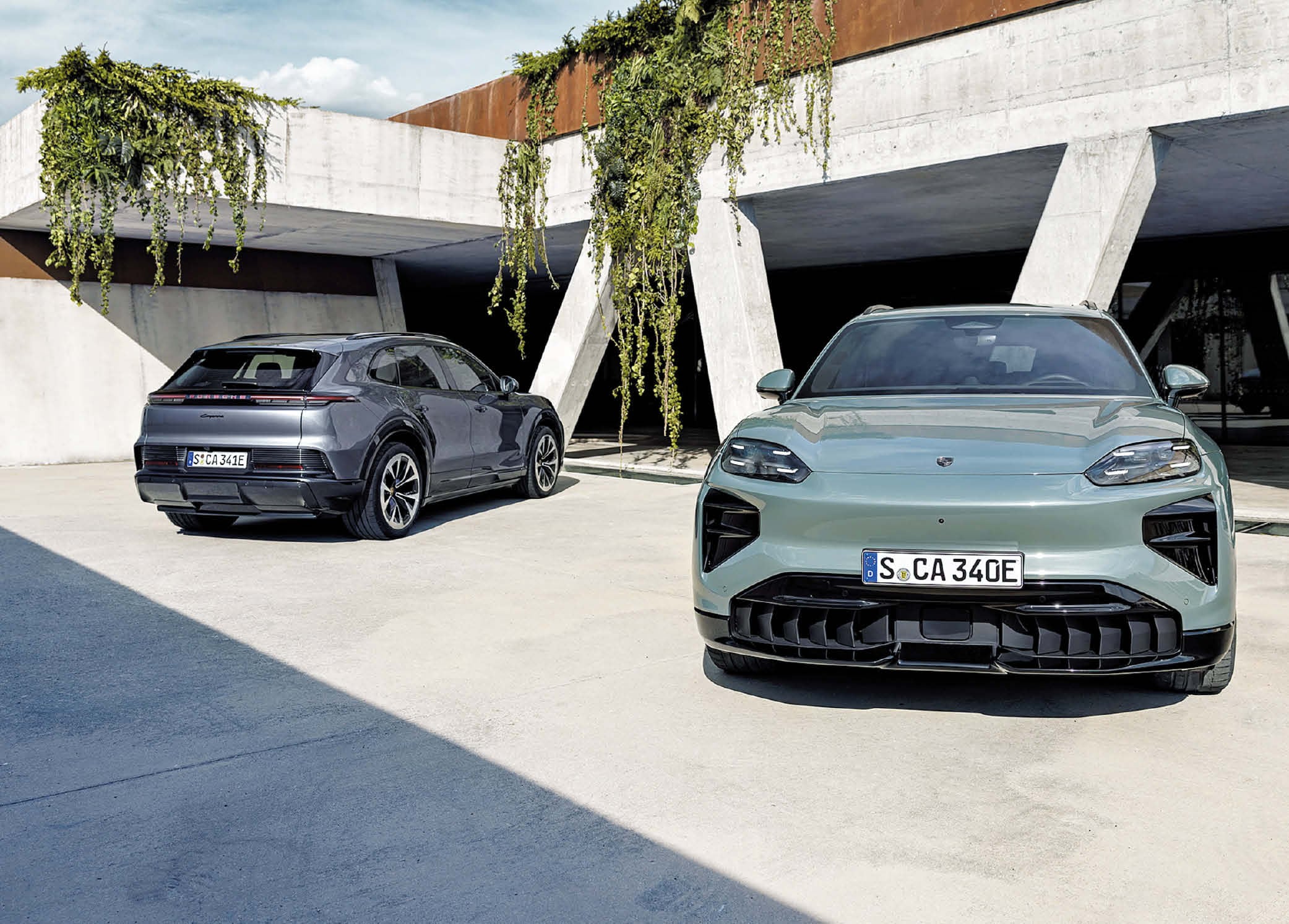
Porsche is set to electrify the South Korean automotive landscape with the highly anticipated debut of its all-electric SUV, the Cayenne Electric, in the latter half of this year. This launch marks a significant milestone, positioning South Korea as the premiere market in Northeast Asia to welcome this groundbreaking vehicle. The Cayenne, a nameplate synonymous with Porsche’s success since its inception in 2002, has consistently been the brand’s best-seller, achieving global sales exceeding 1.5 million units. Now, this iconic model embraces a fully electric future, a first for Porsche’s renowned SUV.
The new Cayenne Electric is engineered to deliver the blistering sports car performance that defines the Porsche brand, even in its purely electric iteration. The range-topping Turbo model is a testament to this, boasting an astonishing maximum output of 1,156 horsepower and an exhilarating 0-to-100 km/h (0-62 mph) acceleration time of just 2.5 seconds. Addressing a common concern surrounding electric vehicles, charging speed has been significantly enhanced. Drivers can expect to add approximately 325 kilometers (around 202 miles) of range with a mere 10-minute charging session, based on European standards.
A Trio of Electrifying Performance
The Cayenne Electric will be offered in three distinct variants, catering to a spectrum of performance and luxury preferences, with pricing ranging from approximately 142.3 million to 189.6 million Korean won.
- Cayenne Electric (Base Model): This entry-level pure electric model delivers a robust 408 horsepower, providing a strong foundation of electric performance.
- Cayenne S Electric (Mid-Spec Model): Stepping up, the Cayenne S Electric offers an impressive 544 horsepower, bridging the gap between everyday usability and exhilarating power.
- Cayenne Turbo Electric (Top-Tier Model): The pinnacle of the range, the Turbo Electric, unleashes a formidable 857 horsepower. When equipped with Launch Control, this figure surges to a mind-boggling 1,156 horsepower, unlocking the vehicle’s full acceleration potential. Launch Control is a specialized function designed to extract maximum power precisely at the moment of departure, ensuring an unparalleled surge of speed.
Performance Benchmarks and Range
The performance capabilities of these electric powertrains are truly remarkable:
- Cayenne Turbo Electric: Achieves 0-to-100 km/h in a blistering 2.5 seconds and a top speed of 260 km/h (162 mph).
- Cayenne S Electric: Completes the 0-to-100 km/h sprint in 3.8 seconds.
- Cayenne Electric (Base): Accelerates from 0-to-100 km/h in 4.8 seconds.
All three models are equipped with a substantial 113 kWh battery, offering impressive driving ranges under the European WLTP standard:
- Cayenne Electric (Base): Up to 642 km (399 miles) on a single charge.
- Cayenne S Electric: Up to 653 km (406 miles) on a single charge.
- Cayenne Turbo Electric: Up to 623 km (387 miles) on a single charge.
Advanced Charging and Design
The Cayenne Electric supports ultra-fast DC charging at speeds of up to 400 kW, enabling a charge from 10% to 80% in approximately 16 minutes. Pioneering in its application within the Porsche lineup, the Cayenne Electric also introduces wireless charging. This innovative feature allows the vehicle to charge simply by being parked over a charging pad, eliminating the need for cables. When utilized with a home charging pad, it can deliver up to 11 kW of power wirelessly.
The exterior dimensions have been subtly enhanced to accommodate the new electric architecture, with the body measuring 4,985 mm in length, 1,980 mm in width, and 1,674 mm in height. This represents a 55 mm increase in length compared to the outgoing internal combustion engine Cayenne. The wheelbase has been significantly extended by 130 mm to 3,023 mm, a crucial enhancement that translates into increased legroom for rear-seat passengers. Practicality is further boosted by a generous cargo capacity of up to 1,588 liters, complemented by an additional 90-liter storage compartment located under the front hood.
A Futuristic Interior Experience
The interior of the Cayenne Electric is a showcase of modern automotive technology and luxurious design. A continuous screen seamlessly integrates a curved OLED central display, a 14.25-inch digital instrument cluster, and a 14.9-inch passenger display. For the first time in a Cayenne, an augmented reality head-up display is available, projecting vital navigation and driving information directly into the driver’s line of sight, appearing to float 10 meters ahead.
Porsche’s Strategic Focus on the South Korean Market
Porsche is implementing a deliberate strategy to actively court consumers in the South Korean market with its expanding range of electric vehicles. Christiane Chorn, Porsche’s Head of Overseas Emerging Markets, highlighted the significance of this region, stating, “South Korea has grown to become the fifth-largest market for Porsche last year. In particular, the popularity of electrified models is high, with pure electric vehicle sales ranking sixth globally.”
Last year, Porsche observed a substantial 30% year-on-year increase in sales within the domestic market, reaching 10,746 units. Electrified models were the dominant force, accounting for 62% of total sales. This breakdown includes 38% from internal combustion engines, 28% from plug-in hybrids, and a significant 34% from pure electric vehicles.
Commitment to Localized Battery Technology and Infrastructure
Further underscoring its commitment to the South Korean market and addressing growing consumer concerns about battery safety, Porsche has announced a pivotal decision: all pure electric models sold in South Korea will be equipped with Korean-manufactured battery cells starting this year. The Cayenne Electric and the dedicated electric Taycan model will utilize battery cells sourced from LG Energy Solution. The Macan Electric, which previously used batteries from Chinese manufacturer CATL, will transition to Samsung SDI products this year.
Beyond vehicle components, Porsche is investing heavily in the local infrastructure. The company plans to double its domestic service network by 2030 and significantly expand its charging infrastructure and electric vehicle-dedicated facilities, ensuring a comprehensive and supportive ownership experience for its growing electric vehicle clientele.