Thailand’s Government Eyes Fuel Tax Cuts Amidst Price Volatility
Thailand’s government is preparing for a potential reduction in fuel taxes as a contingency measure, should the Oil Fuel Fund prove insufficient in its efforts to stabilise domestic fuel prices. Deputy Prime Minister Ekniti Nitithanprapas, who also holds the position of finance minister, revealed that the Ministry of Finance has already developed strategies for tax reductions in anticipation of a worsening economic scenario. However, the ultimate decision on implementing such measures rests with the incoming government.
“If the fund is no longer able to maintain price stability, tax measures will become necessary,” Mr. Nitithanprapas stated, highlighting the delicate balance the government must strike. He drew parallels to the situation during the Russia-Ukraine conflict, where the government allocated approximately 270 billion baht. This substantial sum was utilized through a combination of subsidies from the Oil Fuel Fund and cuts to fuel excise taxes, all aimed at capping retail fuel prices.
However, the current fiscal landscape presents a more challenging environment. “Our fiscal position is weaker than it was then, and we must be mindful of maintaining Thailand’s credit rating,” Mr. Nitithanprapas cautioned. This underscores the need for prudent financial management while navigating global economic uncertainties.
Despite ongoing market turbulence, government officials have consistently assured the public that domestic fuel supplies remain robust and sufficient to meet demand.
Ensuring Adequate Fuel Supply
Confirmation of steady crude oil imports has been provided by Phantong Loykulnanta, Director-General of the Customs Department. He reported that crude oil imports have not seen a decline, with Thailand importing 276 million litres of crude oil on March 20th alone. On average, daily imports have consistently exceeded 100 million litres, indicating a stable inflow of essential raw material for the nation’s refineries.
Danucha Pichayanan, Secretary-General of the National Economic and Social Development Council, further elaborated on the proactive measures being taken. He confirmed that refiners have intensified their production efforts to cater to the increasing demand for fuel. Major energy operators, including PTT and Bangchak Corporation, have reportedly boosted their refining output by approximately 9%. This increase has a particular focus on diesel production, a critical commodity for transportation and industry.
The surge in demand is also reflected in retail sales. PTT Oil and Retail Business has reported significant growth, with petrol sales climbing by 25% and diesel sales experiencing an even more substantial increase of 35%.
To alleviate pressure on individual service stations and ensure smoother distribution, the government has broadened fuel distribution channels. This includes expanding access for wholesale distributors, thereby preventing industrial users from directly competing with retail consumers for available fuel.
Leading refiners such as Thai Oil, PTT Global Chemical, IRPC, and Bangchak have responded by increasing their delivery volumes. While officials acknowledge that it might take an estimated one to two days for these increased supplies to fully reach all geographical areas, the commitment to ensuring availability is evident.
In parallel with these supply-side efforts, the public has been strongly encouraged to practice energy conservation. This collective effort is seen as crucial in managing demand during this period of heightened volatility.
Enhanced Oversight and Transparency
To bolster oversight and prevent potential hoarding, authorities are on the verge of launching a comprehensive real-time dashboard. This innovative system is designed to meticulously track fuel distribution from the point of refinement all the way to the end users. The dashboard is anticipated to become operational within the next few days, providing regulators with unprecedented visibility and the ability to swiftly address any irregularities.
Furthermore, provincial authorities have been issued directives to conduct thorough inspections of fuel stations across the nation. These inspections are intended to ensure compliance with distribution regulations and to identify any instances of unusual stock build-ups or price manipulation.
Regarding international fuel shipments, Mr. Pichayanan clarified that Thailand’s fuel exports are strictly limited. Beyond neighbouring countries, no other nations are receiving fuel shipments from Thailand. Current export activities are confined to Laos and Myanmar, with a daily cap of 5 million litres.
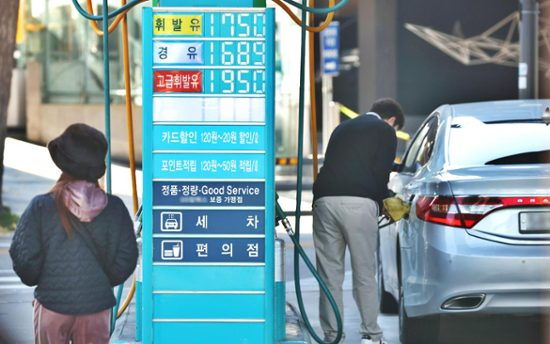
The Ministry of Energy has consistently maintained its stance that the Oil Fuel Fund remains capable of mitigating the impact of rising global oil prices. This assurance comes despite recent surges in international oil prices, which have climbed from approximately US$90 per barrel (equivalent to 2,930 baht) in recent weeks.
Nevertheless, officials concede that some adjustments to domestic retail prices may eventually be necessary to accurately reflect the escalating global costs of crude oil. This pragmatic approach acknowledges the economic realities while striving to cushion the blow for consumers.