Ibeju-Lekki: Beyond Industrial Giants, A Quiet Revolution in Education Takes Root
On the burgeoning outskirts of Lagos, a region rapidly evolving into one of Africa’s most significant industrial hubs, a profound transformation is underway. While the skyline is dominated by ambitious industrial projects, a more subtle yet equally impactful revolution is taking place within the classrooms of Ibeju-Lekki. Here, thousands of students are experiencing a shift not measured in industrial output, but in access to education, renewed dignity, and burgeoning aspirations. The 6th edition of the Dangote Scholarship Award Programme has brought this educational awakening into sharp focus.
Ibeju-Lekki has swiftly become Nigeria’s new industrial frontier, significantly driven by the presence of the Dangote Petroleum Refinery and a vast fertiliser complex. However, as is often the case in areas of rapid industrial expansion, the benefits of this growth have not always trickled down uniformly to social development. For many families residing in the host communities, fundamental educational necessities, such as school uniforms, backpacks, and essential learning materials, remain a persistent challenge. It is precisely within this critical gap that targeted corporate social responsibility initiatives are beginning to demonstrate a tangible and measurable impact.
The recent distribution of school supplies valued at N241 million, benefiting a total of 3,704 students, including 1,348 primary school pupils and 2,356 secondary school students, directly addresses one of the most immediate obstacles to educational attainment: access. This intervention empowers students to attend school with confidence and alleviates significant financial burdens for parents, ultimately representing a crucial long-term investment in the community’s human capital.
What truly distinguishes this programme is its comprehensive and sustained approach. It extends far beyond ephemeral donations, integrating structured scholarships, vocational training, and clear pathways to employment. This holistic model creates a seamless pipeline, guiding students from the classroom directly into meaningful careers.
A notable highlight of this year’s programme was the recognition of 22 young individuals who successfully completed internationally accredited City & Guilds of London certifications in Electrical and Mechanical Engineering. For beneficiaries such as Yusiot Taiwo, this initiative has been truly life-changing, providing not only invaluable technical skills but also a direct route into the professional workforce. Demonstrating a deliberate strategy to align education with employability, nineteen of these newly certified trainees have already secured employment within Dangote Fertiliser Limited.
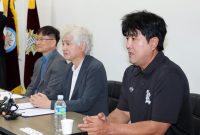
For the Dangote Group, this investment is viewed through a dual lens of social responsibility and strategic foresight. As Edwin Devakumar, Group Vice President of Oil and Gas, articulated during the event, the company’s guiding philosophy is clear: the success of its business operations must be intrinsically linked to the prosperity and well-being of its host communities.
This philosophy underpins a full-cycle development approach. It begins with early support at the primary school level, continues through sustained investment in secondary and tertiary education, encompasses vital skills acquisition and professional certification, and culminates in a smooth transition into gainful employment. This integrated model is meticulously designed not merely to support education but to actively dismantle cycles of limitation and foster sustainable opportunities.
Addressing the assembled students, Devakumar underscored both the privilege and the profound responsibility that accompanies such support. He urged them to “Use this opportunity wisely. Work hard, remain focused, and never stop believing in your potential. Your education is not only for your personal advancement, but for the progress of your families, your communities, and our nation.”
The positive impact of this initiative resonates deeply within the local communities. HRM Oba Kazeem Olumuyiwa Ogunbekun, the Onilekki of Lekki Land, lauded the company’s unwavering commitment and consistency over the years, observing that its interventions have demonstrably improved livelihoods and fostered a stronger sense of trust. “Our communities are happy with what Dangote has been doing over the past six to seven years. We encourage them to sustain these efforts,” he stated.
Similarly, Rasaki Bamidele Kasali, the Executive Chairman of Lekki LCDA, described the intervention as both timely and impactful. He also voiced a call for the programme’s expansion to neighbouring communities, a sentiment that reflects a broader aspiration as development gains momentum in one area, expectations naturally rise in adjacent regions.
For the students themselves, this programme represents far more than immediate relief; it is a crucial investment in their future possibilities. By ensuring that young people are adequately equipped to remain in school and acquire relevant, in-demand skills, the initiative is actively cultivating a generation prepared to participate meaningfully in the rapidly expanding industrial economy surrounding them.
Across the African continent, the persistent challenge of translating substantial industrial investments into truly inclusive development remains a critical issue. However, in Ibeju-Lekki, a promising model is beginning to take shape – one that seamlessly integrates education, skills development, and opportunity into the very fabric of economic growth.
While the N241 million investment is undeniably significant, its true enduring value lies in the far-reaching ripple effects it generates. These are visible in classrooms populated by better-prepared and more engaged students. They are evident in young technicians acquiring globally recognised skills that enhance their employability. They are felt by families experiencing welcome relief from financial pressures. Ultimately, this initiative is fostering a generation that is significantly better positioned to actively shape Nigeria’s future. In a region undergoing such rapid and dynamic transformation, this commitment to human capital development may well prove to be the most lasting and impactful legacy of all.