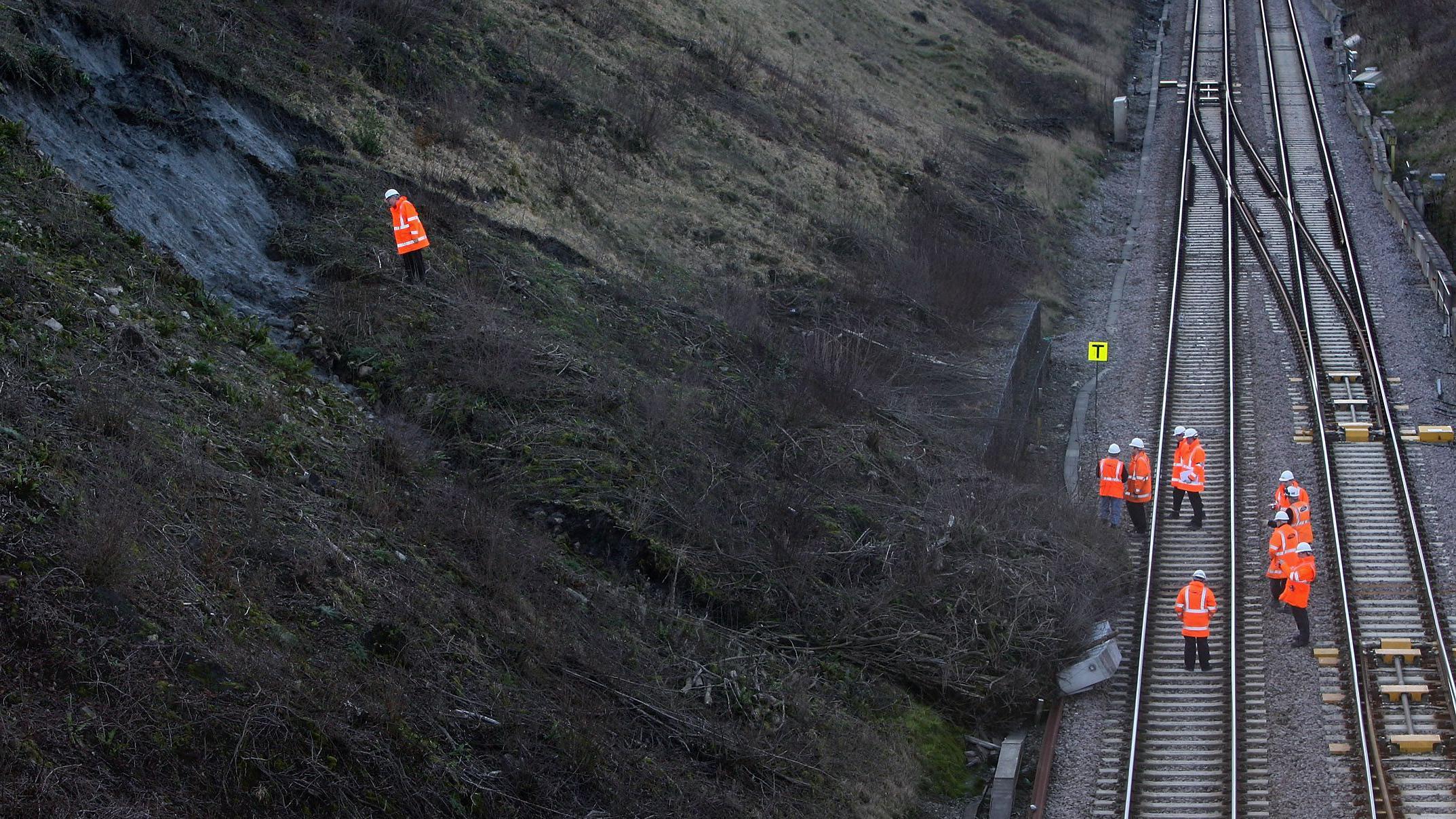
The persistent threat of landslides poses a significant challenge to the efficiency and safety of railway networks worldwide, particularly in regions prone to geological instability. Recent disruptions, such as those experienced on Britain’s rail network, highlight the profound impact these natural events have, from minor delays to severe accidents. Understanding the nature of landslides and the factors contributing to their occurrence is crucial for effective mitigation strategies.
Understanding Landslides
A landslide, also referred to as a landslip, is a geological phenomenon where a mass of rock, earth, or debris moves down a natural slope. This can occur on cliffs, hillsides, or mountains. These movements can be sudden and catastrophic or gradual and imperceptible, developing over extended periods.
The Forces Behind Landslides
Scientifically, landslides are triggered when the force of gravity pulling material down a slope overcomes the inherent resisting forces that hold the slope together. Several environmental and human-induced factors can exacerbate this imbalance:
- Saturated Ground: Periods of intense or prolonged rainfall are primary drivers, as water saturates the soil, increasing its weight and reducing its internal friction.
- Extreme Temperatures:
- Prolonged hot or dry weather can lead to soil desiccation and cracking, making it more susceptible to erosion and collapse.
- Conversely, cold weather can cause freeze-thaw cycles, where water seeps into cracks, freezes, expands, and widens them, weakening the slope.
- Weather Phenomena: Strong winds and storms can contribute to slope instability through direct force or by exacerbating erosion.
- Erosion: Natural erosion processes, often accelerated by water flow, can undercut slopes, removing supporting material and increasing the risk of collapse.
- Vibrations: External vibrations from sources such as heavy road traffic, construction activities, or even seismic events can destabilize already precarious slopes.
- Climate Change: An anticipated increase in the frequency and intensity of extreme weather events due to climate change is projected to lead to a rise in landslide occurrences globally.
Impact on Rail Travel
The implications of landslides for railway operations are particularly severe due to the fixed nature of train tracks. Unlike road vehicles that can maneuver around obstacles, trains have no capacity to deviate from their path.
- Immediate Disruptions: When debris falls onto a railway line, services are immediately halted. Trains must be rerouted, leading to significant delays and cancellations while engineers from infrastructure management companies, like Network Rail in the UK, work to clear the obstruction.
- Infrastructure Assessment: Beyond simply removing debris, a thorough inspection of the track and surrounding infrastructure is essential to ensure the safety of ongoing operations.
- Long-Term Instability: A landslide often weakens the integrity of a slope, making it more vulnerable to subsequent slips. This necessitates extensive remedial work.
- Slope Stabilization: In many cases, engineers must undertake significant projects to stabilize the affected slopes. This can involve:
- Improving drainage systems to reduce water saturation.
- Reinforcing the slope with materials like steel rods or soil nails to increase its structural integrity.
- Re-profiling the slope by reducing its angle to decrease gravitational stress.
These stabilization efforts can be time-consuming and lead to prolonged periods of disruption and service alterations.
Landslide Prevalence in Southern Britain
Data collected through Freedom of Information requests reveals the extent of land movement affecting the British rail network. Between May 2023 and April 2024, the network recorded 147 instances of land movement. The Southern region of the UK, encompassing areas like Dorset and Hampshire, reported the highest number of these events, with 45 incidents.
Notable incidents that have impacted rail services include:
- In 2023, a Great Western Railway service encountered rubble following a landslide near the Cassington Road bridge, between Oxford and Hanborough.
- Earlier in 2024, train lines were temporarily closed between Reading and London Paddington due to a landslip and the associated hazard of an unsafe tree.
- Also in 2024, a section of track bed subsided in Bicester following a landslip, leading to partial closure of a rail line.
- A landslip near Hook in Hampshire in 2023 caused a railway track to collapse, resulting in substantial disruption for passengers.
- A particularly severe period occurred in 2009 in Dorset, where two landslides within a span of three days led to a derailment and widespread disruption.
The Dangers of Landslides
While landslides most frequently manifest as travel delays and damage to infrastructure, their potential consequences can be far more severe, extending to loss of life.
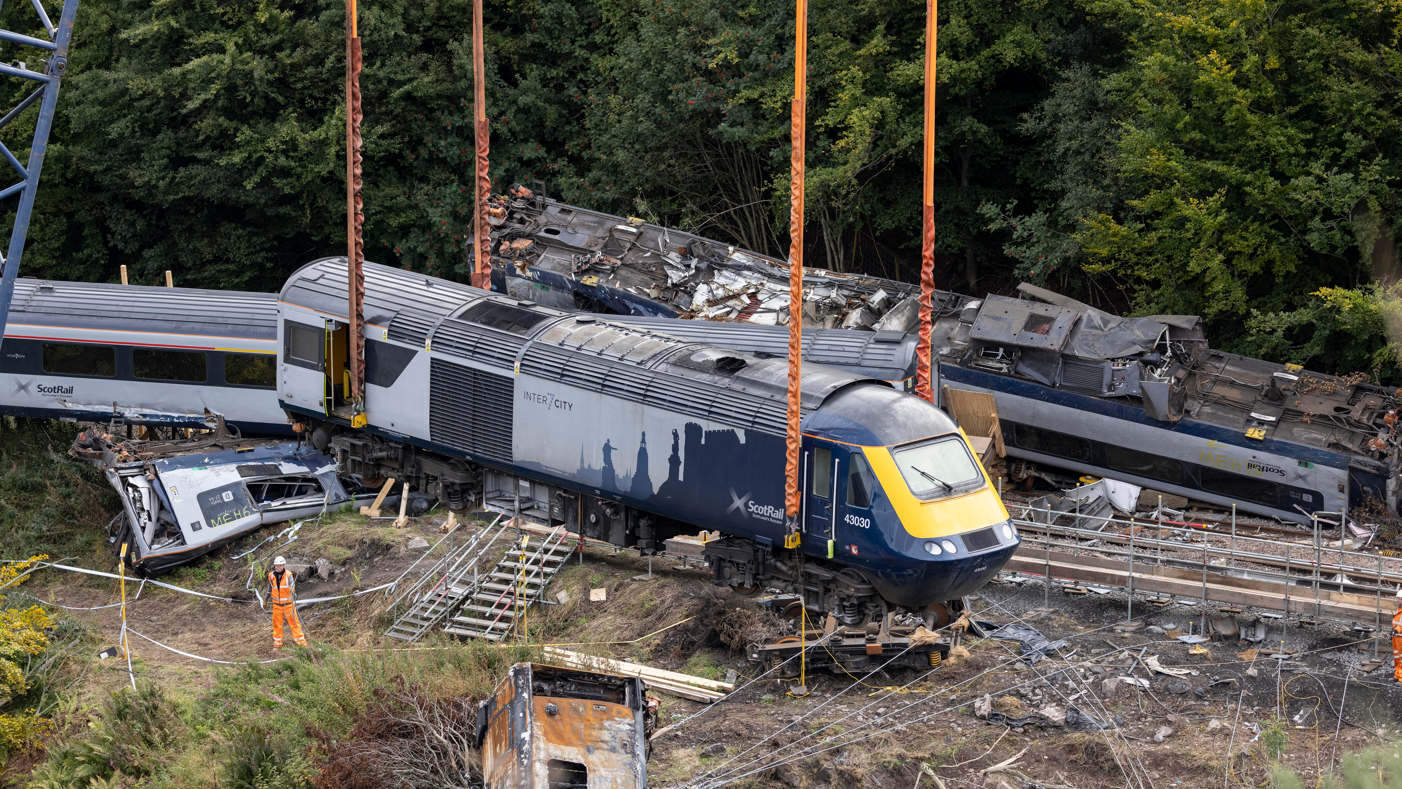
- 1995 Aisgill Derailment: A tragic incident occurred in 1995 on the Settle to Carlisle line when a train derailed after striking a landslide. The derailed train was subsequently struck by another service. This catastrophic event resulted in the death of a guard and injuries to nearly 30 passengers.
- 2020 Carmont Derailment: On August 12, 2020, a train derailed at Carmont in Aberdeenshire after hitting a landslide that occurred in the aftermath of heavy rainfall. Tragically, three people lost their lives, and six others were injured. Network Rail later admitted to a series of failings that contributed to the incident and was fined £6.7 million in 2023.
- 2023 Shap Incident: In a more recent event, a train came off the tracks on the West Coast Main Line at Shap in Cumbria. While 87 people were on board, fortunately, only four sustained minor injuries, and none required hospitalization.
Proactive Measures for Landslide Mitigation
Network Rail and similar organizations are implementing a range of advanced technologies and strategies to detect, monitor, and mitigate the risks associated with landslides.
- Advanced Detection Technologies:
- Laser Imaging, Detection, and Ranging (LiDAR): Helicopters equipped with LiDAR technology are deployed to survey areas susceptible to landslides, creating detailed 3D maps that can identify subtle changes in terrain over time.
- Motion Sensors and CCTV: In high-risk zones, sophisticated motion sensors and closed-circuit television (CCTV) systems are installed to continuously monitor for any movement of soil and rock. These systems are designed to trigger alarms if predefined thresholds are breached, prompting immediate inspection by engineers.
- Engineering Solutions:
- Slope Stabilization: As mentioned earlier, techniques such as installing improved drainage, embedding steel rods, and utilizing soil nails are employed to reinforce slopes and prevent movement.
- Re-profiling Slopes: When other methods are insufficient, engineers may alter the physical geometry of a slope by reducing its angle. This lessens the gravitational forces acting upon it, thereby decreasing its susceptibility to landslides.
- Integrated Warning Systems: Network Rail works in conjunction with agencies like the Environment Agency and Flood Forecasting Centre. Resources and personnel are strategically deployed to areas under flood warnings, recognizing the strong correlation between flooding and landslide risk.
These ongoing efforts are vital in safeguarding rail passengers and ensuring the reliable operation of the railway network against the persistent threat of natural geological events.