BMW i4 eDrive35: A Premium Electric Sedan That’s Almost Perfect
For those seeking a blend of luxury, sportiness, and environmental consciousness without breaking the bank, the BMW i4 emerges as a compelling option. While it took some time for the Australian market to fully embrace this electric Bimmer, the introduction of an entry-level variant at a competitive price point has certainly piqued interest. However, with BMW phasing out the i4 early next year to make way for the upcoming i3 and the “Neue Klasse” electric 3 Series, the question arises: is it worth snagging one now, or is it better to wait for what’s on the horizon?
Value Proposition: More Than Just a Badge
The BMW i4 offers exceptional value for its segment, positioning itself as the most affordable BMW of its size. While smaller models like the 1 Series, X1, iX1, and iX2 are cheaper, the i4 provides a significant step up in premium feel and performance. Currently, the sole offering is the eDrive35, priced from $88,900 before on-road costs. The mid-spec eDrive40 and the range-topping M50 have been discontinued.
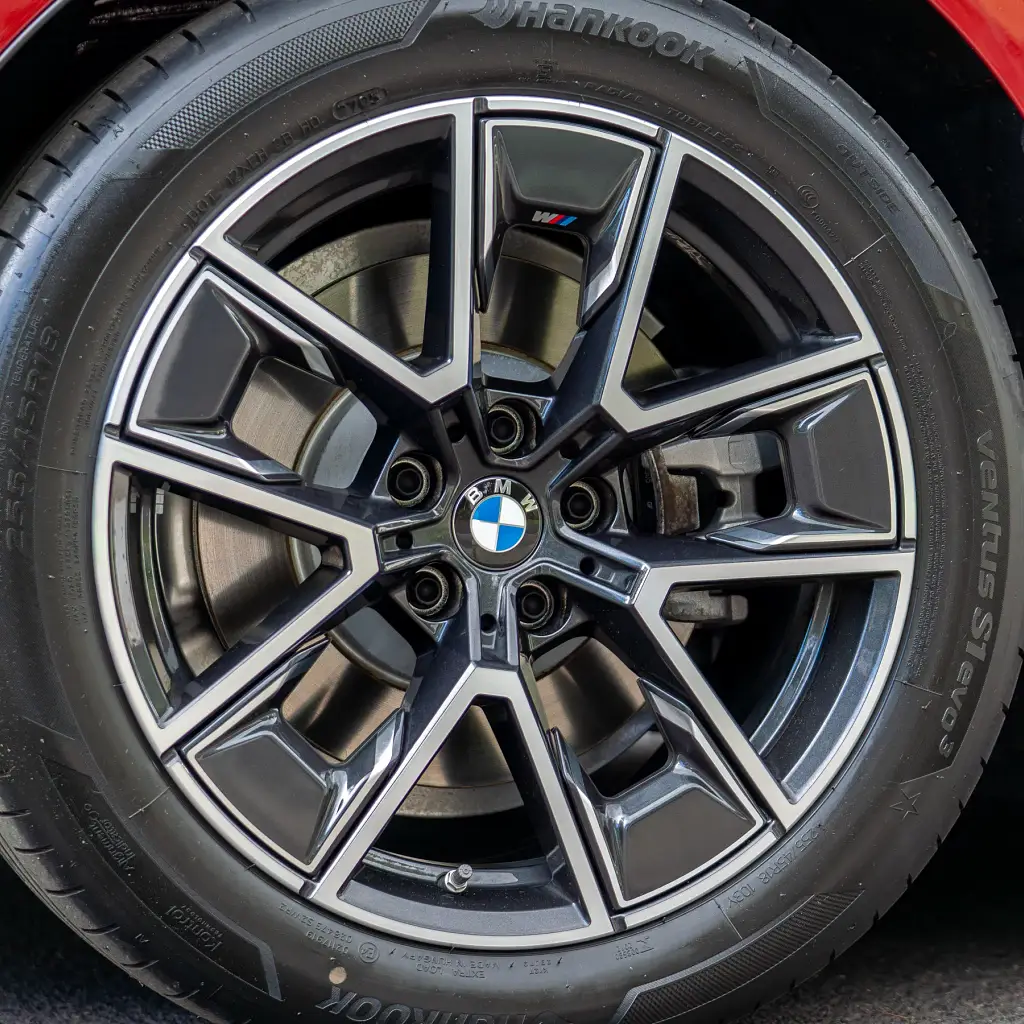
While these departed variants offered more power and a touch more luxury, the eDrive35 remains exceptionally well-equipped. The reduction in variants has seen a slight price increase of $1100, but this is arguably offset by enhanced standard features. The i4 now comes with the M Sport styling kit, previously an option, which includes M Sport bumpers and sills, a shadowline dark exterior trim, and 18-inch M light alloy wheels.
Standard amenities are generous, featuring an electrically operated glass sunroof, powered and heated sports front seats with lumbar support, a head-up display, a 10-speaker audio system, faux leather upholstery, and a wireless phone charger. While interior customisation options are more limited compared to the higher grades, the two available choices are offered at no additional cost.
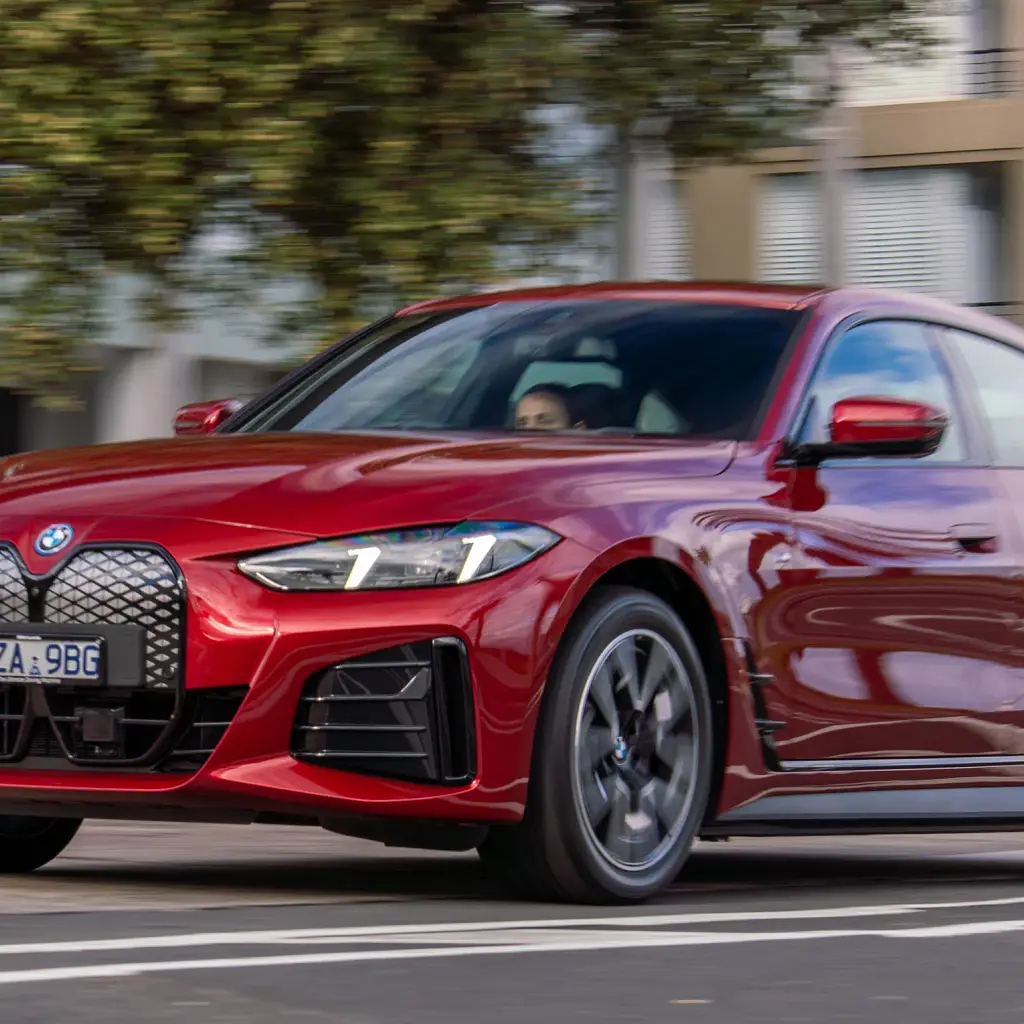
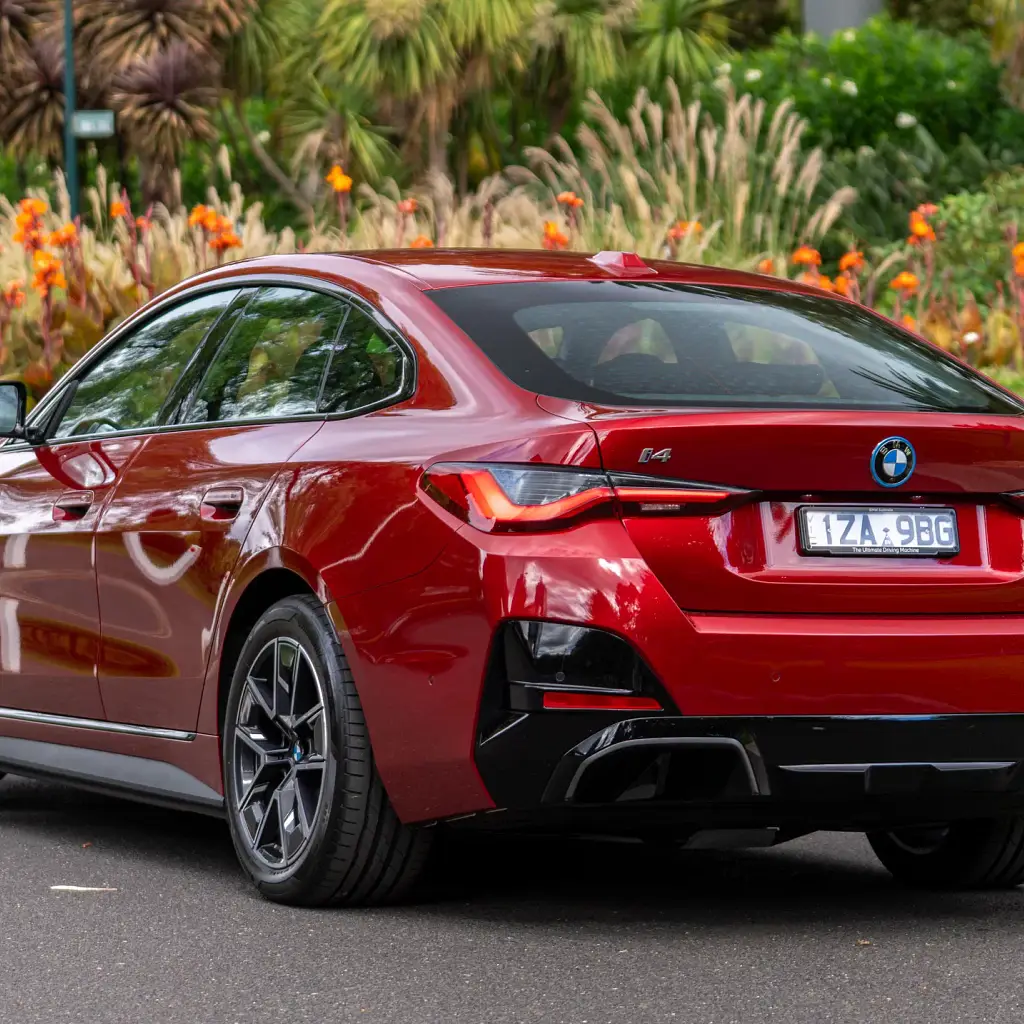
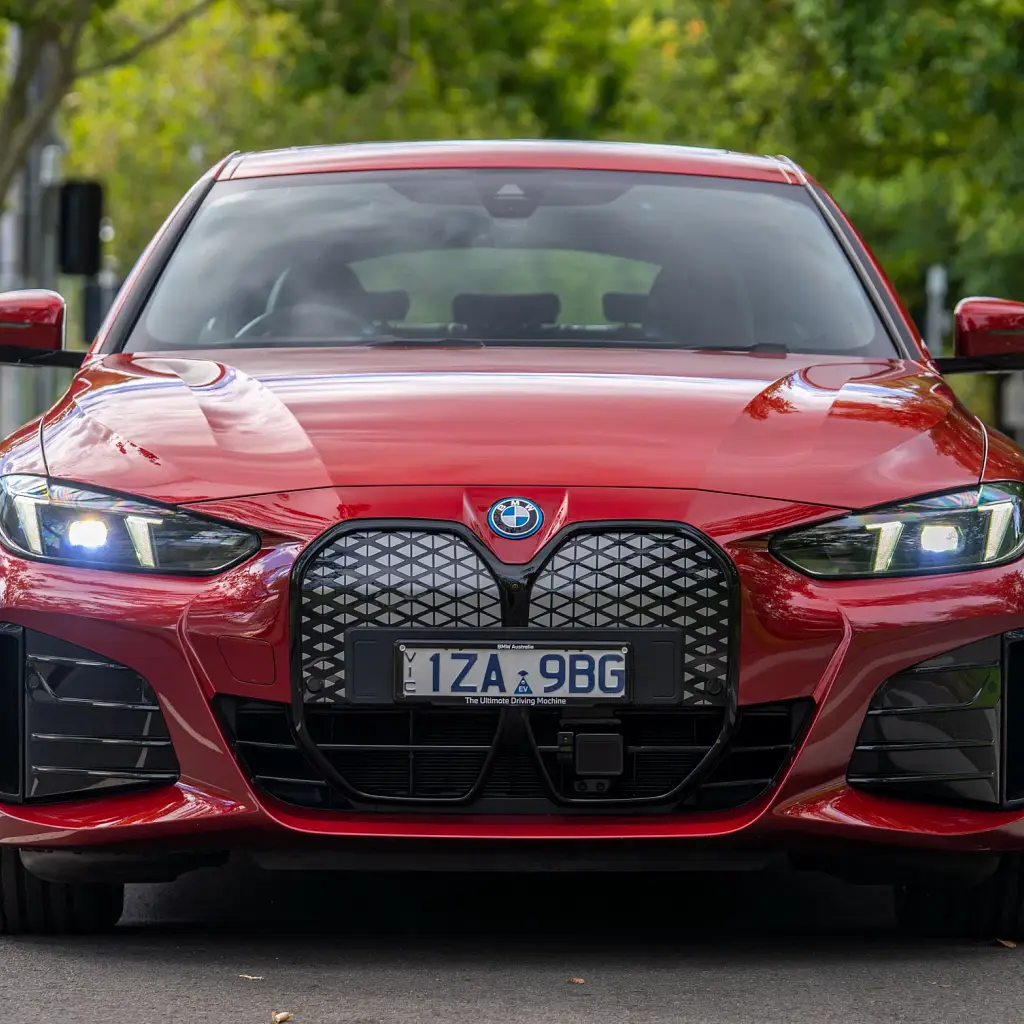
Exterior paint options include seven choices, with Alpine White being the only free option. The striking Fire Red, tested here, commands an additional $2000 and is well worth the investment. Other premium options, like the M Portimao Blue, are also attractive. While larger 19- or 20-inch wheels are available for an extra cost, the standard 18-inch wheels strike an excellent balance between comfort and aesthetics, as will be discussed later.
In terms of competition, the i4 lines up against the Tesla Model 3, Hyundai Ioniq 6, and Polestar 2. The Tesla Model 3 starts at a more accessible $54,900 for the Premium Rear-Wheel Drive variant, the Hyundai Ioniq 6 is priced from $67,300, and the Polestar 2 Standard Range Single Motor begins at $62,400, all before on-road costs.
Range and Charging: Competent, Not Class-Leading
The BMW i4’s driving range is respectable, though not groundbreaking. The 66.4kWh battery offers a claimed range of 448km on a full charge. During a week of testing, which included extensive driving and some time spent in Sport mode, approximately 350km was covered, with about 60km remaining before needing a recharge. This real-world performance aligns closely with the claimed figures.
The claimed energy consumption is 16.3kWh per 100 kilometres, and the test car averaged an impressive 16.2kWh, demonstrating remarkable efficiency. BMW states that the i4 can charge from 10% to 80% in 32 minutes at a 180kW charging station. The test experience corroborated this, with a 14% to 50% charge taking approximately 15 minutes.
When compared to its rivals, the Ioniq 6 offers a similar range of 429km in its base configuration. The Tesla Model 3 boasts a more substantial 520km, and the Polestar 2 leads the pack with 554km. It’s worth noting that the upcoming BMW i3 is slated to offer a remarkable 900km WLTP range, significantly eclipsing current offerings.
Ownership Costs and Warranty
BMW provides the i4 with its standard five-year/unlimited-kilometre warranty, complemented by eight years of complimentary roadside assistance. Servicing for the i4 is condition-based, utilising on-board sensors to monitor component wear and alerting the driver via the instrument cluster when maintenance is required.
In comparison, the Tesla Model 3 now comes with a five-year/unlimited-kilometre warranty, aligning with industry standards. Its servicing is also condition-based. Hyundai offers the Ioniq 6 with a five-year/unlimited-kilometre warranty, extendable to seven years with exclusive servicing through the brand. Servicing intervals are every 24 months or 30,000km. The Polestar 2 shares similar warranty and servicing intervals with the Ioniq 6, but includes five years of complimentary scheduled servicing. All these electric vehicles, except the Model 3 which has an 192,000km limit, are covered by an eight-year/160,000km battery warranty.
Comprehensive insurance for the BMW i4 eDrive35 is estimated at $4091.17 annually for a 35-year-old male residing in Chatswood, NSW. This figure may vary based on individual circumstances and location.
Safety: A Solid Performer, But Not Flawless
The BMW i4 received a four-star ANCAP rating in 2022, marking the first time a locally tested BMW did not achieve a five-star result. This rating was based on Euro NCAP testing conducted at the time. While the i4 performed well in adult, child, and vulnerable road user protection, its safety-assist technologies fell slightly short of the highest marks. ANCAP acknowledged that Australian models were better equipped with higher-standard AEB and lane-support systems than their European counterparts, but BMW chose not to resubmit the vehicle for retesting.
A notable omission identified by ANCAP is the lack of a centre airbag, which is designed to prevent head clashes between the driver and front passenger during side-impact collisions. Despite missing out on a perfect score, the i4 is equipped with an extensive suite of safety features, including six airbags and BMW’s Parking Assistant Plus. The safety systems operate unobtrusively, with the exception of lane-centring, which can occasionally allow the car to drift slightly to one side when cruise control is engaged. However, the inclusion of lane-keep assist, absent in earlier versions, is a welcome addition.
In contrast, all three of the i4’s main rivals hold five-star ANCAP ratings: the Tesla and Hyundai models from 2023, and the Polestar from 2021.
Exterior Design: A Statement of Sporty Elegance
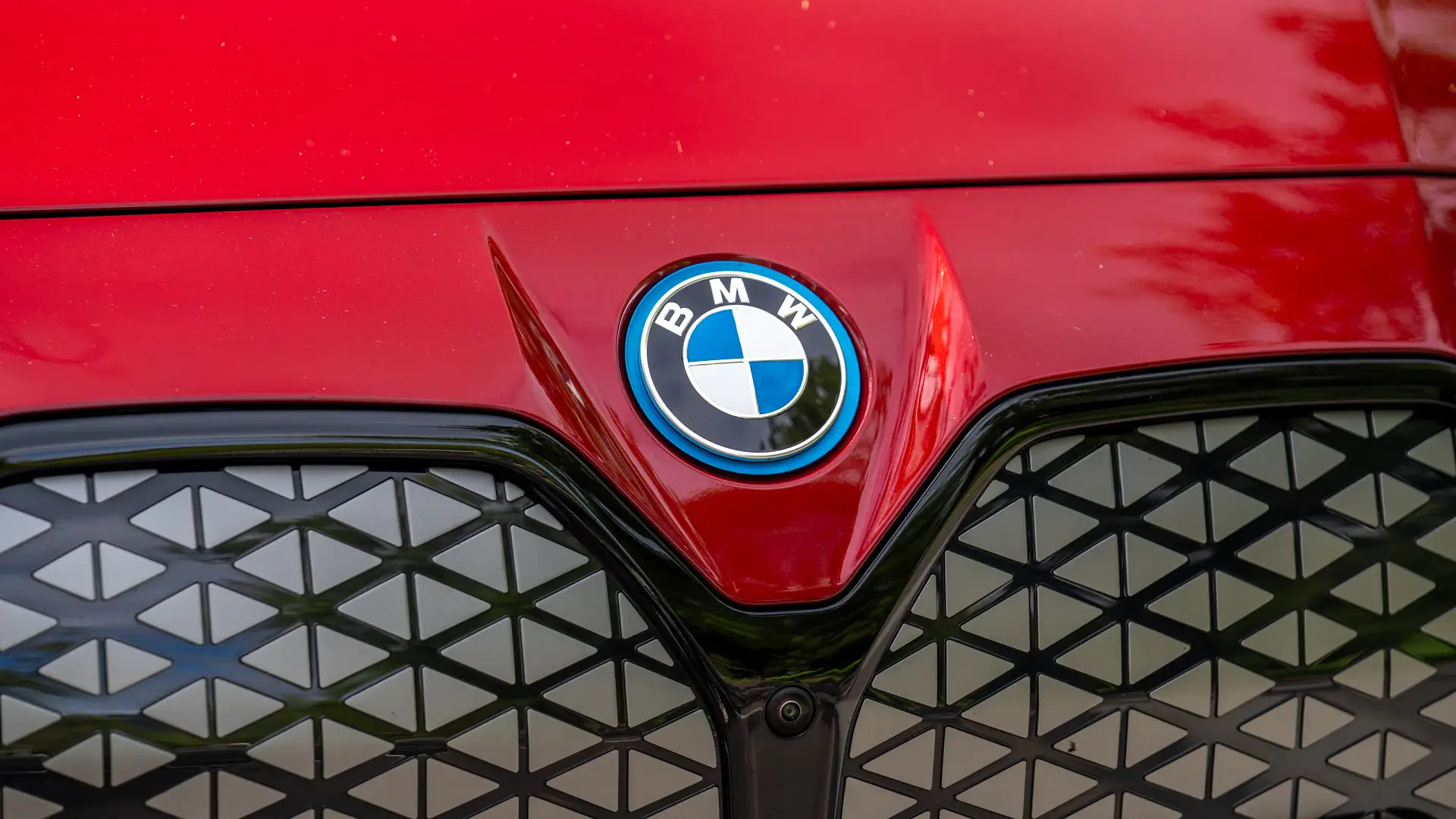
The BMW i4 presents itself as a medium-sized sedan, comparable in dimensions to the 3 Series or 4 Series. Measuring nearly 4.8 metres in length, it commands a noticeable presence on the road. The front fascia is characterised by a prominent vertical kidney grille with a honeycomb pattern, sculpted bonnet lines for aerodynamic enhancement, and large side air intakes, all contributing to an aggressive and sharp appearance. In profile, the i4 exudes a sleek and sporty silhouette.
The rear design features slim tail-lights, and the M Sport bumpers further accentuate its athletic aesthetic. The pillarless doors add to the i4’s premium appeal, even in its base configuration. The car’s low ride height, while potentially making ingress and egress slightly challenging for some, is visually appealing and makes it easier for children to enter independently. The overall design is a significant drawcard, surpassing its direct competitors in aesthetic appeal.
Interior Comfort and Quality: Traditional Luxury Meets Modern Tech
Stepping inside the i4, even in its entry-level guise, the hallmark BMW quality is immediately apparent. While some hard plastics are present on the dashboard and lower sections, they feel robust and do not detract from the overall premium feel. These materials blend seamlessly with the predominantly black interior, making them barely noticeable.
The test car featured all-black synthetic leather, which is practical and resistant to marks, though a Cognac brown/tan interior might offer a more luxurious feel. The fine-brushed aluminium trim is a standout feature and is preferable to the optional grey open-pored fine-wood alternative. The interior design leans towards traditional luxury rather than a futuristic, space-age aesthetic, making the transition from an internal combustion engine vehicle a smoother experience for many.
Front cabin space is prioritised for a sportier feel, with the driver and front passenger cocooned in comfortable, supportive sports seats. Door storage is adequate, as are the central cupholders, although their stiffness can make inserting larger cups a challenge. The small bin under the centre armrest offers limited storage, suitable for essentials like sunglasses and wallets.
This theme of compact storage continues in the second row, where door pockets have limited space, even for smaller bottles, and map pockets are absent from the front seatbacks. However, rear occupants benefit from their own climate controls, as the i4 features a tri-zone system. Two USB-C ports are provided for charging, supplementing the front console’s USB-C, USB-A, and 12V socket.
The raised floor in the rear, a consequence of the platform shared with the 4 Series Gran Coupe and the accommodation of the battery, means the middle seat is best suited for occasional use, creating a 2+2 configuration. Taller rear passengers will experience limited legroom, restricted foot space under the front seats, and compromised headroom due to the car’s low-slung coupe-like body style.
The i4 redeems itself with its boot space, which is both generous and easily accessible thanks to its liftback design. This configuration simplifies the loading of larger items and makes fitting child seats easier than in a traditional sedan, allowing access over the headrests. The rear seats fold down in a convenient 40:20:40 split.
Infotainment System: A Mixed Bag of Functionality
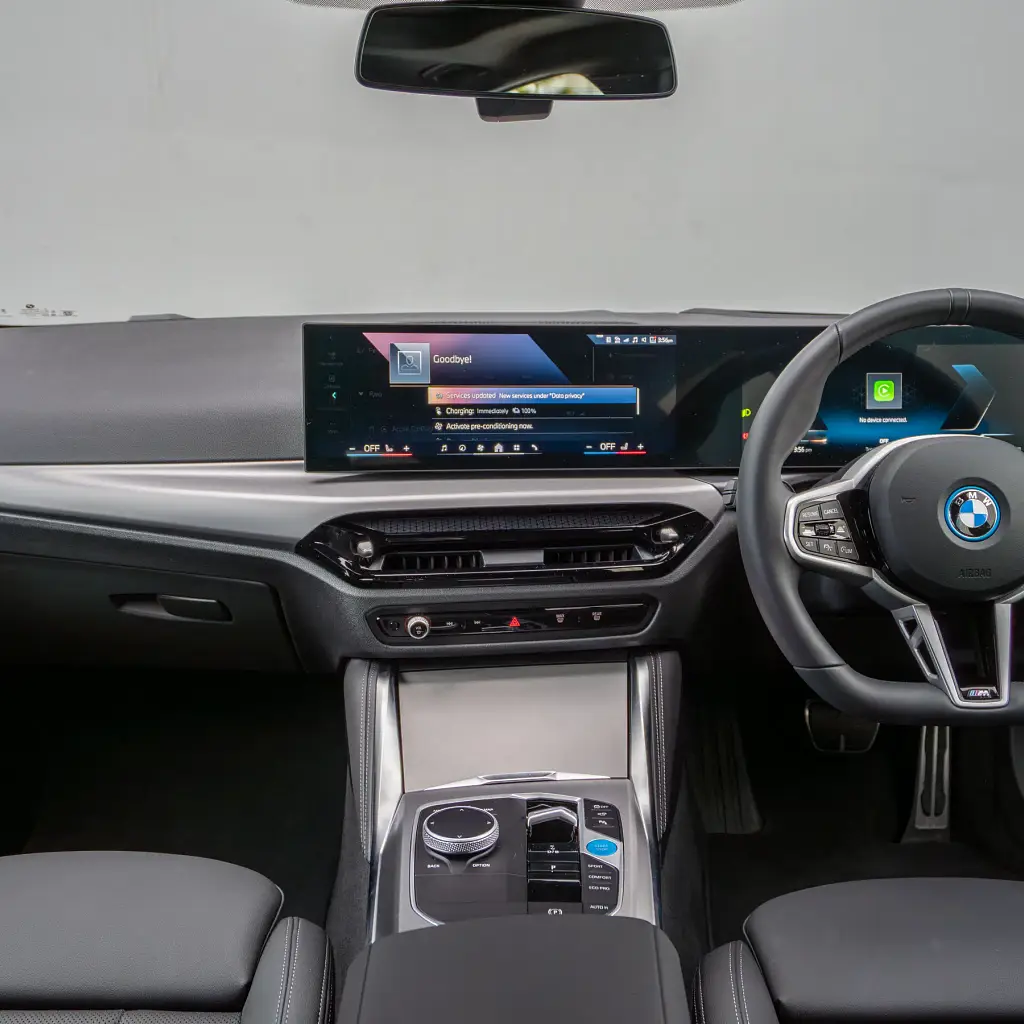
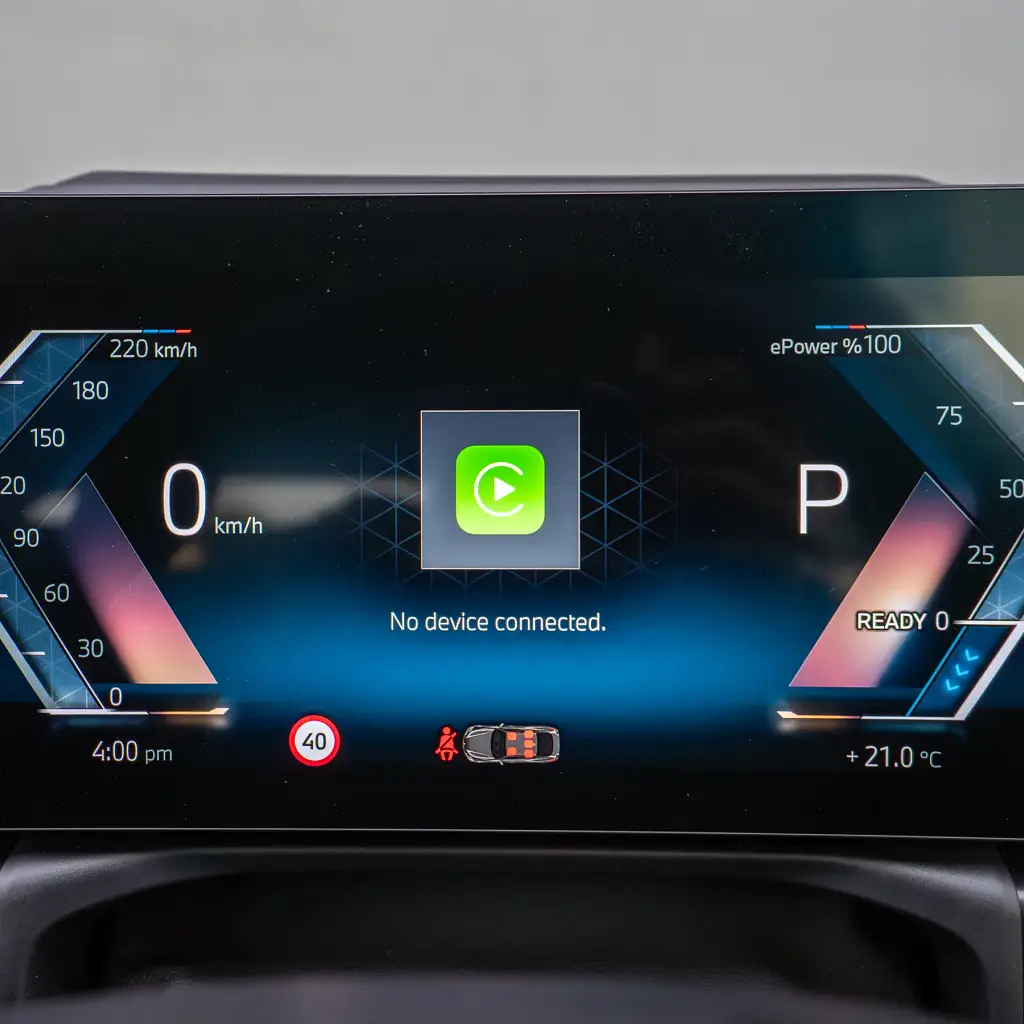
The infotainment system in the i4 will be familiar to anyone who has experienced a recent BMW model. The 14.9-inch infotainment screen and 12.3-inch digital instrument cluster are seamlessly integrated into a single, long panel that flows across the dashboard. The display is sharp and responsive, and the general layout is logical. However, the sheer number of apps, many of which mirror functions found in Apple CarPlay but are presented separately, can be overwhelming. This fragmentation creates a cluttered and occasionally confusing user experience, making it difficult to locate specific functions while driving without distraction.
For instance, adjusting regenerative braking requires navigation through menus, as there is no dedicated button. Despite repeated attempts, quick access to this setting remained elusive during the test week. The “automate habits” function, designed to reorder apps based on user preference, was inaccessible without a BMW ID profile. The limited number of physical buttons, a common trait in modern EVs, might prove bewildering for drivers accustomed to traditional internal combustion engine vehicles.
While shortcut buttons for navigation, media, and driving modes are present on the centre console, climate controls, apart from front and rear demisters, are integrated into the infotainment system. A welcome feature is the presence of a physical on/off button, a rarity in the current EV landscape, unlike the Model 3 and Polestar 2.
The 10-speaker sound system, while not from a premium branded manufacturer, delivers an impressive audio experience, projecting sound evenly throughout the cabin with good bass response and clarity. BMW’s My BMW connected services app allows owners to monitor vehicle status, remotely control functions, plan trips, and manage charging, though some features may require a subscription.
Driving Dynamics: Engaging and Refined
While the i4 eDrive35 is not the most potent i4 variant ever produced, with its 210kW/400Nm output not setting acceleration records, it offers more than sufficient performance for everyday driving and beyond. Power is delivered instantaneously from the single electric motor to the rear wheels via a single-speed automatic transmission.
Even in Eco mode, the acceleration is brisk. In Sport mode, the i4 propels forward with such force that occupants are pressed back into their seats. For daily commuting and general driving, this level of performance is more than adequate. Braking is also effective, with the i4 featuring adaptive regenerative braking that adjusts to driving conditions, or can be manually set to low, medium, or high.
The Eco and Comfort modes offer a slightly softer ride, but the Sport mode demonstrates remarkable composure without becoming overly firm. The ride remains compliant and enjoyable across various road surfaces, with the only significant disruptions occurring over large potholes or speed bumps. The 18-inch wheels contribute significantly to this balanced ride quality.
BMW’s steering system is a highlight, and the i4 exemplifies its intuitive and agile nature, fostering a strong connection between the driver and the road. The car navigates corners with grace, feeling well-controlled and planted, aided by the grip provided by the Hankook Ventus S1 Evo tyres. Body roll is minimal, even in Comfort mode.
A minor drawback is an occasional creak that can be heard when decelerating or navigating sharp turns, suggesting some flex in the body. This is a surprising imperfection for a premium vehicle and something that should have been addressed during testing. The Hankook tyres also perform admirably in minimising road noise, and the cabin is well-insulated from wind noise.
Conclusion: A Compelling Electric Choice
The BMW i4, particularly the eDrive35 variant, has proven to be a significant contributor to BMW’s electric vehicle sales figures since its 2022 launch. Its success is attributable to a combination of factors. The i4 is visually appealing, offers a refined driving experience (despite the minor creak), is quiet and comfortable, exhibits excellent energy efficiency, and its liftback design enhances practicality for occasional family use.
Crucially, the i4 represents strong value for money. It falls under the Luxury Car Tax (LCT) threshold for fuel-efficient vehicles and benefits from fringe benefits tax (FBT) exemptions, at least for the time being. While the electric Mercedes-Benz C-Class is anticipated to enter this segment, currently, there are few direct luxury competitors offering a similar package at this price point.
Although the Tesla Model 3, Hyundai Ioniq 6, and Polestar 2 are commendable electric vehicles, they may not evoke the same sense of occasion or premium feel as the i4. For those seeking an electric vehicle that seamlessly transitions from a traditional car, the BMW i4 stands out as an excellent choice.