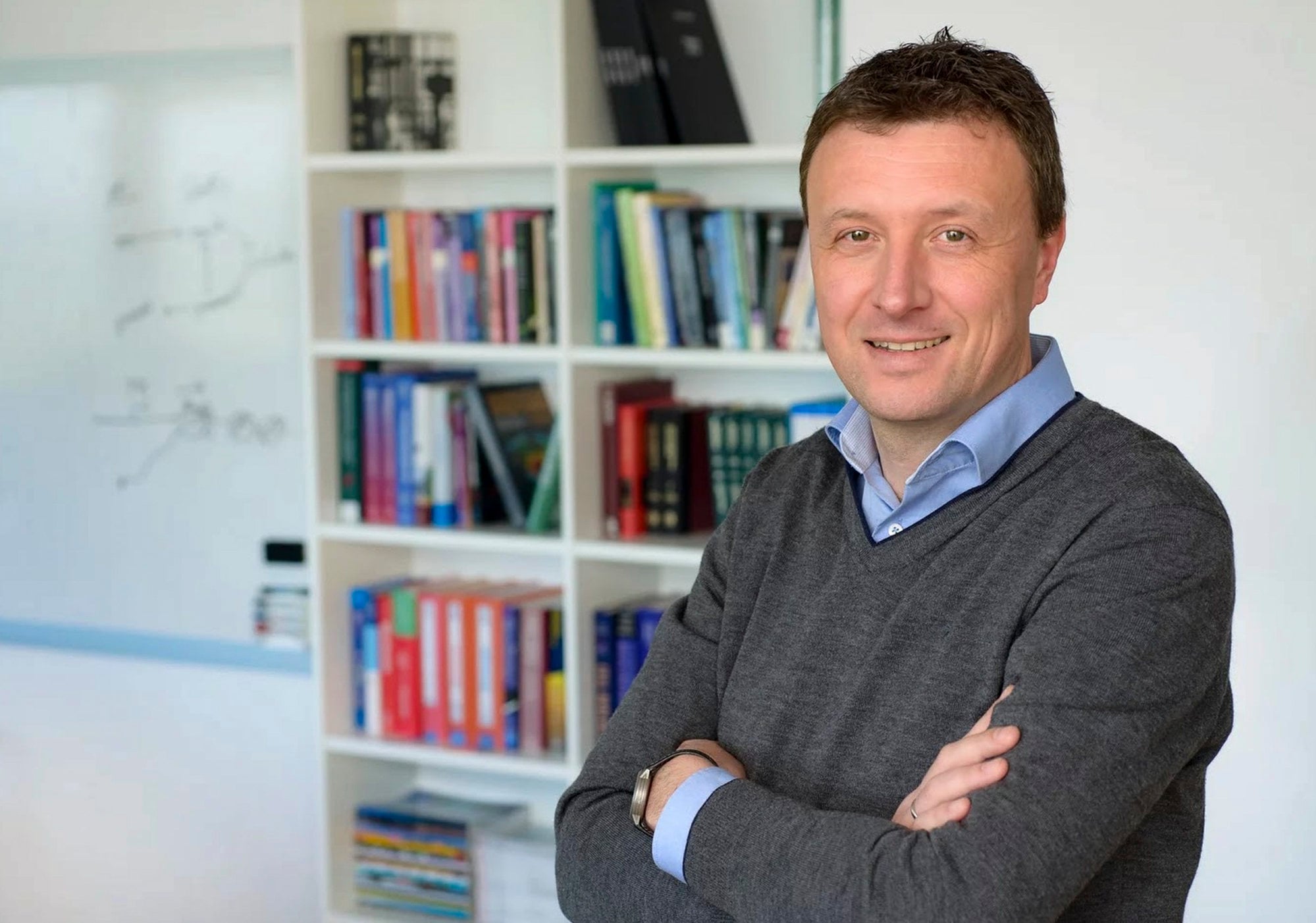
“Major shifts in the worldwide movement of skilled individuals” are opening up new possibilities, as stated by the leader of Germany’s Max Planck Society.
As the United States faces abrain drain, Europe is becoming a significant research collaborator for China as both regions gain from an increase in young scientists coming from the United States.
Significant shifts in global politics have led to “major changes in the movement of skilled individuals,” as stated byPatrick Cramer, the president of Germany’s Max Planck Society, a prominent research organization in Europe.
“Those are precisely the questions I ponder throughout the day,” Cramer mentioned during an interview in Shenzhen in April.
Are you curious about the major issues and developments happening globally? Find the answers withSCMP Knowledge, our latest platform featuring curated content including explainers, FAQs, analyses, and infographics, presented by our acclaimed team.
“One factor is the incoming administration in the United States [which has]changed visa regulations, scientific funding and, for instance, criticized Earth system science – some areas of research have become challenging,” he stated.
But there is another factor – the emergence of China. There is greater financial resources in China, so the country is establishing more institutions and there are more academic positions available.
He mentioned that global conflicts, such as wars, result in “situations where individuals sometimes struggle to perform their tasks effectively because they are unable to think clearly or attract young people due to the unfavorable conditions.”
However, the loss of talent goes beyond just top researchers departing the US. Cramer pointed out a pattern where leading scientists return to China to establish new institutions following successful careers overseas.
“The primary impact is on young talent—PhD students and postdoctoral researchers—who typically pursue their studies or research in the US. While many still choose to go to the US, there are fewer available positions, and some face challenges in obtaining visas or encounter other obstacles,” he said.
Several individuals who typically travel to the US are now choosing other destinations around the globe. Who is gaining from this shift? I believe China and Europe will see advantages.
He mentioned that nations capable of financing extra wages would gain the most, pointing out that Brazil was another country that had increased its science funding.
The Max Planck Society has consistently attracted global talent, and its collaboration with China—particularly the Chinese Academy of Sciences—is already well-established.
Last year, the society and Chinese researchers worked together on 157 projects, as stated by Cramer.
Between 2019 and 2023, their collaborative publishing activities led to almost 8,700 papers, positioning China as the fourth-largest partner nation, following the US, UK, and France.
Cramer mentioned that Chinese scientists constituted approximately 15 percent of its early-career researchers.
He mentioned that the objective was to encourage the sharing of expertise, instead of a one-sided loss of skilled individuals, ensuring that scientists could gain knowledge from top minds and support the development of future generations globally.
Cramer, a scientist specializing in chemistry and structural as well as molecular biology, shared his professional journey, which involved studying in Europe and receiving training in the United States. Following his return to Germany, he provided instruction to researchers from 30 different nations in his laboratory, many of whom later became professors in their respective countries, including in China and the United States.
The Max Planck Society keeps connections with former postdoctoral researchers who have returned to their home countries through 70 “partner groups” in China. Early career scientists are provided with five years of financial support to establish laboratories and maintain cooperation with their German colleagues.
Cramer mentioned that there was a strong motivation for the society to strengthen its collaboration with China: the opportunity to utilize the nation’s top-tier scientific facilities.
He pointed to the Five-hundred-metre Aperture Spherical Telescope(FAST) – the biggest and most responsive single-dish radio telescope globally, situated in Guizhou’s southern region.
Europe’s largest radio telescope is Effelsberg, which has a diameter of 100 meters, and is managed by the Max Planck Society close to Bonn.
Some individuals at FAST received their training at the Max Planck Institute for Radio Astronomy prior to joining FAST,” Cramer mentioned. “This is beneficial as they have a strong understanding of one another. They maintain collaboration.
The telescopes work together. He mentioned that FAST’s large antenna discovered new objects such as pulsars, while Effelsberg’s smaller and more adaptable antenna was utilized for “extended, meticulous, and intensive follow-up research” on the specifics.
He said rivalry between the US and Chinawas a “regret” that consumed effort and led to international strain, yet he also viewed it as a significant “chance we must seize” for Europe.
“Throughout the century, the European continent experienced numerous wars. Some regions saw quick advancements while others progressed more slowly, leading to significant differences across Europe,” he stated.
But in recent decades, we have demonstrated that it is possible to attain sustainable and peaceful development for a continent characterized by numerous languages and nations.
Rather than concentrating on the United States or China, Europe needs to establish its own strengths, methods, and principles, he stated.
Cramer stated that the “European approach” was based on supporting democracy, pursuing long-term development, combating climate change, and paying attention to “logic and the voices of reason.”
“We aim to collaborate with anyone who aligns with these principles and our objectives. We remain receptive to all parties. This is what we refer to as multilateralism,” he stated.
This is highly significant as there are numerous leaders across the globe who tend to distance themselves in various regions. Currently, this trend is particularly pronounced in the United States with the ‘America First’ approach.
Being Europeans, I believe we should collaborate with individuals from various nations who align with our goals… to behave in a manner that benefits the Earth and humankind, and to work together instead of competing against one another.
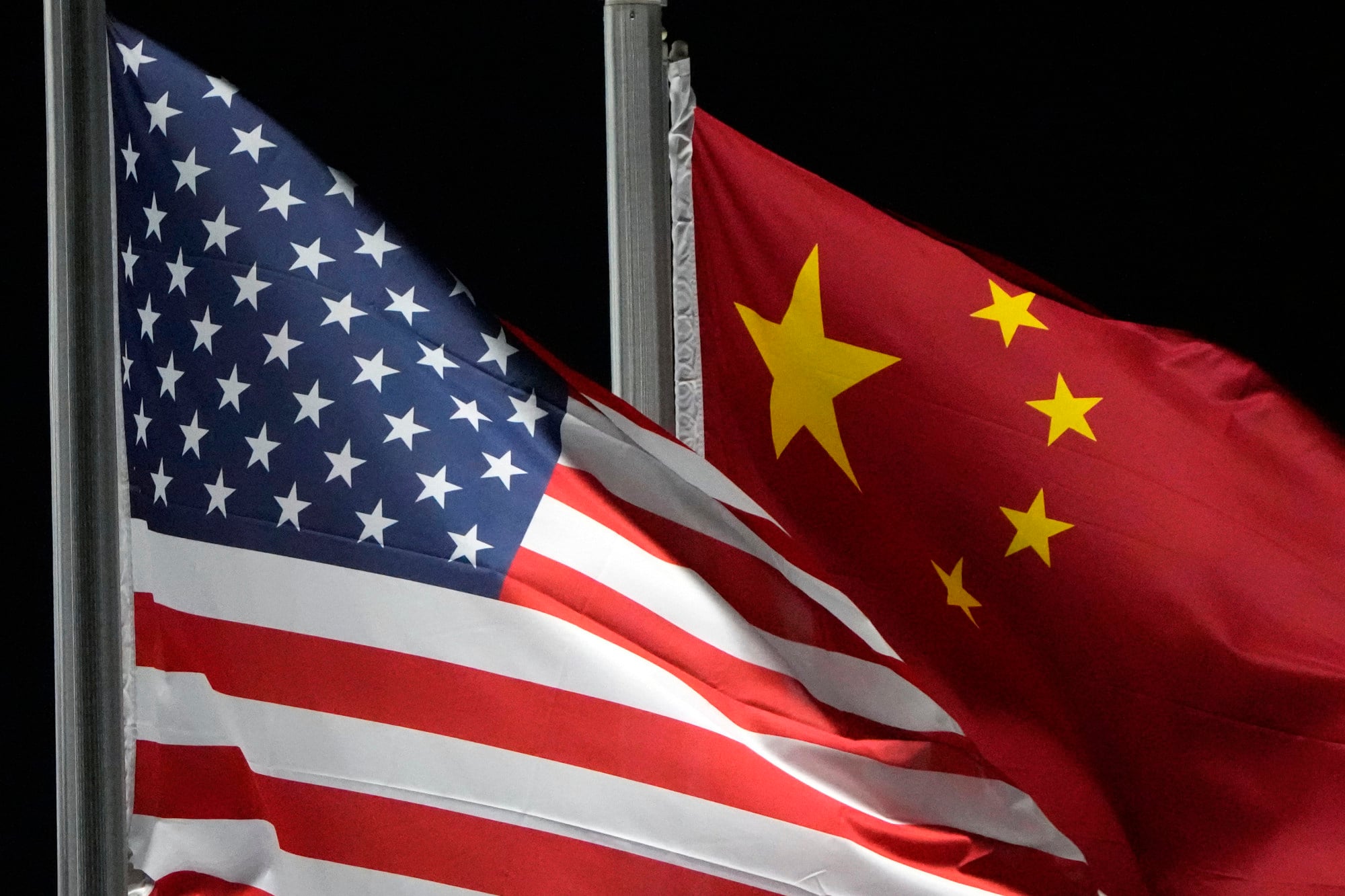
Cramer also mentioned that Europe has things to learn from China. “China is demonstrating how to mobilize individuals to collaborate on large-scale construction projects, major bridges, and significant engineering endeavors.”
He provided an example of a robotics laboratory in Shenzhen — affiliated with the newly established Max Planck Society-Chinese Academy of Sciences Centre for Synthetic Biochemistry.
Cramer referred to the four-story building that streamlines genetic research as “a highly Chinese initiative since it requires numerous individuals working together toward a shared objective, which is truly remarkable.”
“I believe it is extremely challenging to achieve in Europe. We don’t possess a facility of that size and level of complexity. We can gain much from China, and I think China can also benefit from Germany and Europe,” he stated.
In today’s globalized world, returning to a divided state would hinder human progress. This is the approach I hope Europe would take.
Cramer, who traveled to Beijing in 2013 when the air was filled with thick smog, mentioned that it was impossible to foresee how rapidly China’s scientific and national progress would unfold.
“It was evident that by that point, a change had already occurred. In 2008, China began bringing people back from around the world, primarily from the United States,” he stated.
In that year, Beijing initiated the Thousand Talents Program aimed at attracting Chinese scientists, scholars, and businesspeople residing abroad to come back to their homeland.
“I witnessed young individuals returning and establishing laboratories, but I wouldn’t have thought it would happen so quickly,” he remarked.
He also highlighted the more noticeable transformations within the nation such as thehigh-speed railwaynetwork and the transition toelectric vehicles.
In just a bit more than 10 years, China managed to develop all this advanced technology. They were able to construct trains that are as good as those from Japan or Germany, and they produced electric cars that are on par with Tesla. To me, this was not something that could have been predicted in 2013.
Socially and economically, he also highlighted the country’s achievement in lifting hundreds of millions of peopleout of poverty.
However, he mentioned there were issues to worry about, pointing out that the quick expansion might not be long-lasting, and he referred to the management of the pandemic as a “zero-Covid catastrophe.”
From the outside, it seems to me that errors have occurred,” he stated. “In 2022, it severely affected China.
Individuals faced hardships globally,” he stated, highlighting a mental health emergency among youth in Germany caused by extended school shutdowns. “The initial Trump administration also committed significant errors regarding Covid, as they did not anticipate its severity and disregarded scientific advice.
In the battle against global warming, he mentioned that China had surpassed Germany to become the top performer insolar technology.
Although economically challenging for Germany, Cramer stated that this was “very beneficial for the world” as China rendered solar energy more affordable, speeding up the worldwide transition from fossil fuels.
Regarding China’s future role, he stated: “I strongly support China continuing on this route [so that] they can show that they can merge economic expansion with the increase in people’s prosperity, while also achieving carbon neutrality significantly ahead of 2060.”
I believe China needs to set a challenge for itself – ‘let’s start much sooner’ – as it could also stimulate the sustainable and eco-friendly economy.
There are numerous things thatEurope and Chinacan collaborate in the shift towards a sustainable economy. We are home to some of the world’s top experts in green chemistry, for instance,” he stated. “We need to unite on this issue to reduce carbon emissions from the technological sphere as rapidly as possible.”
Cramer also highlighted that dealing with global fragmentation—especially during an era where technological and scientific dominance has become a key point of contention in international relations and security policy—demands a thoughtful strategy.
“He mentioned the difference between scientists and our peers, as well as the government of the nation,” he stated, using the example of differentiating the anti-science measures taken by the Donald Trump administration from colleagues at American universities.
“Although the new US administration has faced numerous criticisms regarding American science, we aim to enhance our collaboration with the US, particularly during challenging periods,” he stated.
As a result, the Max Planck Society intends to establish new partnership centers with leading universities on the eastern and western coasts of America.
He mentioned that the organization, which comprises researchers from 138 nations, would only express an opinion “if the science is impacted,” for instance, by protecting the freedom of science or scientists who “face specific political pressures.”
“It is crucial to avoid cultural conflicts, as failing to do so puts scientific discussion at risk—individuals may start debating without relying on scientific evidence,” he stated.
They may feel emotional due to having family in a specific country, or perhaps because of their background from [certain] culture.
He stated that the philosophy of the Max Planck Society remains more crucial than ever — for science to serve as “the voice of reason in a fast-evolving world.”
More Articles from SCMP
Cannes 2026: Review of “All of a Sudden” – Ryusuke Hamaguchi impresses with a film set in Paris
Chief justice of Hong Kong calls on senior lawyers to maintain the public’s confidence in the judiciary
China verifies agreement to purchase American planes and engines following Donald Trump’s visit
Travelers should not be overlooked in the discussion about ride-sharing services
This piece was first published in the South China Morning Post (www.scmp.com), a top news outlet covering China and Asia.
Copyright (c) 2026. South China Morning Post Publishers Ltd. All rights reserved.