
AlteSh, which includes AliExpress, Temu, and Shein, has significantly disrupted the global e-commerce landscape with its ultra-low-price strategies. These platforms, often referred to as “C-commerce,” have transformed the way consumers shop by leveraging large-scale subsidies and tariff exemptions. In 2024, Temu and Shein surpassed Amazon in mobile shopping app downloads in the U.S., marking a seismic shift in the industry.
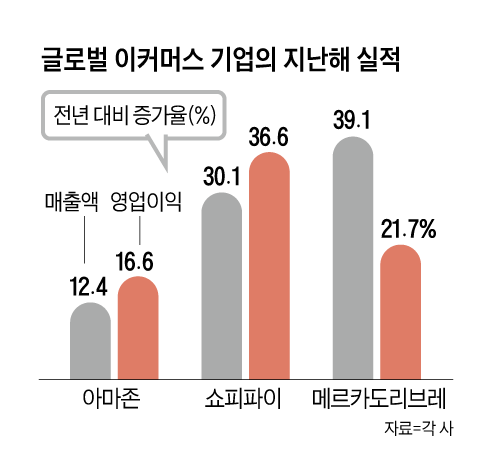
As C-commerce platforms experienced explosive growth, many traditional e-commerce companies faced significant challenges. For instance, Wish, a U.S.-based e-commerce company, saw its value decline sharply and was eventually sold at a discount. Similarly, ASOS, a European fashion e-commerce leader, reported double-digit sales declines. However, recent performance reports from Amazon, Shopify, and Mercado Libre indicate that these concerns were unfounded. Amazon’s sales grew by 12.4% year-on-year, with operating profit increasing by 16.6%. Shopify recorded a 30.1% sales increase and a 36.6% rise in operating profit, while Mercado Libre saw sales and operating profit grow by 39.1% and 21.7%, respectively.
An Eye for an Eye, a Tooth for a Tooth
Amazon, the world’s largest e-commerce company, responded to the C-commerce challenge with a strategy of “head-on breakthrough.” To retain customers who were defecting to C-commerce platforms, Amazon launched Amazon Haul, a mobile store focused on ultra-low-priced goods. This service, available in the U.S. and expanded to 25 countries, offers products under $20 and delivers them directly from overseas manufacturing sites within two weeks. This approach targets cost-conscious consumers by offering lower prices in exchange for longer delivery times.
Bain & Company noted that Amazon Haul has become a direct threat to Chinese competitors, intensifying global competition. The service saw a fivefold increase in products sold and a tripling of visitor numbers within a year. Amazon achieved a new GMV of approximately $2 billion within the U.S. alone.
Temu and Shein aggressively targeted the Latin American market, with Temu’s monthly active users (MAU) in Latin America surging 143% compared to the same period the previous year. Additionally, the Peruvian Port of Chancay, part of China’s Belt and Road Initiative, reduced shipping times and costs, heightening the sense of crisis among Latin American companies.
Counterattack Strategy
Mercado Libre, known as the “Amazon of South America,” countered with a “counterattack” strategy by establishing a direct logistics hub in mainland China. This strategy involves consolidating and storing Chinese sellers’ products at a hub in China before packaging and shipping them to Latin American countries. This allowed Latin American consumers to browse and purchase ultra-low-priced goods from Chinese suppliers within the familiar Mercado Libre app.
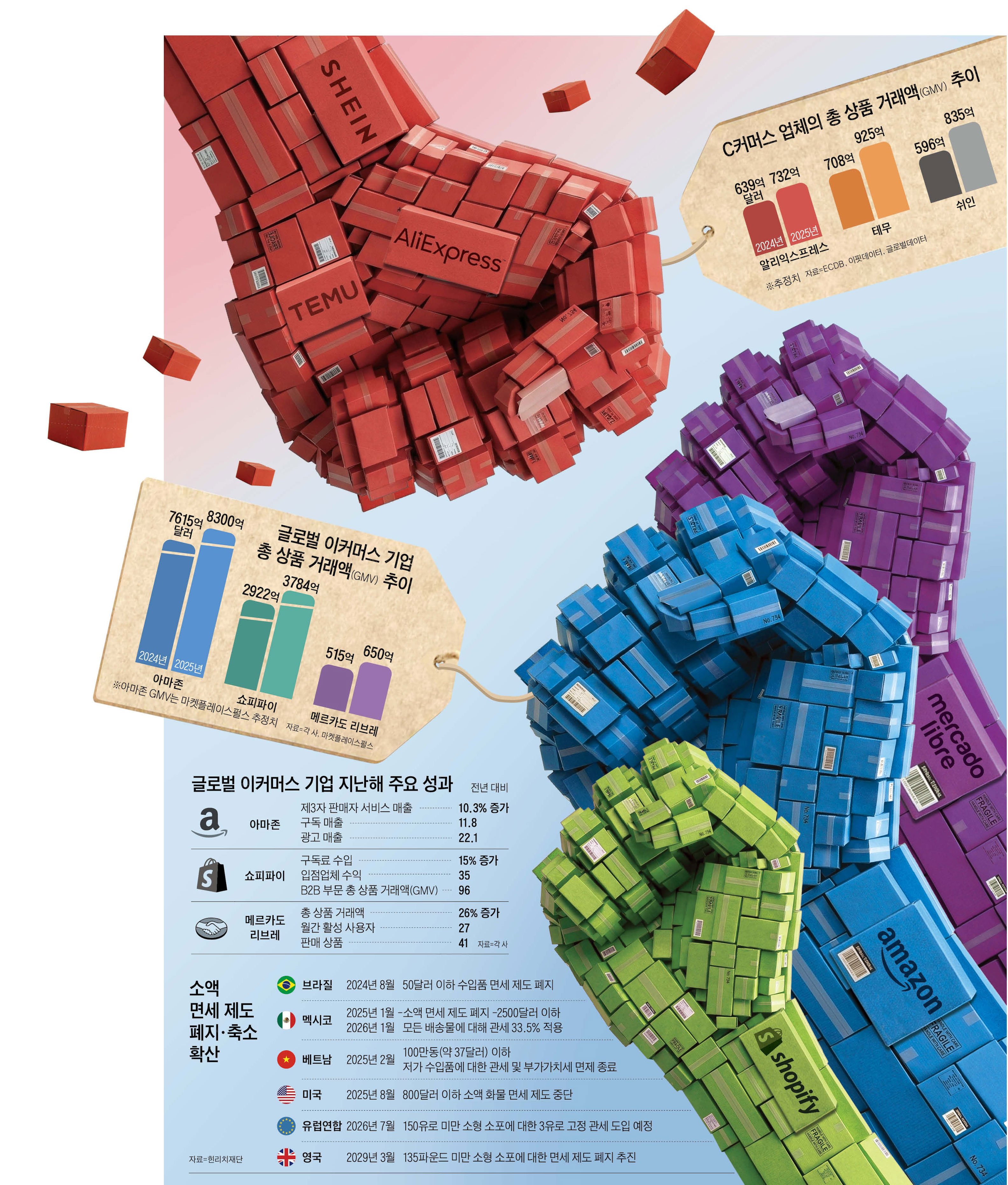
Mercado Libre improved service levels by directly controlling the supply chain for Chinese-based products. By providing tax payment and delivery tracking services integrated with South American customs systems, Mercado Libre attracted top Chinese sellers struggling with language barriers and customs delays. As a result, Mercado Libre recorded $28.9 billion in sales in Latin America last year, a 39.1% increase from the previous year.
Differentiation from C-commerce
While Amazon focuses on direct procurement and operates centralized malls, Shopify provides solutions for sellers aiming to launch their own online stores. This structure is vulnerable to C-commerce attacks. In response, Shopify shifted focus to the B2B market, a strategy that proved effective. Through its enterprise-focused “Shopify Plus Enterprise Plan,” Shopify built customized solutions for business customers, attracting global companies like Starbucks and Canada Goose.
Mercado Libre utilized its strong fintech infrastructure to prevent existing users from leaving. Its fintech subsidiary, Mercado Pago, used an in-house AI credit assessment model to analyze shopping purchase histories and issue credit cards. This allowed Mercado Libre to grant its customers strong purchasing power that competing platforms cannot offer.
Countries Blocking the C-commerce Offensive
The global reduction and abolition of de minimis tariff exemptions slowed AlteSh’s growth. Countries such as the U.S., Mexico, Vietnam, Turkey, Brazil, and others have taken action to curb the influence of C-commerce platforms. These measures include halting tariff exemptions for shipments under certain values and imposing higher tariffs on cross-border goods.
Experts predict that these changes won’t eliminate C-commerce from the market. Juozas Kaziukenas, an independent e-commerce analyst, stated that Chinese platforms remain cheaper than alternatives due to their other advantages. As they grow, these platforms are shifting from selling only ultra-cheap goods to offering more varied products at different price points.
The Korean Market?
AlteSh showed explosive growth in South Korea until 2024, but their upward trajectory slowed due to consumer fatigue amid controversies over counterfeit products and security issues. Despite this, Coupang recovered to 28 million WAU last month, maintaining its leading position. Domestic e-commerce platforms saw temporary increases in WAU during Coupang’s crisis but remained in the 3–4 million range without achieving a notable rebound.
월 5900원 멤버십, 신문 독자에게는 2900원, 조선멤버십
55000원 상당의 신문-잡지 8종 마음껏 보기, 조선멤버십
현금처럼 쓸 7000포인트 받아 알뜰한 쇼핑, 조선멤버십