A sudden whisper, laced with disbelief, cut through the air. “Baraka?” My head snapped around, my heart leaping into my throat. And there he was, standing at the gate. He was a shadow of the man in the photographs, thinner, quieter. He didn’t resemble the cousin we had been told about for a decade. There was a smallness to him, as if life’s burdens had physically compressed his frame.
Auntie Ruth let out a choked cry. Her voice, far from welcoming, trembled with an emotion closer to fear. “Why did you come today?” she asked, her words sharp and questioning. Baraka offered no verbal reply. Instead, he took a slow, deliberate step forward, each movement weighted with an unspoken gravity. Uncle Mugo’s hand clamped onto his arm with a grip that seemed desperate, as if fearing he might simply dissolve back into the ether.
“People are watching,” my mother murmured beside me, her voice a hushed admonishment. “Don’t stare.” Yet, my gaze remained fixed on him. The harsh sunlight seemed to carve his features into sharp relief, and dust swirled around his worn shoes. The hushed murmurs from the gathered crowd grew louder, an unsettling chorus of speculation. This was no joyous reunion; it felt like a dam breaking, releasing a torrent of hidden truths. In that instant, I knew the narrative we had constructed around his life in Qatar was about to crumble.
Growing up, Baraka was less a tangible person and more a whispered legend. I was too young to grasp the subtleties when he left, too young to understand the careful hushed tones that accompanied any mention of his name, too young to notice the deliberate omissions in his story. “Ako Qatar,” Auntie Ruth would say, her smile tight, “He is doing well.” Uncle Mugo would nod in agreement, “Construction work. Hard work, but good money.” We accepted their words, unquestioningly. Why wouldn’t we?
Each year, during family gatherings, his name would surface, always accompanied by the same platitudes. “He might bring a car next year.” “He is building something big.” “He is just too busy to visit.” I recall asking my mother once, “Why doesn’t he call me?” She had simply laughed softly. “He calls the elders. You are still small.”
That day, the room was filled with the comforting aroma of tea and the faint scent of smoke. The clinking of cups and the overlapping murmur of conversations created an illusion of normalcy, of safety. Later, Auntie Ruth proudly displayed photographs. “See?” she’d say, pointing to a picture. “That is Baraka at work.” He was pictured on a dusty construction site, a helmet perched on his head. He looked strong, proud, a man forging his future. “Wow,” I’d breathed, “He looks successful.” “He is,” she’d replied, a touch too quickly. No one challenged her assertion. In our family, success was intrinsically linked to venturing abroad, a testament to sacrifice and a source of honour. Even Guka, our grandfather, would often say, “Baraka is helping this family from afar.” We clung to that sentiment.
At night, as stories unfolded, my cousins and I would weave fantastical narratives of his life. “Maybe he lives in a tall building,” one would suggest. “Maybe he eats foreign food every day,” another would add. I would smile, picturing him returning with armfuls of gifts. We all believed it.
Years slipped by, quiet and uneventful. Then, Guka passed away. The early morning call shattered the calm. My mother’s voice broke as she spoke, and the subsequent days were a blur of frantic packing, hurried travel, and profound grief. At the compound, sorrow settled like a heavy shroud. Relatives gathered, their voices hushed, their eyes red-rimmed. “Baraka will join on video,” someone announced. “Yes,” Auntie Ruth confirmed, “He already confirmed.” A sense of relief washed over me; it felt right that he would be present, even from a distance. Yet, beneath the surface, a disquiet simmered. Auntie Ruth conspicuously avoided eye contact, and Uncle Mugo’s silence was unnerving. That evening, I ventured to ask my mother, “Why do they look worried?” She sighed, “Grief shows differently.” I nodded, but the explanation felt hollow.
The air was thick with the scent of damp earth and freshly cut grass. The wind rustled through the trees, whispering secrets. Everything seemed to be holding its breath, waiting. The morning of the burial arrived, heavy with an oppressive stillness. In the distance, the low, steady beat of drums pulsed. People moved in hushed clusters, clad in somber hues.
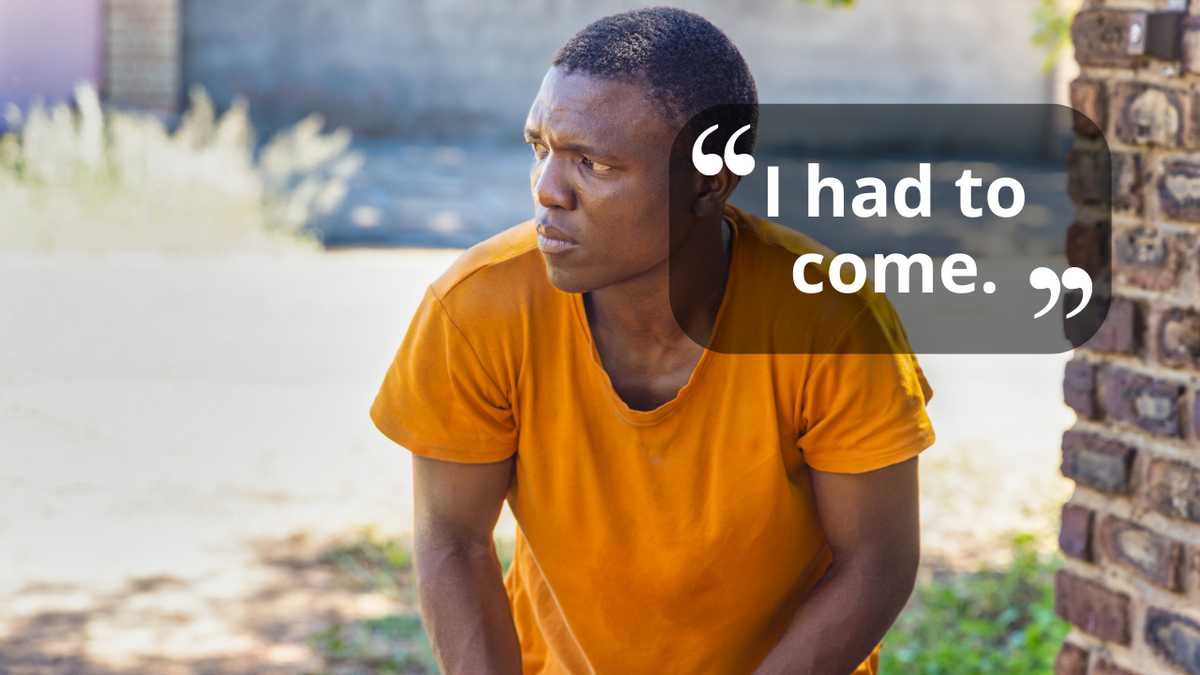
Then, Baraka walked in. No prior call, no warning, just his unexpected presence. Auntie Ruth’s reaction was the first visible crack in our carefully maintained facade. She rushed towards him, gripping his shoulders. “Why now?” she whispered, her voice laced with bewilderment. “Why like this?” “I had to come,” he replied softly. His voice startled me; it was gentler, more subdued than I remembered, tinged with a carefulness that felt foreign. Uncle Mugo pulled him aside, his voice a low, urgent murmur. “We talked about this. Not today.” Baraka simply shook his head. “It is already today.” A shiver traced its way down my spine, a primal chill that spread outwards. Around us, the whispers intensified. “Is that him?” “He looks… different.” “Why didn’t he call first?” My mother squeezed my arm, her voice a firm command: “Stay still.”
Baraka offered no boisterous greetings. Just brief nods, fleeting hugs, and averted gazes. He then settled himself under the shade of the mango tree, a solitary figure. The sunlight, filtering through the leaves, dappled his face in shifting patterns of light and shadow, making him seem as though he yearned to disappear into their depths. Something about his stillness was deeply unsettling. This was not the Baraka of our embellished stories, not the architect of dreams in Qatar. This was someone else entirely, someone burdened by an invisible weight.
As the burial ceremony progressed, I observed subtle details. When elders spoke of family unity, Baraka’s shoulders tensed. Mentions of land seemed to tighten his grip, his fingers curling into fists. At one point, a relative quipped, “Now that Baraka is back, he can invest here.” A ripple of laughter followed, but Baraka offered no mirth. His gaze dropped, his jaw visibly tightening. It was then that the first seeds of doubt began to sprout within me.
That night, the compound felt palpably different, hushed and charged with an unspoken tension. I stepped outside for some air, the sky a vast expanse of inky blackness studded with countless stars. The chirping of crickets filled the silence. Near the kitchen, I overheard hushed voices – two aunties. “Did you see him?” one whispered. “Yes,” the other replied. “So thin.” A beat of silence, then, even softer, sharper: “So he is finally out?” My heart skipped a beat. “Ruth should have told us,” the first auntie continued. “How do you hide prison for ten years?”
Prison. The word struck me with the force of a physical blow. I froze, my breath catching in my throat. “No, maybe you are mistaken,” the second auntie said, her voice laced with uncertainty. “I am not,” the first insisted. “I heard it clearly. That case… it was serious.” The air suddenly felt frigid, and the smell of smoke stung my nostrils. I retreated silently, my mind a whirlwind of confusion. Prison? It made no sense. None at all.
Returning inside, my chest felt tight. My mother sat alone, her expression unreadable. “Mum,” I began carefully, “what were those aunties talking about?” She didn’t look at me. “People talk too much.” “But they said—” “Enough,” she interrupted, her voice firm and final. “Family matters are complicated. Leave it alone.” Her tone effectively ended the conversation, but it did little to quell the storm raging in my thoughts. Sleep eluded me that night. Every time I closed my eyes, the image of Baraka beneath the mango tree, silent and still, resurfaced. And the word echoed, relentlessly: Prison.
The next morning, I observed him from a distance. He remained under the mango tree, hands clasped, his gaze fixed on the distant hills. His profound silence seemed to press down on me, heavier than the midday heat. I attempted to break through it. “Cousin… do you want some tea?” He offered only a faint nod, his eyes never leaving the horizon. The tea grew cold in my hands. At breakfast, whispers followed him like a persistent shadow. Cousins exchanged nervous, curious glances. One muttered, “Is he… really back?” Auntie Ruth flitted about, fussing with the food, her hands trembling as she placed plates. Uncle Mugo sat rigidly, his jaw clenched. The air thrummed with unspoken anxiety.
Later, during a discussion about land distribution, voices began to rise. “We need to confirm boundaries before anyone claims plots,” an elder stated. Baraka flinched, his knuckles whitening. “I—” he started, then trailed off. “Speak up,” someone urged. He swallowed, his voice barely audible. “I don’t… want conflict.” A sharp, uneasy laugh cut through the room. “Conflict? You’ve been gone ten years! You should know the meaning.” I saw his body stiffen, sweat beading on his temples. He looked away, hiding his face behind his hands. I moved closer. “Cousin, what’s wrong? You don’t have to explain here.” He shook his head, a subtle tremor running through it.
The dry, warm scent of the earth filled my nostrils. Dust coated my shoes. The world seemed to slow down. The tension escalated when an argument erupted over a disputed plot. Voices grew louder, chairs scraped against the floor, and a hand slammed onto the table. Baraka’s face paled. He retreated towards the doorway, his arms wrapped protectively around himself. “Cousin, it’s okay. Step outside if you need to,” I whispered. He did, vanishing behind the cowshed. I followed him later, hesitant. The heat pressed against my skin. The cowshed carried the faint, earthy scent of hay and sweat. He stood facing the hills, silent and motionless. “Where have you really been?” I asked gently. He remained silent for a moment, then began to speak. Inside, the argument between my mother and Uncle Mugo reached a fever pitch. Their words, clipped and urgent, carried fragments of their distress. “We told them he was abroad!” Uncle Mugo exclaimed, his voice raised. “Why not just tell the truth?” my mother demanded. “Shame,” he replied. “You know how it went.”
My stomach churned. Shame. The word resonated differently than fear or anger. That evening, under the fading light of the setting sun, I finally heard the full story. We sat beneath the mango tree, its branches casting long shadows across the ground. Baraka spoke quietly, his voice laced with a caution I had never heard before. “I didn’t want anyone to see me like this.” His words carried a weight that seemed to crush him. “What happened?” I asked softly, leaning closer, trying to decipher the story etched on his face. The silence between us was heavy. He hesitated before answering. The air smelled of dry leaves and dust, and a distant dog barked. His fingers traced the rough grain of the wooden bench, restless. “Ten years… I was in Kamiti,” he said, his voice finally finding its strength. “Land disputes. It went wrong.” The truth landed like a blow, shattering every carefully constructed narrative of Qatar, construction, and success. They felt impossibly distant, utterly false. “I thought…” I whispered, the words sounding weak even to my own ears, “You were abroad.” I struggled to reconcile the man before me with the stories we had so readily believed.
He offered a faint shrug. “We said that to protect you,” he explained, his gaze fixed on the ground. “And to protect the family from shame.” I blinked slowly, processing the enormity of his words. Prison, not prosperity. Isolation, not opportunity. He had been trapped, caught in something far beyond his control. “Did someone get hurt?” I asked, my voice trembling, already dreading the answer. He nodded once. “Yes,” he confirmed. “And I paid my dues. We all did. But people judge, even after everything ends.” His tone was steady, yet weary. A chill ran through me. The wind stirred the mango leaves above, and a bird cried out sharply. The moment felt raw, exposed. I finally understood his silences, the profound weight behind every flinch, every distant gaze. Nothing about him was careless anymore.
“I thought you abandoned us,” I confessed quietly, the words carrying years of confusion and hurt. “No,” he replied firmly. “I stayed away because I felt broken. I did not want to ruin the family name.” His voice was steady now. The truth settled around us, undeniable and transformative. I felt a surge of anger, relief, and sorrow all at once. “Most of us,” I said slowly, “we’re not angry. Just… shocked.” He looked at me, his eyes glistening. “Shocked, yes. But you still accept me?” “I… yes,” I managed. “We accept you. And we’re here now.” That night, the compound felt different. Less tense, perhaps, but more fragile, more honest.
The following day, the final land meeting commenced with a palpable undercurrent of unease. Voices clashed again, old grievances resurfacing with alarming speed. Chairs scraped as cousins leaned forward, each fiercely guarding their claim.
An elder attempted to restore order, but their pleas went unheeded. Arguments overlapped, accusations flew, and the mention of money immediately tightened the atmosphere. Baraka remained seated initially, observing the unfolding scene with a quiet intensity. His eyes moved from face to face, steady and unreadable. Then, he rose, slowly and deliberately. The cacophony ceased instantly. Even the most impassioned voices faltered mid-sentence. All attention shifted to him, a silent, unified focus. “I don’t want any land,” he stated. His tone was calm, yet it carried an undeniable weight. “I just want peace.” A ripple moved through the assembled group. Shock replaced anger, and confusion settled in. No one had anticipated such a declaration. Auntie Ruth exhaled deeply, covering her mouth. Uncle Mugo lowered his gaze, his rigid posture softening. The elders exchanged brief, knowing glances. A profound silence descended, heavier than the earlier shouting, compelling introspection.
Then, a cousin nodded. Another followed, more slowly, but with certainty. Agreement spread in quiet waves. The meeting transformed without further contention. Voices lowered, and decisions were made without force. The combative energy drained away, replaced by a calmer atmosphere. Baraka did not withdraw. He moved among them, offering assistance wherever needed. He fetched water, worked without complaint, and joined the men at the slaughter, his hands steady. He dug alongside younger cousins, his actions speaking louder than any defense.
Later, I sat beside him under the mango tree. The sun dipped low, casting long, golden shadows. A gentle breeze carried the scent of earth and smoke. “I never wanted them to see me like that,” he murmured, his voice almost lost in the wind. “I thought silence would protect everything.” “You don’t have to hide anymore,” I replied. “We failed to see the truth, not you. And now they are finally looking.” He nodded slowly, absorbing my words. A faint smile touched his lips, cautious but genuine, revealing a flicker of relief he tried to mask.
By evening, the initial distance had softened. Cousins approached him in small, quiet gestures – a nod, a shared joke, a plate passed across the table. It was not a grand spectacle, but an honest, unforced reconciliation. Respect gradually supplanted suspicion. This was not the triumphant return anyone had envisioned. There were no lengthy speeches or thunderous applause. Yet, it felt more profound than any celebration. Baraka stood among them, at ease. He worked, spoke, and laughed without hesitation. He belonged again, not by assertion, but by quiet presence.
I understood something clearly then. Silence does not always signify betrayal. Sometimes, it serves to shield what words would only shatter. Life rarely adheres to the narratives we construct for ourselves. Baraka’s absence had been a wound, not just for him, but for all of us who had clung to comforting myths. Truth can be terrifying, but silence carries its own immense weight, often heavier than any lie. We had judged him unfairly, yearning for a story that suited our expectations. But faced with reality, we saw not a criminal, but a person profoundly shaped by circumstance.
I finally grasped it: forgiveness and understanding are distinct. Acceptance is a slower, more arduous process, yet it is essential. Families often conceal truths to protect their own. Sometimes these efforts fail; sometimes, they succeed. Watching Baraka help with the digging and fetching water, I wondered if we ever truly learn to carry each other’s burdens without succumbing to fear. If faced with the choice, would I maintain silence to shield someone I loved, or risk everything for the unvarnished truth? I didn’t have the answer yet, but for the first time, I could honestly ask the question.