France Declines Direct Intervention in Liberia-Guinea Border Dispute
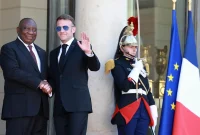
Liberia’s appeal to French President Emmanuel Macron for direct intervention in the escalating border dispute with neighboring Guinea has reportedly been declined. Multiple sources indicate that Paris has adopted a measured stance, signaling a reluctance to become directly involved in the sensitive territorial claims along the shared frontier. This decision highlights a broader recalibration of French foreign policy in West Africa, emphasizing restraint and regional ownership of conflict resolution.
The reported refusal comes at a critical juncture for Liberia, which had sought to leverage France’s historical influence with Guinea to de-escalate mounting tensions. The dispute, characterized by an increased military presence and competing territorial claims, had prompted President Joseph Boakai to personally engage with President Macron, urging diplomatic intervention.
Diplomatic Overture and French Response
Sources privy to the exchanges revealed that Liberia’s request was framed within the context of France’s long-standing political and strategic role in Francophone Africa, particularly its historical relationship with Guinea. This diplomatic overture was later corroborated by France’s Ambassador to Liberia, Marc Fonbaustier, who confirmed communication between the two leaders, although specific details were not disclosed.
However, despite Liberia’s appeal, President Macron reportedly signaled a clear reluctance to intervene. This hesitation is understood to be influenced by the sensitivities surrounding Guinea’s current leadership under President Mamadi Doumbouya. Officials familiar with the discussions indicated that the French President underscored the importance of non-interference in matters directly involving Conakry. This stance is widely interpreted as an effort to avoid further straining already delicate relations between France and Guinea, which have been strained since the 2021 military takeover.
A senior source described the response from Paris as “firm, calculated, and reflective of a strategic shift.” The source noted that France appears increasingly hesitant to insert itself into disputes that carry the risk of being perceived as infringing on the sovereignty of African states, especially in regions where its historical role is under renewed scrutiny. Another source elaborated, stating that while France values its relationship with Liberia, President Macron operates within a framework prioritizing restraint and regional ownership of conflicts, implying that African-led institutions should take precedence in resolving such disputes.
The Roots of the Liberia-Guinea Border Dispute
The border dispute between Liberia and Guinea stems from longstanding ambiguities surrounding their shared boundary. These ambiguities are compounded by overlapping local claims and the significant economic importance of territories along the frontier. In recent weeks, tensions have intensified, with reports of increased troop deployments and sporadic confrontations heightening fears among residents in affected communities.
The situation has been further complicated by recent events. Despite a Memorandum of Understanding (MoU) signed in Conakry involving Presidents Boakai and Doumbouya, along with Sierra Leone’s President Julius Maada Bio, the situation reportedly deteriorated within 24 hours. Guinean troops allegedly advanced into and claimed areas believed to be within Liberian territory, raising serious concerns about the durability of diplomatic agreements.
A Call for Legal Resolution and Legislative Action
Amidst these developments, former Liberian Foreign Minister Monie R. Captan has warned that the crisis may have moved beyond the scope of conventional diplomacy. Drawing on his experience during the Liberian civil war, he recalled a 2002 humanitarian mission to Lofa County that revealed early signs of similar territorial tensions. He described witnessing the Guinean flag raised on what was understood to be Liberian territory, with armed fighters and foreign troops occupying strategic positions nearby. This encounter underscored the volatility of the border and the long-standing nature of the dispute.
Captan argues that the Liberia-Guinea border conflict is fundamentally a legal issue rather than a political one. He believes that decades of bilateral meetings and regional summits have failed to produce a lasting solution because they have not addressed the underlying legal ambiguities. He suggests that a sustainable resolution requires a structured legal approach, including comprehensive fact-finding, historical documentation, and potential arbitration through international mechanisms like the International Court of Justice.
Meanwhile, the Speaker of Liberia’s House of Representatives, Richard Nagbe Koon, has called for urgent legislative-level intervention within the Mano River Union framework. He has urged the convening of a high-level meeting of parliamentary leaders from member states in Abidjan from March 28 to 30, 2026, to address the growing border tensions. Speaker Koon expressed concern over reports of Guinean security forces crossing into and occupying areas along the Makona River, which forms part of the boundary. He warned that such actions risk undermining national sovereignty and the stability of the Mano River sub-region.
Regional Implications and Future Outlook
The proposed Abidjan meeting, according to Speaker Koon, would serve as a critical platform for reinforcing regional cooperation and strengthening legislative oversight. He emphasized that sustained engagement at both executive and legislative levels is essential for preserving peace and ensuring that the crisis does not escalate into a wider regional conflict.
Regional bodies, including the Economic Community of West African States (ECOWAS) and the African Union (AU), have also called for restraint and renewed dialogue, warning of far-reaching implications for stability across West Africa if the situation escalates.
With France stepping back from direct involvement, Liberia faces the challenge of recalibrating its diplomatic approach. As tensions persist, the coming days are expected to test the resilience of Liberia’s diplomacy and the effectiveness of regional mechanisms. The outcome of this dispute is likely to shape the future of peace and cooperation within the Mano River Union.