Global Air Quality Crisis: Only 13 Nations Meet Safe Standards as Pollution Surges
A stark new report reveals a deepening global air quality crisis, with a mere 13 countries and territories achieving the World Health Organization’s (WHO) safe air standards in 2025. The vast majority of the world’s population is breathing polluted air, with the most severe concentrations found in South Asia and parts of Africa, according to the 2025 IQAir World Air Quality Report.
The comprehensive analysis, which examined PM2.5 data from over 9,400 cities across 143 nations, regions, and territories, underscores a significant global failure to meet the WHO’s guideline of 5 micrograms per cubic meter (μg/cu.m) for annual average PM2.5 levels. Asia, in particular, appears to have missed the mark entirely in meeting these benchmarks.
Oases of Clean Air: The Select Few
Despite the widespread pollution, a handful of locations managed to maintain air quality within safe limits. French Polynesia, nestled in the South Pacific, emerged as the cleanest territory, boasting an impressive annual average PM2.5 concentration of 1.8 μg/cu.m. This was closely followed by Caribbean nations Puerto Rico, with an average of 2.4 μg/cu.m, and the U.S. Virgin Islands, at 2.5 μg/cu.m.
Other notable locations that met the WHO’s stringent air quality standards include:
- Barbados
- New Caledonia
- Iceland
- Bermuda
- Réunion
- Andorra
- Australia
- Grenada
- Panama
- Estonia
The dataset underpinning this report is vast, drawing from more than 40,000 regulatory monitoring stations and a network of low-cost sensors. These vital data points are collected and managed by a diverse array of entities, including government agencies, academic institutions, non-profit organizations, private companies, and dedicated citizen scientists from around the globe.
A City-Level Decline
The report also highlighted a worrying trend at the urban level. Only 14% of the cities analyzed met safe air standards in 2025, a decrease from 17% the previous year. This decline suggests that even in areas that previously enjoyed better air quality, pollution is on the rise.
Nieuwoudtville in South Africa was recognized as the least polluted location globally. Beyond its remarkably clean air, the town is also celebrated for its stunning seasonal wildflower displays, offering a unique combination of natural beauty and environmental health.
The Driving Forces Behind the Pollution Surge
Experts largely attribute the global decline in air quality to human-driven climate change. The report points to an increased frequency and intensity of events such as wildfire smoke, dust storms, and extreme weather patterns – all exacerbated by the continued reliance on fossil fuels.
Europe, for instance, endured its most severe wildfire season on record in 2025. These devastating blazes, which peaked in August, contributed to substantial economic losses estimated at over €43 billion (US$49.8 billion), directly linked to the interconnected impacts of heatwaves, floods, and droughts.
South Asia and Africa Bear the Brunt of Pollution
The grim reality of air pollution is most acutely felt in South Asia and specific regions of Africa, which recorded the highest PM2.5 concentrations worldwide. Pakistan topped the list of polluted nations, with an average PM2.5 concentration of a staggering 67.3 μg/cu.m. Bangladesh followed closely with 66.1 μg/cu.m, and Tajikistan registered 57.3 μg/cu.m.
The scale of the problem is further emphasized by the fact that the world’s 25 most polluted cities are all situated within India, Pakistan, and China, with India disproportionately represented in these rankings.
The city of Loni, located in India, was identified as the most polluted urban center globally. Its PM2.5 levels were found to be more than 22 times higher than the WHO’s recommended safe limits. This severe pollution is attributed to a confluence of factors, including extensive traffic emissions, widespread industrial activities, and the pervasive presence of road dust.
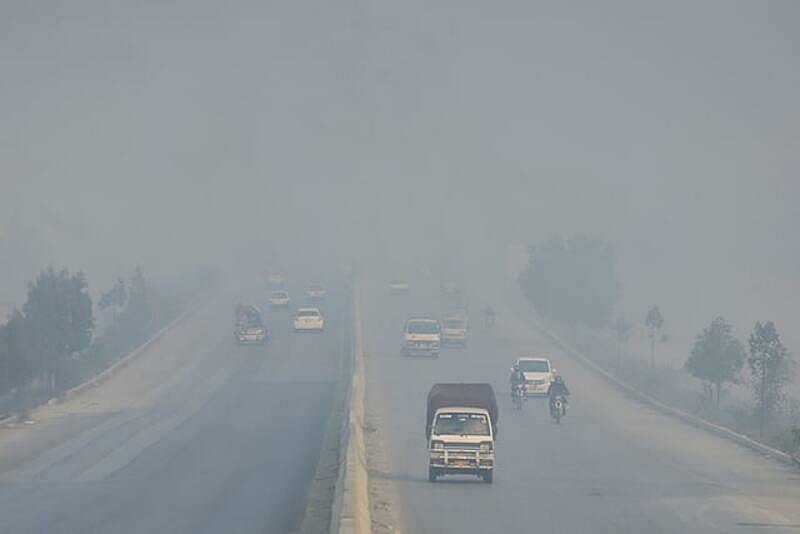
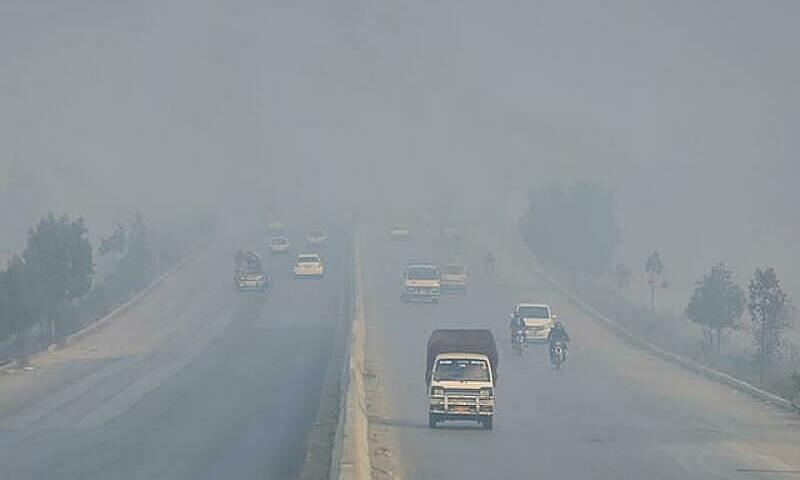
Vehicles move amid smog and air pollution during morning hours in Peshawar, Pakistan, November 28, 2025. Photo by Reuters