“Arirang”: A Century of Resonance, From Silent Film Anthem to Global Phenomenon
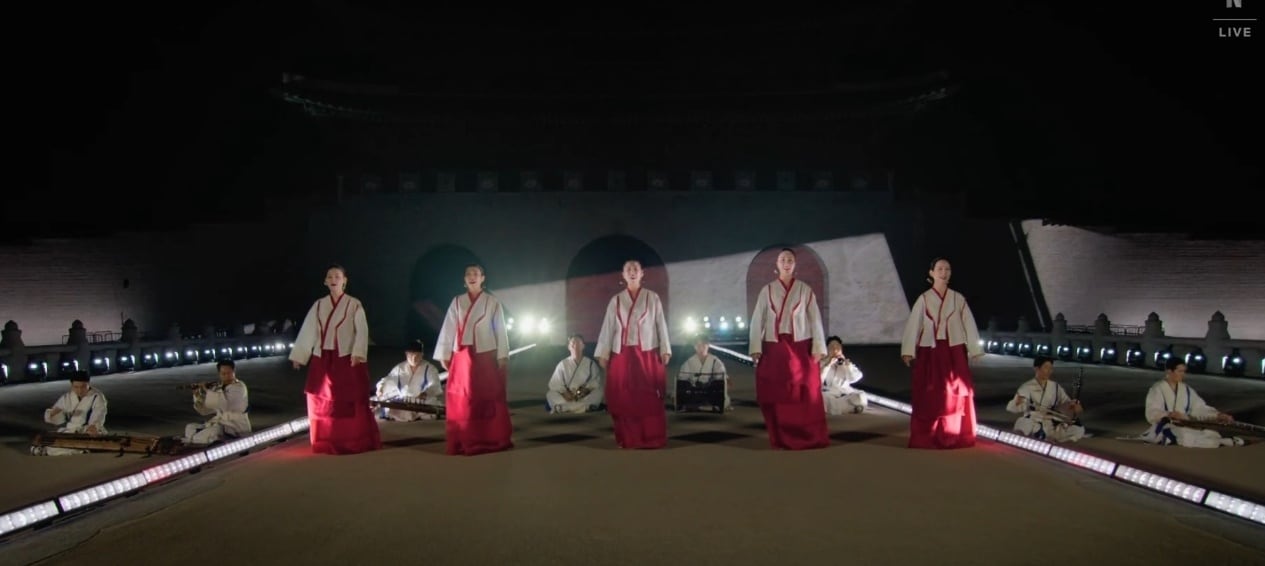
The recent performance by global music sensation BTS in Seoul’s Gwanghwamun Square captivated audiences worldwide. A particularly poignant moment, widely cited as a highlight, was the rendition of “Arirang” by members of the National Gugak Center, set against the historic backdrop of Gwanghwamun. This performance served as a powerful reminder of how this beloved Korean folk song has transcended borders and achieved global recognition.
However, the story behind the “Arirang” featured in the BTS performance warrants a closer look. Korea boasts a rich tapestry of “Arirang” traditions, with over 60 distinct versions and an estimated 3,600 songs passed down through generations. The “Arirang” recognized by UNESCO as Intangible Cultural Heritage in 2012 encompasses this vast legacy. The specific version that resonated with BTS’s global audience began with the familiar refrain, “Arirang, Arirang, Arariyo,” and concluded with the melancholic lines, “I can’t even go ten ri before falling ill.” This particular iteration, also known as “Bonjo Arirang” or “New Arirang,” is inextricably linked to the visionary filmmaker Chunsa Na Woon-gyu.
Exactly one century ago, in 1926, the 24-year-old Na Woon-gyu released “Arirang,” a silent film widely acclaimed as an anti-Japanese national masterpiece. Na Woon-gyu’s singular talent was evident as he undertook the monumental tasks of director, original writer, adapter, and lead actor. The film’s enduring theme song was the very “Arirang” that echoed through Gwanghwamun Square. Na Woon-gyu penned the evocative lyrics, while the Dansungsa Orchestra composed the memorable music.
While the oldest known transcription of “Arirang” dates back to 1896, attributed to the American scholar Homer Hulbert, the film’s “Arirang” was a distinct creation by Na Woon-gyu, a native of Hoeryong in North Hamgyong Province. He drew inspiration from a sorrowful “Arirang” he had heard railway workers sing in his youth, breathing new life into it and infusing it with the collective emotions and aspirations of a nation under duress. The song’s meteoric rise in popularity across the Korean Peninsula was a remarkable phenomenon, transforming a film’s theme song into a beloved national folk anthem.
The historical significance of the film “Arirang”‘s release is profound. It premiered on October 1, 1926, coinciding with the completion ceremony of the Japanese Government-General Building. In a bold act of defiance, Na Woon-gyu orchestrated a promotional march from Dansungsa Theatre to Gwanghwamun Street, with his film’s promotional team parading and playing the theme song “Arirang.” The song itself became a powerful symbol of resistance against Japanese colonial rule. The flustered Government-General attempted to quell the burgeoning dissent by confiscating 10,000 flyers featuring the theme song, but their efforts were ultimately futile as crowds flocked to cinemas, demonstrating the song’s undeniable impact. A hundred years later, the echoes of “Arirang” were heard once more in front of the now-demolished Government-General Building, once again reaching a global audience.
Na Woon-gyu possessed a remarkable foresight, seemingly anticipating the future rise of Hallyu, the Korean Wave, and the global phenomenon of K-culture. In a November 1936 interview with “Samcheolli” magazine, he articulated his vision: “If we can capture the common emotions that people worldwide can feel and create content based on Joseon’s landscapes and sentiments, entering the global market will not be difficult.” He further emphasized the need for internal development, stating, “We must think about fundamentally defeating others by producing great actors, directors, and literary giants within our own ranks.” Tragically, Na Woon-gyu passed away young the following year, but his prescient words have undeniably come to fruition. As the BTS performance concluded, one could almost imagine a voice echoing, “Are you watching, Na Woon-gyu?” His legacy, intertwined with the enduring spirit of “Arirang,” continues to inspire and resonate across the globe.