Aukus Powers Up: Drones to Guard Vital Undersea Cables
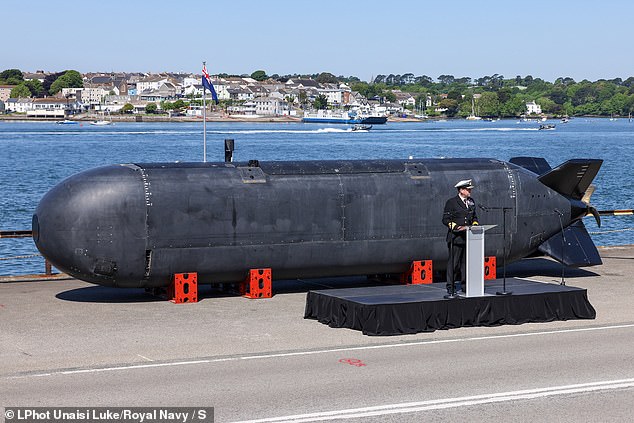
In a significant stride towards bolstering maritime security, Britain, Australia, and the United States are pooling their expertise to develop advanced underwater drone technology. This collaborative effort, operating under the Aukus military alliance, is specifically designed to counter emerging threats to critical undersea cables, which have recently become the focus of attention from Russian spy vessels.
The ambitious project will see the development of uncrewed underwater vehicles (UUVs), commonly known as underwater drones. These sophisticated machines are anticipated to be operational and ready for deployment by next year. Their primary function will be to assist naval operations, enabling ships and submarines to survey vast swathes of the ocean floor, equipped with an array of sensors and potentially even weaponry.
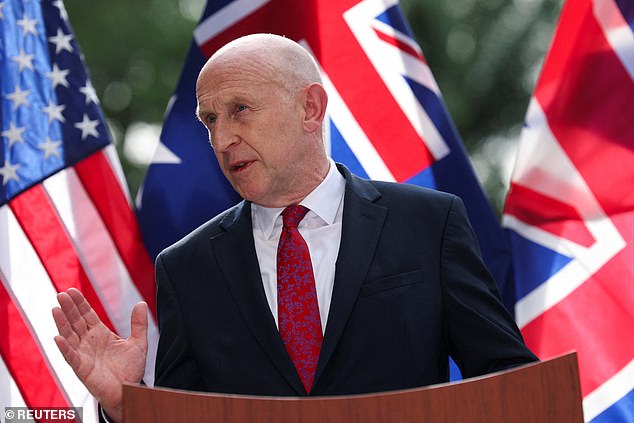
The announcement was made at a defence conference in Singapore by key figures from all three nations. British Defence Secretary John Healey stood alongside his US counterpart, Pete Hegseth, and Australia’s Deputy Prime Minister, Richard Marles, to unveil the initiative. While the complete financial outlay for the project remains undisclosed, Mr. Healey confirmed that the United Kingdom would be contributing a substantial £150 million to the endeavour.
“This is what modern defence looks like,” Mr. Healey stated, emphasising the project’s forward-thinking nature. “We’re stepping on the accelerator to develop cutting-edge tech to boost our collective deterrence and support our shared security.”
The impetus for this accelerated development stems from recent concerns over Russian activity. Last month, Mr. Healey revealed that three Russian submarines had reportedly engaged in a “covert” operation, probing cables and pipelines in waters to the north of the UK. While a British warship and aircraft were dispatched to monitor and deter the Russian presence, Mr. Healey assured that there was “no evidence” of any damage to critical British undersea infrastructure. Russia’s embassy in London has, however, refuted these claims.
The strategic importance of these undersea cables cannot be overstated. The UK, for instance, relies on approximately 60 such cables for both data transmission and energy supply, with over 90 per cent of the nation’s daily internet traffic traversing these vital connections.
This latest Aukus initiative follows closely on the heels of criticism regarding the alliance’s pace in delivering on its promised projects. Earlier this year, the Commons Defence Committee issued a warning that the alliance’s progress was lagging, expressing concerns about its ability to maintain credibility if tangible results were not delivered in a timely manner.
Acknowledging these criticisms, Mr. Healey admitted, “For too long in Aukus, we talked too much and delivered too little.” However, he was quick to add, “That has now changed under our three governments,” signalling a renewed commitment to action.
The development of UUV technology represents a significant component of the Royal Navy’s broader strategic shift towards a “hybrid” operational model, which places a greater emphasis on unmanned systems and artificial intelligence. This aligns with the deployment of uncrewed minehunters aboard the support ship RFA Lyme Bay, with a potential deployment to the Strait of Hormuz amid ongoing Middle East tensions.
Aukus: A Pillar of Advanced Capabilities
Established in 2021, the Aukus alliance was forged with the overarching goal of fostering a “free and open Indo-Pacific that is secure and stable.” It is widely perceived as a strategic response to the escalating influence of China in the region. The Chinese government, upon the alliance’s inception, denounced it as a move that risked “severely damaging regional peace” due to a “cold war mentality.”
The underwater drone technology project is designated as the first “signature project” under Aukus’s Pillar Two. This pillar is dedicated to collaborative development of “advanced capabilities” among the three nations, encompassing areas such as long-range hypersonic missiles, undersea robotics, and artificial intelligence (AI).
This initiative builds upon the foundation laid by Aukus’s Pillar One. Pillar One’s primary focus has been on equipping Australia with nuclear-powered attack submarines. As part of this commitment, British and American vessels are scheduled for rotational basing in Australian waters.

Further underscoring this commitment, the three allied nations announced that an American nuclear-powered submarine would make a visit to Australia next year. This visit is part of the ‘Submarine Rotational Force-West’ initiative, which aims to ensure a continuous submarine presence at Australia’s naval base in Perth. Earlier this year, the UK’s HMS Anson attack submarine visited the same base for maintenance, a deployment that was reportedly curtailed following the outbreak of conflict in Iran.
The Aukus pact’s formation in 2021 had a significant geopolitical ripple effect, directly leading to Australia’s cancellation of a $37 billion (£27 billion) contract with France for the construction of 12 submarines. At the time, French President Emmanuel Macron expressed that then-Australian Prime Minister Scott Morrison had misled him regarding the deal, while then-French Foreign Minister Jean-Yves Le Drian described the move as a “stab in the back.”