Rare Blue Moon to Grace Australian Skies
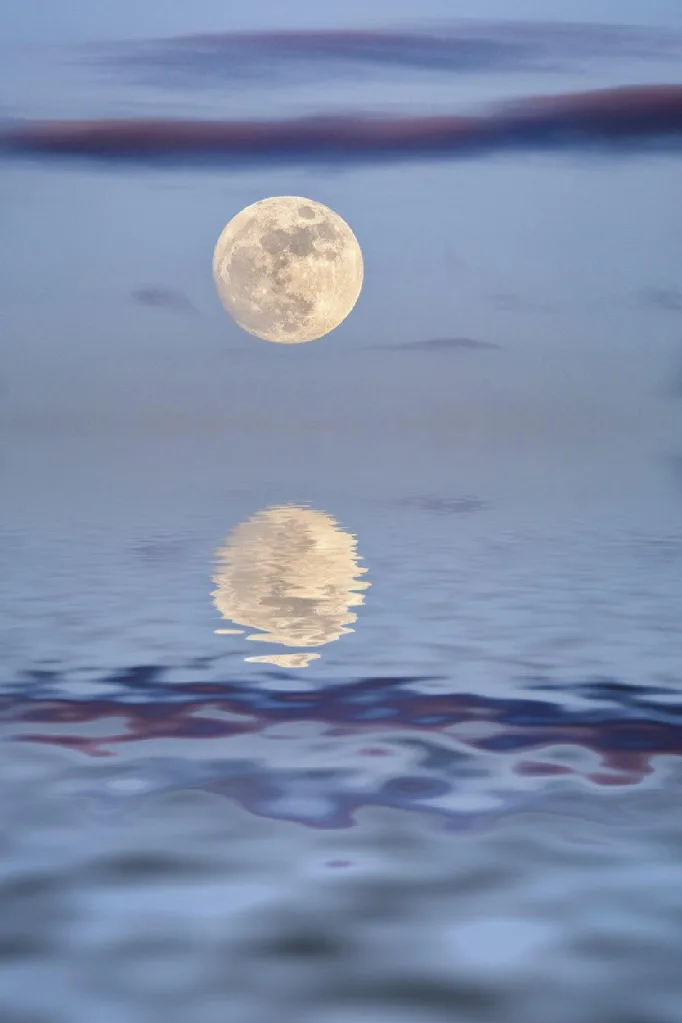
On the evening of May 31, 2026, Australians will have the opportunity to witness a celestial event that lives up to its name: a Blue Moon. This isn’t a night where the moon will turn an actual shade of blue, but rather a rare occurrence where the second full moon within a single calendar month graces our night sky. This phenomenon, so uncommon it’s often referenced in the idiom “once in a blue moon,” will rise at approximately 6:45 pm AEST.
Adding another layer of celestial interest, this particular Blue Moon is also a “micromoon.” This designation means the moon will be at or near its furthest point from Earth in its elliptical orbit, known as apogee. While this might suggest a smaller and dimmer appearance, the human eye often struggles to discern the difference without a direct comparison. Furthermore, the well-known “Moon Illusion” can make the moon appear significantly larger and more dramatic as it rises above the horizon, especially shortly after sunset.
Understanding the Blue Moon Phenomenon
Dr. Laura Driesden, a Postdoctoral Research Fellow in Radio Transients at the Sydney Institute for Astronomy, clarifies that a Blue Moon is not an astronomical event in itself. “It is just about how the lunar month doesn’t fit perfectly into a calendar year,” she explains. Our lunar cycles, which last about 29.5 days, don’t neatly align with our 365-day Gregorian calendar. This slight discrepancy occasionally leads to an “extra” full moon within a month.
There are actually two recognised types of Blue Moons: seasonal and calendar. The Blue Moon occurring on May 31st is a calendar Blue Moon, defined as the second full moon within a single calendar month. The term’s modern usage dates back to the 1930s and gained popularity through publications like the Maine Farmer’s Almanac. For context, the previous calendar Blue Moon occurred on August 31, 2023, and the next one is anticipated on December 31, 2028.
A less common definition, but one with historical significance, refers to a seasonal Blue Moon. This occurs when there are four full moons within a single astronomical season (the period between a solstice and an equinox). In such cases, the third full moon of that season is designated as the Blue Moon, while the other three retain their traditional names.
Why This Blue Moon is Also a Micromoon
The orbital path of the Moon around Earth is not a perfect circle; it’s slightly oval. This means there are times when the Moon is closer to us (perigee) and times when it is farther away (apogee). A “supermoon” occurs when a full moon coincides with perigee, appearing larger and brighter. Conversely, a “micromoon” happens when a full moon occurs near apogee.
“It sounds dramatic, but the human eye usually can’t tell the difference,” Dr. Driesden reassures. “Unless you have a side-by-side comparison, a micromoon looks very similar to any other full moon.” The illusion of size is often amplified during moonrise, a psychological phenomenon known as the Moon Illusion.
Spiritual Significance of the Blue Moon in Sagittarius
Beyond its calendrical definition, the Blue Moon holds significant astrological meaning. On May 31st, this Blue Moon will rise in the zodiac sign of Sagittarius. This sign is often associated with truth, expansion, restlessness, and a deep-seated urge to explore beyond one’s current horizons. Astrologers view this Blue Moon as an opportune moment for introspection, psychological and spiritual resets, and the manifestation of intentions.
The astrological energy of a Full Moon in Sagittarius is particularly potent for:
- Perspective Shifts: Gaining new insights and understanding situations from a broader viewpoint.
- Expansion and Growth: Encouraging exploration, learning, and pushing personal boundaries.
- Revelation and Clarity: Bringing hidden truths to light and offering clarity after periods of confusion.
- Adventure and Freedom: Inspiring a desire for travel, new experiences, and a sense of liberation.
- Release and Letting Go: Providing an opportunity to shed old limitations and embrace forward momentum.
This particular Blue Moon arrives at the midpoint of 2026, following several months that may have been emotionally intense. It offers a chance to recalibrate and “think big,” setting new intentions for the remainder of the year.
Viewing the May 31st Blue Moon
For Australians eager to witness this rare event, the peak illumination will be on Sunday, May 31, around 6:45 pm AEST. The best viewing opportunities will be shortly after sunset.
To maximise your viewing experience:
- Escape Light Pollution: Head away from urban areas to a location with minimal artificial light. This could be a park, a beach, or a clifftop.
- Face East/South-East: The Moon will rise in the eastern part of the sky and traverse towards the west-south-west.
- Allow Eyes to Adjust: Give your eyes at least 20 minutes to adapt to the darkness before actively scanning the sky.
- Consider the Weather: If skies are cloudy on Sunday night, the moon will still appear full on Saturday and Monday nights, offering alternative viewing opportunities.
Tips for Capturing the Moment:
- Photography: Modern smartphones with night or portrait modes are capable of capturing impressive images of the Blue Moon.
Looking Ahead: Future Lunar Events
For those interested in future celestial occurrences, the next Blue Moon is predicted for May 20, 2027. Before that, the next full moon, known as the “Strawberry Moon,” will be visible on June 30, 2026.