Nigeria’s Persistent Fight Over World Cup Qualification
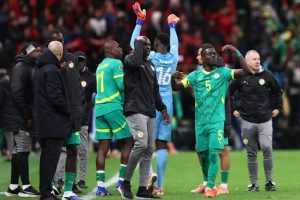
The Nigeria Football Federation (NFF) has taken a bold step in response to FIFA’s decision to dismiss its petition against the Democratic Republic of Congo (DR Congo). The NFF, dissatisfied with the outcome, has announced its intention to appeal the ruling. This move comes after a controversial 2026 FIFA World Cup Playoff match between Nigeria and DR Congo on November 16, 2025, which ended in a 4-3 penalty shootout victory for DR Congo following a 1-1 draw in regular time.
Dr. Mohammed Sanusi, the NFF general secretary, expressed the federation’s dissatisfaction with the decision made by the FIFA Disciplinary Committee. He assured Nigerians that the NFF had immediately begun the process of appealing the decision. However, the actual filing of the appeal at the Court of Arbitration for Sport (CAS), the final authority in such matters, remains uncertain. While the NFF claims to have started the process, many are skeptical about whether it has officially submitted the appeal.
This uncertainty has raised questions about the NFF’s commitment and efficiency. It was previously reported that the NFF’s protest failed to meet the strict procedural requirements outlined in Article 8 of the Regulations Governing the Preliminary Competition for the 2026 FIFA World Cup. The protest was submitted on November 28, 2025—nearly two weeks after the match—which is well beyond the mandatory timeline. According to the regulations, protests regarding player eligibility must be communicated to the match commissioner within two hours of the completion of the match, followed by a detailed written submission within 24 hours.
Moreover, it was alleged that the required protest fee of 1,000 Swiss francs was not paid, which may have prevented the case from being formally processed by FIFA’s judicial bodies. If this is true, it raises concerns about the NFF’s ability to handle such matters effectively, despite its publicized plans to take the issue to CAS.
While the NFF continues its efforts to secure the play-off ticket, the FIFA Inter-continental play-offs have already commenced in Mexico without the Super Eagles. Instead, Nigeria is preparing for two international friendlies against Iran and Jordan in Turkey. Many Nigerians would have preferred their team to be competing in the World Cup rather than playing these matches.
Despite the missed opportunity, the NFF remains hopeful, leading some to believe that those responsible for the failure of the Super Eagles to qualify are using diversionary tactics to deflect pressure from angry fans. The likelihood of the Court of Arbitration for Sport (CAS) ordering FIFA to hand the ticket over to Nigeria seems slim, especially if the decision goes against DR Congo. Such a scenario could be seen as another instance of injustice.
The motivations behind the NFF’s persistent pursuit remain unclear. Some speculate that the current leadership is seeking to maintain political leverage ahead of an upcoming election year. However, the absence of the World Cup ticket has created a significant setback for those hoping to use it as a bargaining chip.
Historically, no president of the NFF who failed to deliver the World Cup ticket has been re-elected. Pa Ibrahim Galadima faced consequences after the 2006 World Cup failure, and Mr. Amaju Melvin Pinnick also suffered repercussions in 2022. While Galadima stepped down gracefully, Pinnick attempted to run for a third term but eventually dropped his bid.
With the Extra-Ordinary General Assembly of the NFF announcing September 26, 2026, as the date for its elective congress in Lafia, the incumbent president, Alhaji Ibrahim Gusau, is expected to run for re-election. His tenure has brought relative stability to Nigerian football, marked by efforts to uplift the sport and accommodate various stakeholders. Unlike his predecessor, Gusau has adopted a more conciliatory approach.
However, the recent World Cup failure is likely to create challenges for Gusau’s re-election campaign. Opponents may use this setback to criticize his leadership. Despite this, many Nigerians have come to accept that the World Cup is not a birthright, as highlighted by Pa Galadima years ago. This shift in perspective may help ease the pressure on the NFF leadership.
Former Super Eagles captain John Mikel Obi has called for those responsible for the World Cup failure to leave the “glasshouse,” adding to the pressure on the NFF. As the NFF continues its fight, it remains clear that the 2026 World Cup ticket has already been secured by DR Congo.