FIA Reverses Decision on Albert Park’s “Straight Mode” Zone Amidst Team Concerns
The Federation Internationale de l’Automobile (FIA) has temporarily rescinded its decision to remove a designated “straight mode” zone between Turns 8 and 9 at the Formula 1 Australian Grand Prix, following significant pushback from Formula 1 teams. This marks a notable U-turn for the governing body, highlighting the complexities of implementing new aerodynamic regulations.
For the upcoming 2026 season, Formula 1 is set to introduce active aerodynamics. This innovative system will see cars automatically adjust both their front and rear wings on specific straights. The primary objective behind this technology is to help manage the substantial energy recovery demands of the new generation of power units, which are designed to be more reliant on optimal battery usage.
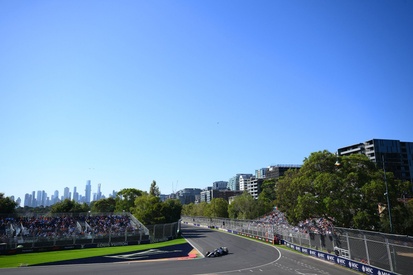
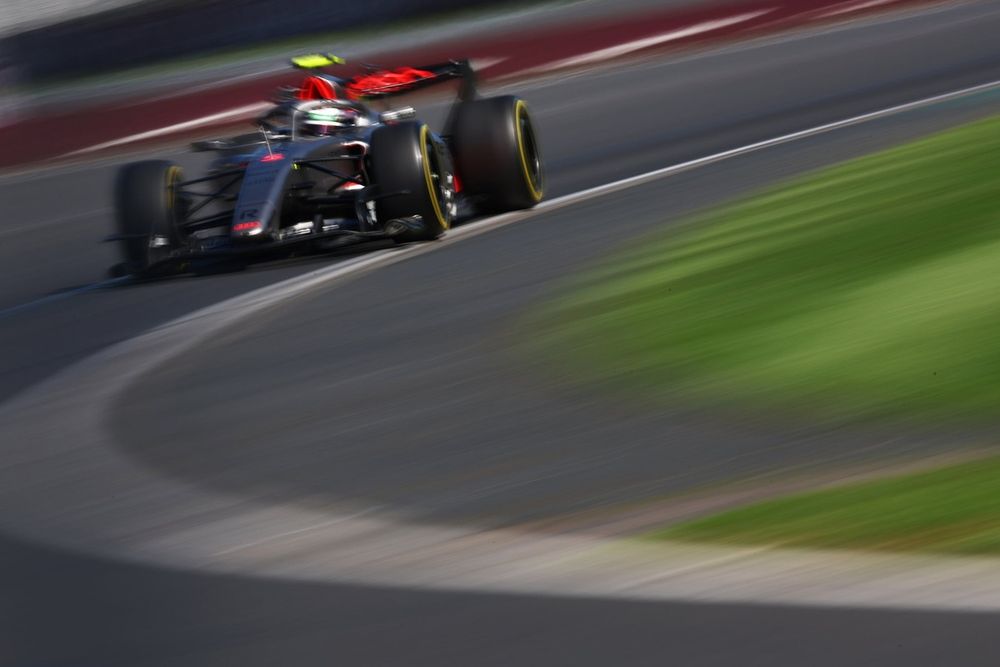
The Albert Park circuit, host of the Australian Grand Prix, was initially designed with five such “straight mode” zones for the current event. One of these zones encompassed the challenging, sweeping section leading from Turn 8 into the high-speed Turn 9-10 combination.
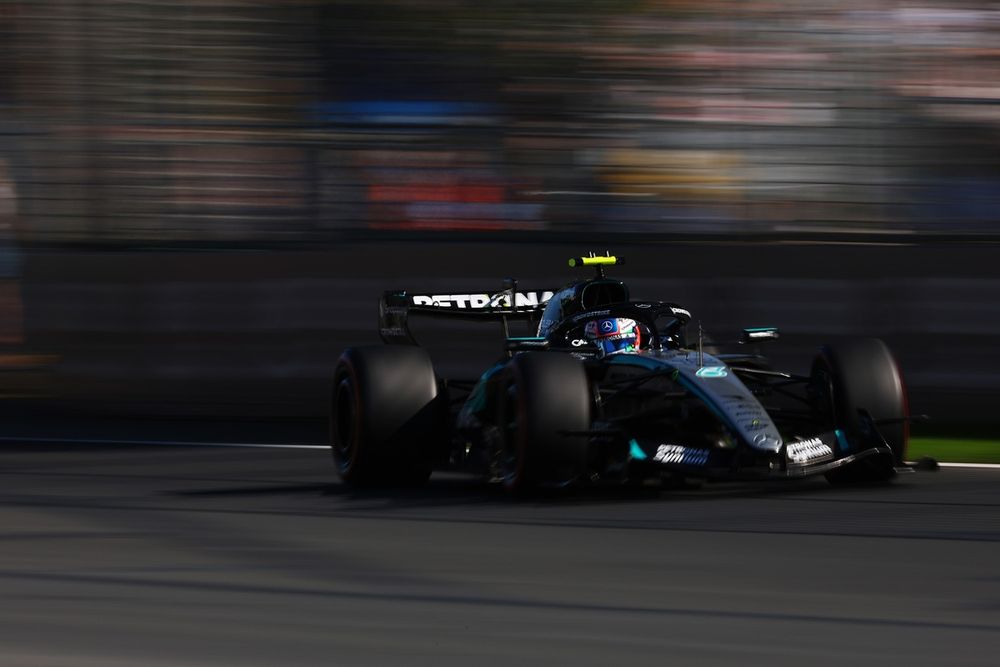
During Friday night’s drivers’ briefing, several drivers voiced their concerns. They reported that the reduction in downforce when “straight mode” is activated in this particular curved section was so significant that it posed a risk of losing control. This risk was amplified when navigating the approach to Turn 9, especially when encountering other cars in close proximity.
Swift Initial Reaction and Subsequent Reversal
Following an overnight analysis of the data and driver feedback, the FIA made a unilateral decision to remove this contentious zone entirely, effective from Saturday’s running, commencing with the third free practice session (FP3). This move was intended to prioritize safety by eliminating a perceived risk.
However, this decision was met with considerable opposition from a number of teams. After the announcement, and in response to the strong feedback and further analysis contributed by the teams themselves, the FIA has now reversed its initial decision. The track configuration will remain as it was for FP3, including the inclusion of the fourth “straight mode” zone. Further comprehensive evaluation will be conducted during and after FP3, with decisions for qualifying and the race to be made subsequently.
The FIA has officially confirmed this reversal in a statement, acknowledging the feedback received and the additional analysis provided by the teams. “Following the feedback received in the last hour from Teams and Drivers, and additional analysis contributed by Teams, the decision to remove Straight Mode zone #4 for Albert Park is rescinded,” the statement read. “For the avoidance of doubt, this amendment is effective immediately, and Straight Mode activation Zone 4 will be in use in FP3. Further evaluation will take place during and after FP3.”
Understanding the “Straight Mode” and its Challenges
Nikolas Tombazis, the FIA’s single-seater director, elaborated on the rationale behind the initial introduction of these zones and the subsequent concerns. He explained that on most circuits, these “straight mode” zones are located on genuine straight sections of the track.
“On three or four circuits in the year, one of which is Melbourne unfortunately, they also include some zones which are fairly curved, as happens on the fourth straight mode zone here in Melbourne between corners 8 and 9,” Tombazis stated. “So, we had a meeting yesterday with the drivers and some expressed a concern that the downforce in that area was a bit too low, especially if they were fighting for position with other cars and they felt they could risk losing control of the car in such conditions.”
He emphasized that safety is paramount for the FIA. “As, of course, safety is number one for us, we decided following some analysis to err on the side of caution and to remove the fourth straight mode zone here for Melbourne, starting from FP3 and of course for qualifying in the race.”
The current situation has arisen because the 11 different car designs exhibit varying degrees of downforce and drag reduction when the wings are opened in “straight mode.” It was only after Friday’s two free practice sessions that the FIA became aware that certain cars were operating on the edge of downforce capability through the Melbourne circuit’s fourth “straight mode” zone. Given the safety implications, the FIA opted for an immediate, albeit temporary, change to the track layout.
Tombazis further explained the learning curve involved: “We are for the first time gaining detailed knowledge of the magnitude of downforce reduction, some teams are experiencing on the straight mode activation, so this is new information for us and for some of the cars that is quite a big downforce reduction, more than we had perhaps envisaged.”
He highlighted the challenge of a one-size-fits-all approach: “This effect is not the same for all cars, but we couldn’t just act on a few cars and say: ‘Well, you need to change your set-up’ and not another’s, because we wouldn’t have a robust enough criterion and it’s short notice to do that, so that’s why we felt it had to be an action for all cars and not for some cars.”
Implications for Teams and Future Regulations
Teams were only notified of the FIA’s initial decision approximately two and a half hours before FP3. The affected section of the track is crucial for energy harvesting, meaning that any change would necessitate a significant re-evaluation of energy strategies and overall car set-ups by engineering teams.
When questioned about the anticipated team pushback, Tombazis acknowledged that his phone had been “vibrating” throughout his media availability. He conceded that the unilateral decision, while safety-driven, could be perceived as penalizing teams that had diligently factored in the new regulations during their preparation.
“Some teams may argue it penalises those who have taken that factor into account, and that is true,” Tombazis admitted. “But, as I say, we acted on this on the basis of safety, so we couldn’t go and say: ‘Well, your car, you’re losing too much and you need to make a change, and your car is OK’. We didn’t feel we had a good enough criterion to do that.”
Looking ahead, Tombazis indicated that similar challenges might arise at three other circuits on the 2026 calendar. However, with more lead time, the FIA aims to develop a more robust plan for regulating minimum downforce levels during “straight mode” activation. Potential solutions could include shortening the “straight mode” zones to reduce the disparity in downforce and speed between the two modes.