US Defence Official’s India Visit Aims to Mend Ties Amid Regional Tensions
A recent visit by a high-ranking United States defence official to India has injected optimism into bilateral defence relations, suggesting a potential return to a stronger partnership. However, analysts caution that significant hurdles remain, particularly concerning India’s energy security and broader geopolitical interests, which could be complicated by the ongoing conflict involving the US and Iran.
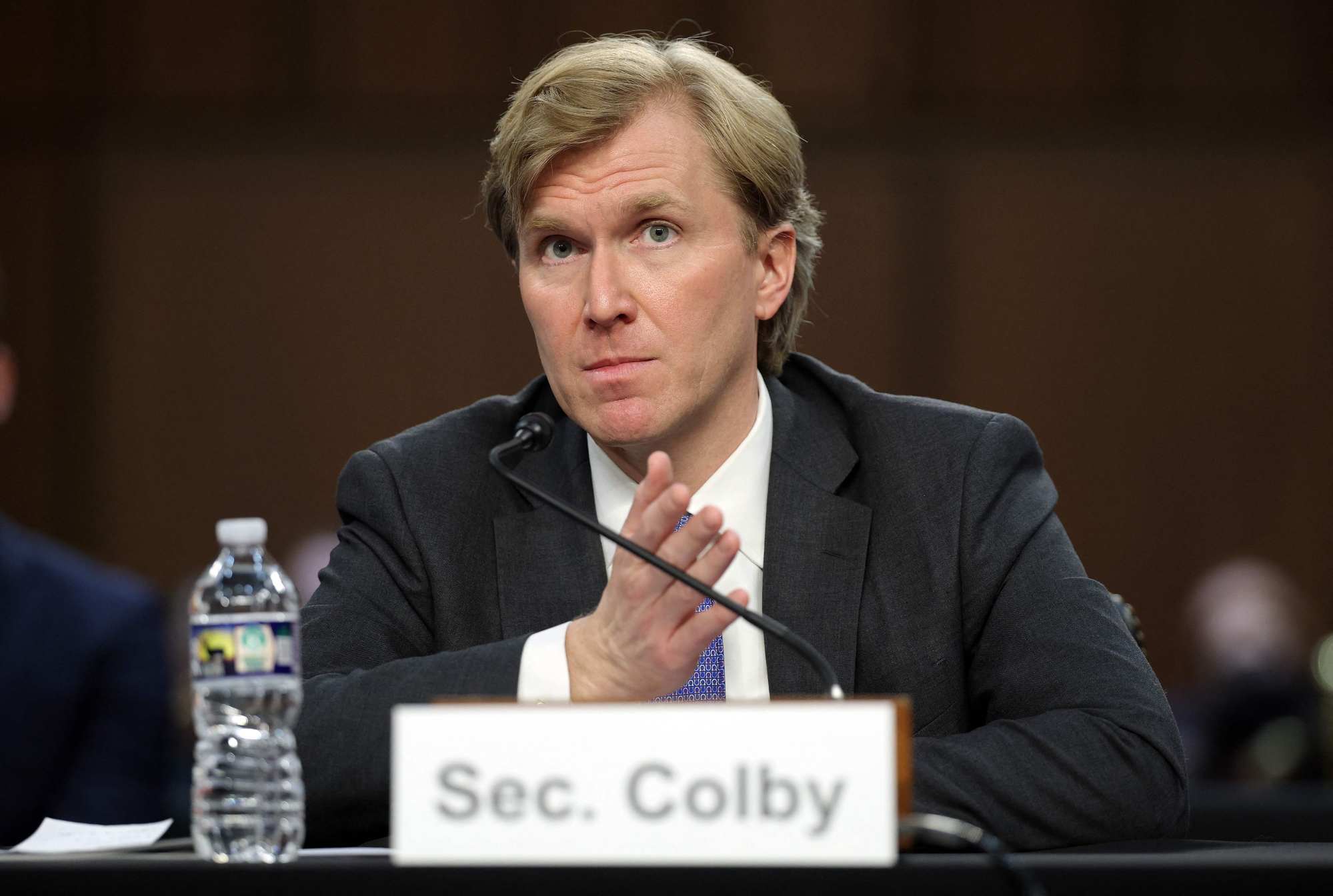
During his visit to New Delhi this week, US Under Secretary of War for Policy, Elbridge Colby, emphasized India’s pivotal role in establishing a favourable balance of power within the Indo-Pacific region. He underscored that India’s substantial size, strategic geography, and burgeoning military and economic capabilities position it as a crucial player in global affairs, capable of exerting significant influence.
Colby engaged in discussions with Indian Foreign Secretary Vikram Misri, as confirmed by India’s Ministry of External Affairs. These meetings, held on the sidelines of the India-US Defence Policy Group, focused on enhancing defence cooperation, addressing regional security challenges, and deepening the strategic partnership between the two nations. A statement from Washington indicated that Colby’s visit was intended to advance the critical India-US relationship and to implement the established Framework for the US-India Major Defence Partnership.
This diplomatic engagement occurred against a backdrop of lingering bilateral tensions. These include Washington’s imposition of tariffs on Indian exports and its disapproval of India’s continued oil purchases from Russia. Adding to the complexity, an incident earlier this month involving the sinking of the Iranian warship IRIS Dena in the Indian Ocean, torpedoed by a US submarine, has ignited considerable anger among Indian politicians and observers.
Anushka Saxena, a research analyst at the Takshashila Institution, highlighted the sinking of the IRIS Dena as a point of concern for India-US relations. She noted that the incident occurred in a region not actively involved in the current conflicts, unlike the Red Sea, which has been targeted by Iran-backed Houthi forces.
Daniel Markey, a senior fellow at the Stimson Centre, interpreted Colby’s visit as a clear signal of Washington’s intent to “get defence ties back on track” with New Delhi, following a period of strain. However, he pointed out that India might find it challenging to set aside its frustrations with the US, particularly regarding the US claim of mediating the end of the conflict between India and Pakistan last year. India has maintained that New Delhi was not involved in any US role in the peace talks between the two South Asian neighbours.
Furthermore, India’s confidence in the US as a reliable supplier of defence equipment, especially advanced fighter jets and other critical defence systems, remains a concern, according to Markey. Analysts point out that Washington has a history of threatening sanctions and imposing restrictions on technology transfers related to its defence trade with India.
While the US expresses a strong desire to expand military sales to India and engage in joint development of military technologies, Saxena advises tempering expectations on both fronts. She added that the ongoing Middle East war has further strained the bilateral relationship, with both nations focused on managing the potential spillover effects of the conflict. India has consistently voiced its concerns regarding the safety and well-being of its approximately 9 million citizens residing in the region.
Navigating Geopolitical Currents: The Quad and Strait of Hormuz Concerns
India’s enthusiasm for the Quadrilateral Security Dialogue (Quad), a strategic forum comprising Australia, India, Japan, and the US, has also seen reservations grow, particularly concerning Washington’s commitment to the grouping. Saxena observed that Colby’s discussions did not explicitly mention the Quad, a point of note given India’s strong interest in the initiative. She recalled that the Quad leaders’ summit, initially scheduled to be held in India last year, was indefinitely postponed by Washington.
Despite these underlying challenges, Colby’s visit has, at the very least, re-established a crucial channel for “high-level political signalling,” affirming that the defence partnership remains a priority for Washington, according to Saxena. A significant development highlighted was the agreement to co-produce General Electric F414 engines, which are integral to modern fighter jets. This collaboration is expected to equip India’s combat aircraft with advanced capabilities and provide India with critical American engine manufacturing expertise, including techniques for crystal blade coating and laser drilling.
Rushali Saha, a security risk analyst based in New Delhi with the threat monitoring platform Horizon Intelligence, noted that the official US statement regarding Colby’s visit was somewhat generic, referring only to meetings with “senior officials.” Nevertheless, she asserted that US-India defence cooperation represents the “steadiest part” of their overall relationship and has demonstrated resilience amidst ongoing political friction.
Regarding the Middle East conflict, Colby’s visit presented India with an opportunity to articulate its concerns about the Strait of Hormuz. This is particularly relevant given reports that Pakistan might emerge as a potential mediator in discussions between the US and Iran. Earlier this week, Indian Prime Minister Narendra Modi held a phone call with US President Donald Trump, conveying New Delhi’s apprehension regarding the imperative of safe and unimpeded passage through the strategically vital strait.
While the US has urged various nations, including India, to join an American-led naval coalition to ensure access to the Strait of Hormuz, India’s preference, according to Saha, lies in pursuing direct engagement with Tehran to safeguard the passage of its own vessels.
Colby’s visit also coincided with a period of significant domestic scrutiny in India regarding its relationship with the US. Opposition politicians have accused New Delhi of prioritizing US interests over its own energy security needs. Consequently, Saha anticipates that “New Delhi will likely refrain from publicly conveying close alignment with the US.”