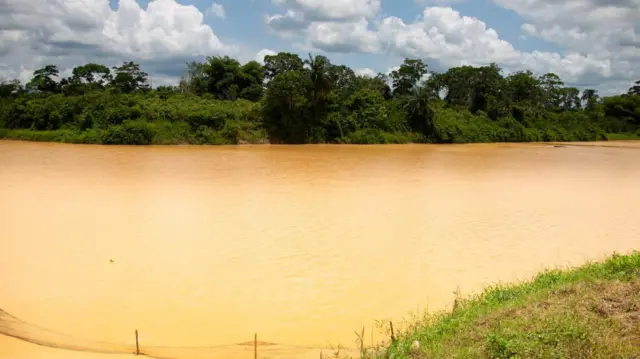
Accra – The Christian Council of Ghana has issued a stark warning regarding the escalating crisis of illegal mining, commonly known as “galamsey,” urging for immediate and unified national action. The Council highlighted that this destructive practice poses a severe and ongoing threat to Ghana’s vital forest reserves and precious water bodies.
In a statement released to mark both the International Day of Forests and World Water Day, Reverend Cyril Fayose, the General Secretary, articulated the Council’s deep concern. He pointed out that an alarming nearly 60 percent of Ghana’s water bodies are now polluted, a grim consequence of rampant illegal mining, inadequate waste management, and agricultural runoff.
The International Day of Forests, observed annually on March 21st, was this year celebrated under the theme “Forests and Economies.” This global observance, established by the United Nations General Assembly, seeks to illuminate the multifaceted economic contributions of forests, extending far beyond their role as a source of timber.
The Christian Council’s statement emphasized that the unchecked destruction of natural resources directly undermines not only the livelihoods of countless individuals but also impedes long-term national development prospects.
A Moral Imperative for Environmental Protection
“The wanton destruction of our forests and water bodies must be viewed as a profound moral issue, one that necessitates immediate and collective action,” the statement asserted. It further implored, “All citizens must rise to the occasion to protect these God-given resources for both present and future generations.”
The Food and Agriculture Organisation (FAO) reports that globally, approximately 1.6 billion people rely on forests for their sustenance and livelihoods. Millions find employment in sectors such as conservation, scientific research, and ecotourism. The Christian Council underscored that forests are not merely providers of economic benefits; they are crucial protectors of watersheds, preventing soil erosion, thereby playing a pivotal role in supporting agriculture and ensuring food security.
However, the Council sounded a grave alarm: Ghana continues to suffer an annual loss of approximately 135,000 hectares of forest cover, with illegal activities being the primary driver of this devastating trend.
Sustainable Exploitation for Socio-Economic Growth
“Forest resources are inherently economic resources, and their exploitation must be conducted sustainably to foster socio-economic development,” the statement declared. “We must intensify our efforts to halt the alarming rate of deforestation.”
The Council acknowledged and commended existing government-led reforestation initiatives, including Green Ghana Day, Tree for Life, Make Ghana Green Month, and One Child, One Tree. Nevertheless, they urged authorities and all relevant stakeholders to embrace more enduring and strategically coordinated approaches to safeguard the nation’s environment.
The Global Water Crisis and Gender Equality
The observance of World Water Day on March 22nd brought into sharp focus the global water crisis, with an estimated 2.2 billion people worldwide lacking access to safe drinking water. This year’s theme, “Water and Gender,” critically highlights the intricate link between water accessibility and gender equality, particularly the disproportionate burden shouldered by women and girls in securing water for their families and communities.
Initiatives spearheaded by UNICEF and UN Women aim to draw attention to the systemic inequalities that restrict access to clean water and adequate sanitation facilities.
Condemnation of Polluting Practices
The Christian Council unequivocally condemned harmful practices that contaminate water sources. These include the dumping of toxic substances like mercury and cyanide into rivers, the discharge of untreated sewage and industrial waste, and the pervasive use of hazardous agrochemicals. Such actions contribute directly to water pollution and pose significant health risks to both humans and ecosystems.
“Water is life,” the Council stated emphatically, echoing the sentiment that “When the last tree dies, the last man dies.”
The Council concluded by calling upon the Christian community and the wider public to embrace environmental stewardship as both a civic duty and a moral responsibility. They stressed that “protecting our forests and water resources is one of the surest ways to accelerate Ghana’s socio-economic development.”