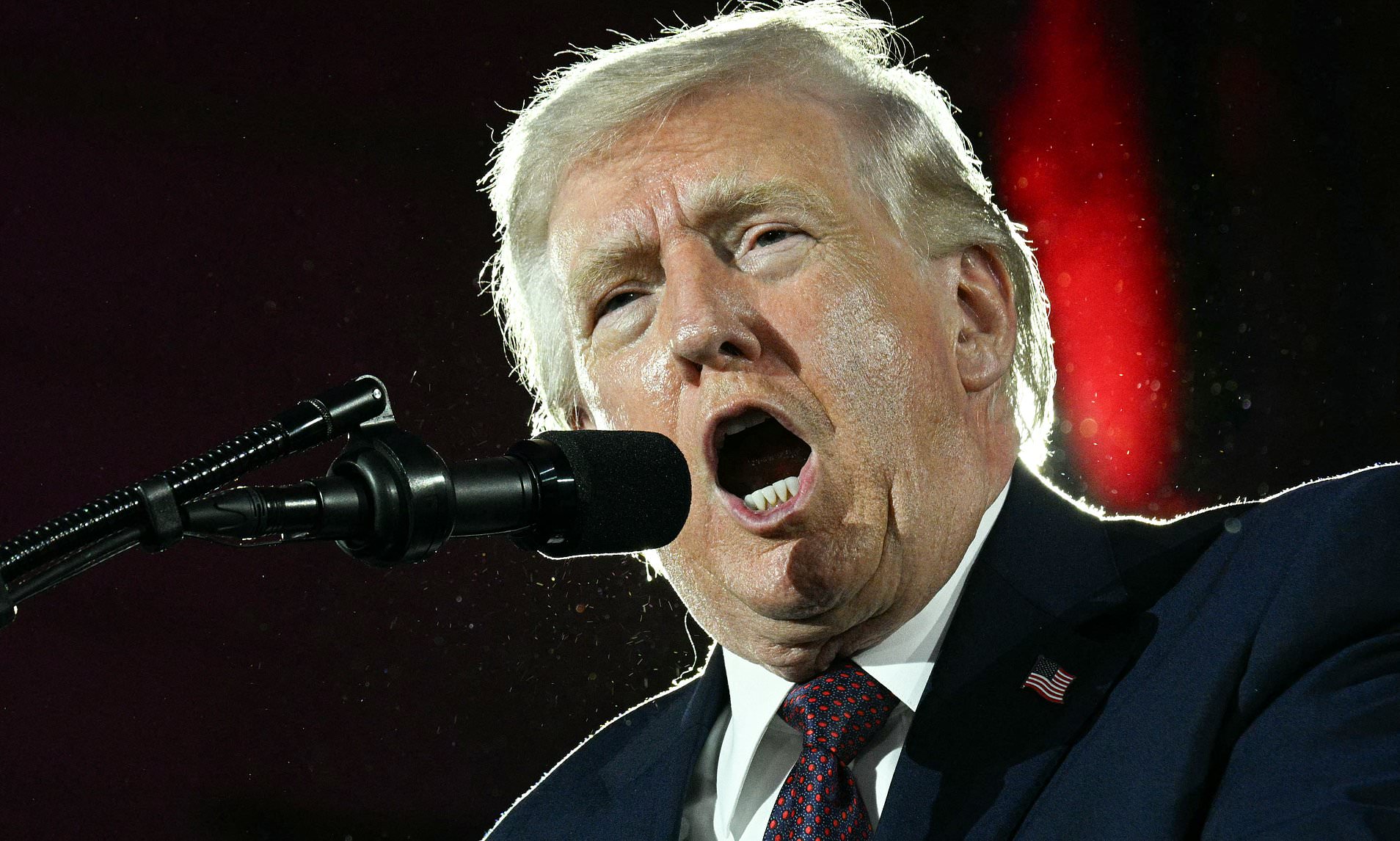
Trump Issues Stern Warning to Iran Amidst Escalating Tensions and Military Posturing
Former President Donald Trump has issued a pointed warning to Iranian negotiators, urging them to “get serious soon, before it is too late.” The assertion comes as the United States reportedly considers significant military options to conclude the ongoing conflict, a situation Trump described as Iran being “militarily obliterated” with “zero chance of a comeback.”
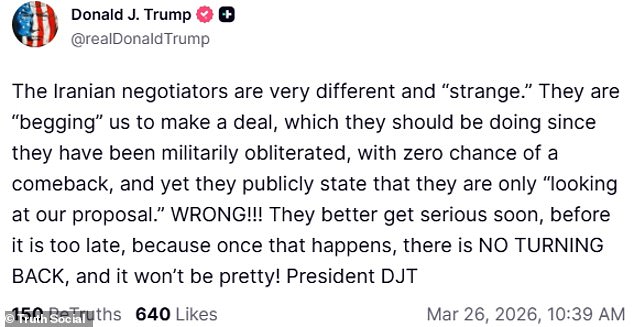
Taking to his social media platform, Truth Social, Trump characterized the Iranian negotiators as “very different and ‘strange.’” He elaborated, stating, “They are ‘begging’ us to make a deal, which they should be doing since they have been militarily obliterated, with zero chance of a comeback, and yet they publicly state that they are only ‘looking at our proposal.’” He emphatically concluded, “‘WRONG!!! They better get serious soon, before it is too late, because once that happens, there is NO TURNING BACK, and it won’t be pretty!’”
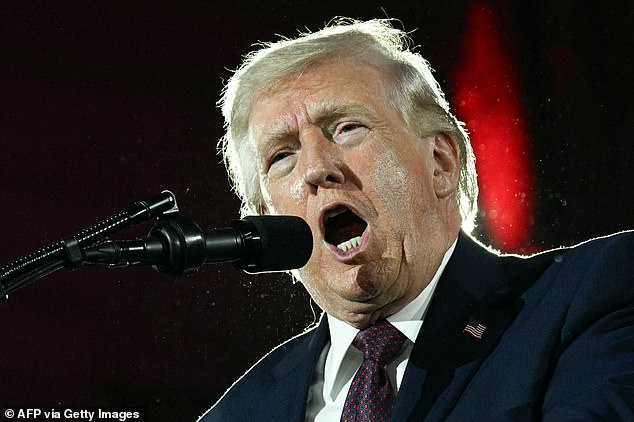
In a separate statement, Trump also renewed his criticism of NATO, asserting that the defensive alliance has provided no assistance in addressing the “lunatic nation, now militarily decimated, of Iran.” He reiterated that the U.S. does not require NATO’s support but emphasized the importance of remembering this lack of aid. Trump has consistently criticized NATO throughout the conflict, particularly after member nations declined his requests to help escort vessels through the Strait of Hormuz. Last week, he referred to these allies as “cowards” for “complaining about high oil prices” while failing to contribute to securing the vital waterway.
Pentagon Weighs “Final Blow” Options Against Iran
The escalating rhetoric from the former president coincides with reports that the Pentagon is developing military strategies aimed at delivering a “final blow” to Iran. These potential options reportedly include the deployment of ground forces and a large-scale bombing campaign.
Insiders suggest that a significant escalation of military action is increasingly probable unless a breakthrough is achieved in ongoing negotiations and the Strait of Hormuz remains open for maritime traffic. U.S. officials, according to Axios, believe that a decisive show of force could benefit Donald Trump by enabling him to declare victory or strengthen his negotiating leverage for a peace settlement.
Specific military options under consideration are said to encompass:
- Invading or blockading Kharg Island, Iran’s primary hub for oil exports.
- Occupying Larak Island, a strategic location that aids Tehran in controlling the Strait of Hormuz.
- Seizing vessels engaged in exporting Iranian oil on the eastern side of the strait.
These developments come as global oil prices have seen an uptick, reacting to Iran’s dismissal of a U.S. proposal aimed at ending the conflict. This occurs despite Trump’s insistence that Iranian leaders are “badly” seeking a deal to halt hostilities.
Iran’s Stance on the Strait of Hormuz and Potential Tolls
Meanwhile, Iranian media outlets have reported that the nation’s parliament is considering a bill to impose tolls on vessels transiting the Strait of Hormuz. The head of the parliament’s construction committee indicated that a draft has been prepared with the stated aim of “providing security for vessels passing,” though specific toll amounts have not yet been determined.
Iranian Foreign Minister Abbas Araghchi stated that Iran has facilitated passage for vessels from countries such as China, Russia, Pakistan, Iraq, and India. He clarified Iran’s perspective, asserting that the Strait of Hormuz is “not completely closed but closed to enemies.”
Trump’s “Cancer” Analogy and Desire for Swift Resolution
During a recent address to the National Republican Congressional Committee, Trump declared that the U.S. and Israel had successfully “cut out the cancer” of Iran’s nuclear program. He likened the situation to removing a malignant growth, stating, “The cancer was Iran with a nuclear weapon. We’ve cut it out. Now we’re going to finish it off.” He indicated that the U.S. military was prepared to deliver a decisive end to the conflict.
Privately, Trump has conveyed to allies and cabinet members his desire to avoid a prolonged war, aiming for a resolution within the initial four-to-six-week timeline he had previously outlined.
Peace Proposals and Counter-Proposals Emerge
The U.S. President has indicated that negotiations are currently underway, with special envoy Steve Witkoff, Jared Kushner, Secretary of State Marco Rubio, and Vice President JD Vance reportedly involved. However, no Iranian representatives have been identified as participants.
According to reports from the New York Times, two officials briefed on the talks confirmed a 15-point peace plan, modeled after Trump’s previous deal concerning Gaza. Key demands for Iran include:
- Dismantling all nuclear and long-range missile capabilities.
- Opening the Strait of Hormuz.
- Severing ties with proxy terror groups across the Middle East.
In exchange, the proposal offers reciprocal benefits for Iran, such as assistance in advancing its civilian nuclear program and the lifting of international sanctions.
Iran, through state television, has presented its own plan, which includes a cessation of killings of its officials, guarantees against future attacks, war reparations, an end to hostilities, and Iran’s “exercise of sovereignty over the Strait of Hormuz.” These Iranian demands, particularly concerning reparations and continued control over the Strait, are likely to be unacceptable to the White House. Iran’s foreign minister, Abbas Araghchi, later stated that “No negotiations have happened with the enemy until now, and we do not plan on any negotiations.”
Human Toll and Recent Strikes in Iran
The ongoing conflict has resulted in a rising death toll, with over 1,500 fatalities reported in Iran, nearly 1,100 in Lebanon, 20 in Israel, and 13 U.S. military personnel. Civilian casualties in the Gulf region have also been reported. Millions of people in Lebanon and Iran have been displaced.
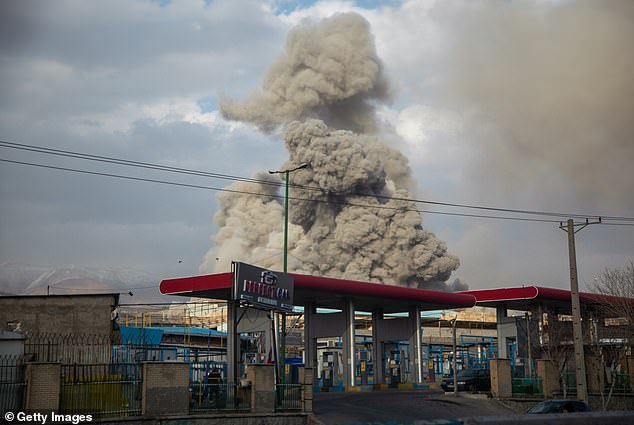
Early on Thursday morning, activists in Iran reported heavy strikes in the vicinity of Isfahan, a city located 205 miles south of the capital, Tehran. Isfahan is home to a significant Iranian air base, military installations, and one of the nuclear sites that was targeted by the United States during a previous conflict in June. The semi-official Fars news agency described the attacks as targeting “two residential areas.”
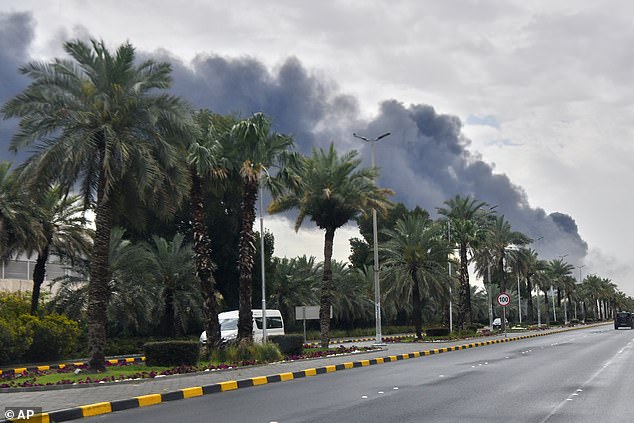
Earlier, Israel’s military announced the completion of “a wide-scale wave of strikes” across Iran, including in Isfahan. A missile alert was also sounded on mobile phones in Dubai. Saudi Arabia’s Defence Ministry reported intercepting multiple drones over its oil-rich Eastern Province, while Kuwait indicated efforts to intercept incoming fire, and Bahrain activated its missile alert sirens.
Detailed Breakdown of Trump’s 15-Point Peace Plan:
Israel’s Channel 12 has reportedly outlined 14 of the 15 demands and benefits, conveyed to Iran through diplomatic backchannels.
U.S. DEMANDS:
- Iran must dismantle its existing nuclear capabilities.
- Iran must commit never to pursue nuclear weapons.
- Uranium enrichment will be prohibited on Iranian territory.
- Iran must transfer its stockpile of approximately 450 kilograms of uranium enriched to 60 percent to the International Atomic Energy Agency (IAEA) within an agreed timetable.
- The Natanz, Isfahan, and Fordo nuclear facilities must be dismantled.
- The IAEA must be granted full access, transparency, and oversight within Iran.
- Iran must abandon its regional proxy strategy.
- Iran must cease funding, directing, and arming its regional proxies.
- The Strait of Hormuz must remain open and function as a free maritime corridor.
- Iran’s missile program must be limited in both range and quantity, with specific thresholds to be determined later.
- Any future use of missiles would be restricted to self-defense.
IN RETURN, IRAN BENEFITS AS FOLLOWS:
- Iran would receive a full lifting of sanctions imposed by the international community.
- The U.S. would assist Iran in advancing its civilian nuclear program, including support for electricity generation at the Bushehr nuclear plant.
- The “snapback” mechanism, which allows for the automatic reimposition of sanctions if Iran fails to comply, would be removed.