Pakistan’s Vision for Inclusive and Transparent AI Governance
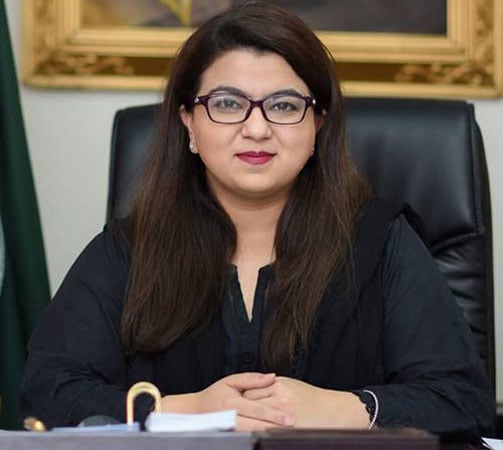
Pakistan’s Federal Minister for Information Technology and Telecommunication, Shaza Fatima Khawaja, has emphasized the need for artificial intelligence (AI) systems to be developed and utilized in accordance with international law and the United Nations Charter. During a thematic discussion on “Safe, Secure and Trustworthy AI: Interoperability and Compatibility of Approaches” at the Global Dialogue on Artificial Intelligence Governance in Geneva, she highlighted the importance of meaningful human oversight in both civilian and security contexts.
The minister pointed out that AI safety is a shared global interest but stressed that the process of defining safety must be transparent, inclusive, and representative of all nations. She argued that safety standards and benchmarks for trustworthy AI are increasingly being shaped by a limited number of countries and technology firms through national frameworks that exclude much of the developing world.
The Role of Culture and Local Realities in AI Safety
Shaza Fatima underscored that safety is not purely a technical matter. She noted that language, culture, and local realities shape the concept of safety. Standards developed without the participation of developing countries risk being imposed rather than collectively adopted. This perspective highlights the need for a more equitable approach to AI governance.
She stated that Pakistan supports the formulation of AI safety norms through inclusive multilateral processes under the United Nations, where all countries can contribute as equal partners. This commitment reflects Pakistan’s belief in a collaborative and fair approach to shaping the future of AI.
The Importance of Interoperability in AI Governance
Highlighting the significance of interoperability, the minister mentioned that Pakistan supports compatible AI governance approaches as envisioned in the Global Digital Compact. She explained that interoperability promotes cross-border trade, research, and data flows while allowing different national regulatory systems to coexist. However, she cautioned that interoperability should serve as a bridge between governance systems rather than becoming a mechanism through which the rules of a few countries are imposed on others.
Developing Global AI Standards Through Collaboration
Shaza Fatima emphasized that global AI standards should be developed through open and collaborative standard-setting bodies. These bodies should ensure safety, reliability, respect for human rights, and recognition of linguistic and cultural diversity throughout the AI life cycle. She also stressed that trust in AI depends on countries having the capacity to independently test, evaluate, and verify AI systems.
“The ability to assess AI systems remains concentrated in the countries where the technology is developed,” she said, warning that developing nations should not be expected to rely solely on external assurances of safety without having the means to verify them. She called for strengthening AI evaluation and governance capabilities in developing countries through shared tools, technical cooperation, and regional partnerships.
A Commitment to Inclusive AI Governance
Shaza Fatima concluded by stating that safe and trustworthy AI should not mean safety for only a few while remaining opaque to the rest of the world. She reaffirmed Pakistan’s commitment to working with international partners and the co-chairs of the dialogue to build an inclusive, transparent, and durable global framework for AI governance. This vision aligns with the broader goal of ensuring that AI development benefits all nations equitably and responsibly.