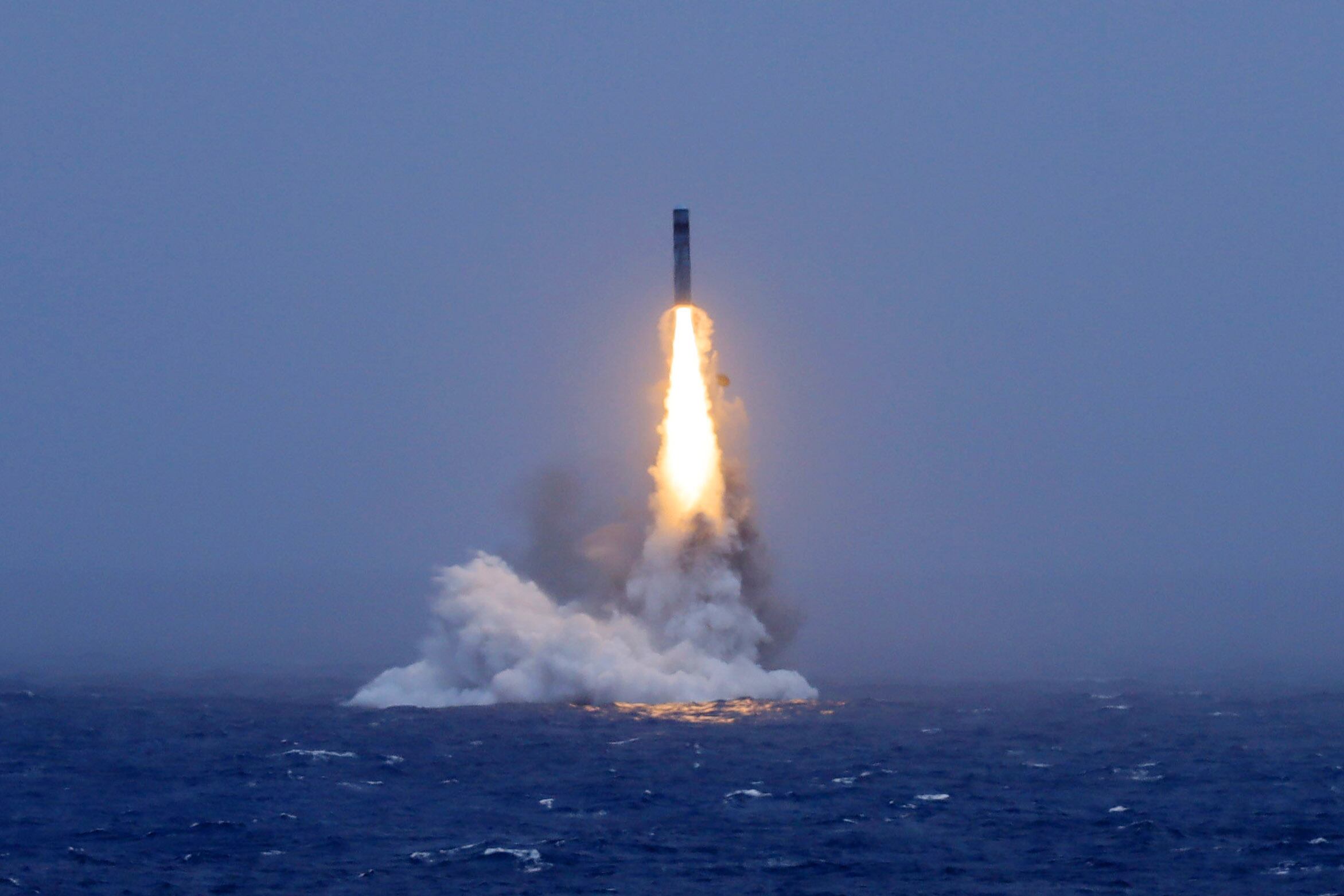
International Response to China’s Missile Launch
The United States, Japan, Australia, and New Zealand have all issued strong condemnations following China’s recent ballistic missile (SLBM) launch from a nuclear-powered submarine into the Pacific Ocean. This event has raised significant concerns among Indo-Pacific allies and global observers.
U.S. Condemnation and Concerns
The U.S. Department of State released a statement on the 6th (local time), expressing concern over what it described as “China’s rapid and opaque nuclear weapons buildup.” The statement emphasized that this development is causing worry both in the region and globally. Additionally, the U.S. House of Representatives’ Special Committee on Strategic Competition between the United States and the People’s Republic of China criticized the move, stating that China is aiming to possess 1,000 nuclear warheads by 2030. The committee also noted that this launch was not a routine exercise but an aggressive act directed at U.S. Indo-Pacific allies.
Regional Reactions
Japan received a 90-minute notice from China before the launch but strongly urged reconsideration, which was ignored. Australian Foreign Minister Penny Wong highlighted the lack of transparency in China’s intentions, while New Zealand’s Foreign Minister Winston Peters condemned the action, stating it does not align with regional stability.
Strategic Implications
Analysts believe that the missile launch was intended to showcase China’s nuclear capabilities to the U.S., potentially pressuring Washington not to interfere in the Taiwan issue. It also aims to reinforce China’s military dominance in the Indo-Pacific. During the Beijing summit in May, former U.S. President Donald Trump expressed his stance on Taiwan, stating, “I do not support Taiwan’s independence,” but he did not respond to China’s demand to halt arms sales to Taiwan. Trump is reportedly using these arms sales as leverage in U.S.-China trade negotiations. He is scheduled to meet Chinese President Xi Jinping again in Washington, D.C., in September.
First Public Demonstration of Nuclear Strike Capability
This marks the first time China has publicly demonstrated its nuclear strike capability using a submarine-launched ballistic missile. Although the exact location of the launch was not disclosed, Japanese media reported that the missile was fired from the eastern sea of Hainan Island toward the South Pacific. The state-run Global Times analyzed that the missile was likely the new JL-3, first unveiled by the Chinese military in September last year. With a range exceeding 10,000 km, this missile can reach most of the U.S. mainland even when launched from the South China Sea.
China’s Perspective
The Global Times stated that the missile launch reaffirms China’s resolve for Taiwan unification, warning, “One must not misjudge China’s determination to achieve complete reunification.” Another state-run outlet, Global Times, argued that as China’s second-strike nuclear capability strengthens, its nuclear deterrence role grows. The outlet added that this is a fundamental countermeasure against nuclear threats from certain countries and a critical link in preventing nuclear war. It also claimed that China had notified relevant countries of the launch plan in advance, calling it “a goodwill measure to reduce misjudgment and a rational action demonstrating responsibility as a major power.”
Future Concerns
Given that China described the launch as a “planned experiment,” there are growing concerns that such submarine missile launches could become routine. Professor Shin Kawashima of the University of Tokyo told Nikkei, “While this missile was launched toward international waters, future launches might fall within Japan’s exclusive economic zone (EEZ).”
Membership Offers
월 5900원 멤버십, 신문 독자에게는 2900원, 조선멤버십
55000원 상당의 신문-잡지 8종 마음껏 보기, 조선멤버십
현금처럼 쓸 7000포인트 받아 알뜰한 쇼핑, 조선멤버십